









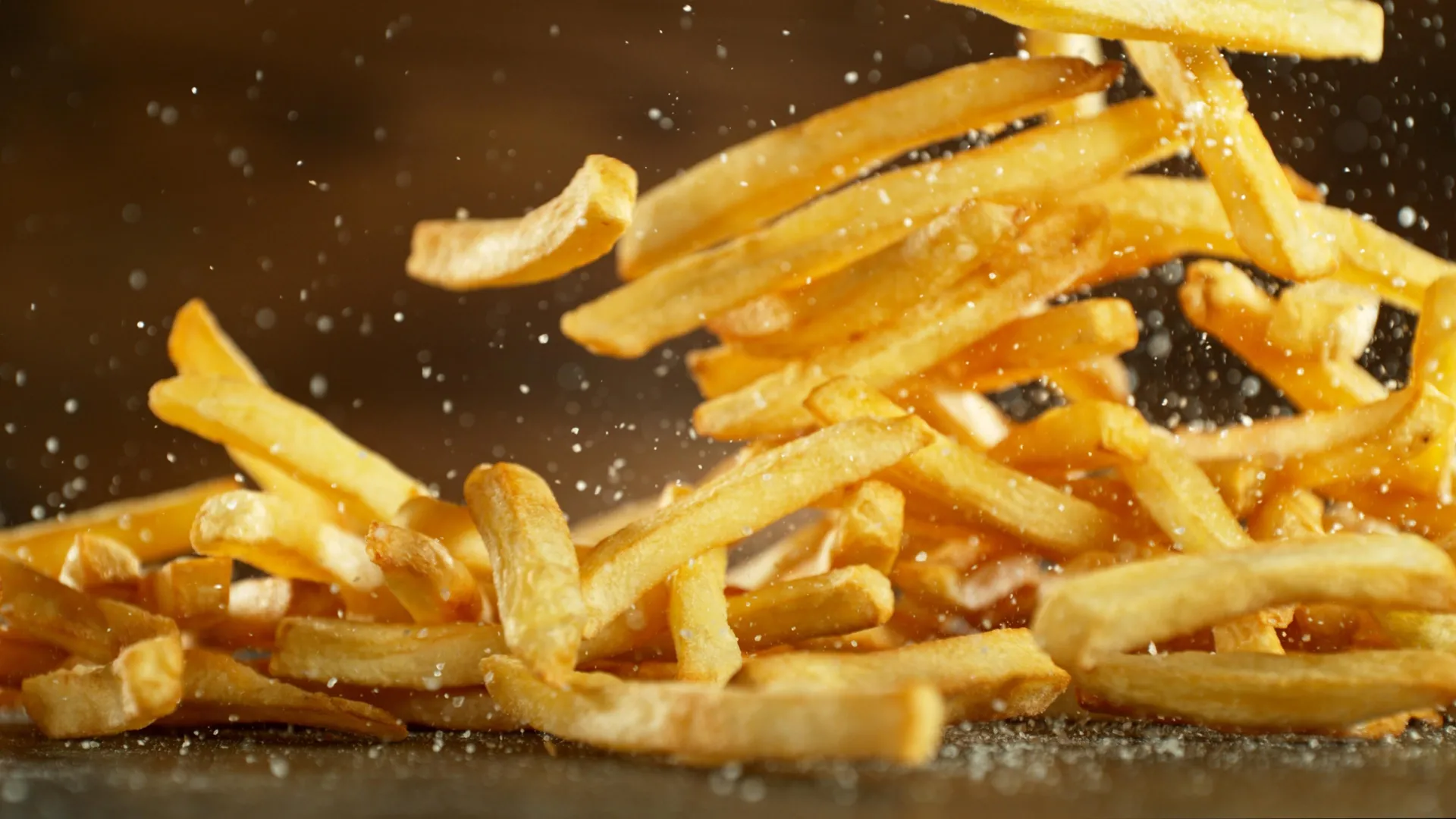
For decades, the golden, salty, and satisfying crunch of a French fry has been a staple of the global diet. Yet, this culinary icon carries a hidden cost. Behind every crispy exterior lies a sponge-like interior, often laden with the high-fat, high-calorie oils used in traditional deep-frying. As global health concerns regarding obesity, hypertension, and cardiovascular disease mount, food scientists have been searching for a "holy grail": a way to retain the indulgent sensory experience of fried food while drastically reducing its caloric footprint.
Researchers at the University of Illinois Urbana-Champaign (UIUC) believe they may have found the answer. By harnessing the precise, invisible power of electromagnetic waves, a team of food engineers has pioneered a hybrid frying technique that promises to disrupt how we prepare the world’s most popular side dish.
The Science of the "Soggy Sponge"
To understand why the hybrid fryer is a breakthrough, one must first understand the physics of a potato in a vat of hot oil. Traditional deep-frying is a delicate dance of heat and mass transfer. When a raw potato strip hits oil heated to 180°C (356°F), the surface moisture begins to evaporate almost instantly.
As the water exits the potato, it leaves behind a network of microscopic pores—essentially a labyrinth of empty channels. If the pressure inside these channels is lower than the pressure outside, the oil is pulled into the potato through a process known as capillary suction.
"Think about a straw in a drink," explains Pawan Singh Takhar, a professor of food engineering in the Department of Food Science and Human Nutrition at UIUC. "If you push air into the straw, you create positive pressure, and the liquid is pushed out. But if you suck on the straw, the liquid moves upward. Now imagine food materials have millions of tiny straws. When there is positive pressure, the oil stays out. But if there is negative pressure, the oil starts moving in."
The team’s research revealed a sobering statistic: as much as 90% of the frying process occurs under negative pressure. This means that for the vast majority of the time a fry is submerged, it is actively sucking up oil, turning a humble vegetable into a calorie-dense snack.
A Chronology of Innovation
The path to a healthier fry was not a sudden epiphany but a rigorous, multi-year scientific journey.
Phase 1: Diagnostic Analysis
The project began by mapping the "life cycle" of a fry. Working in collaboration with Washington State University, the UIUC team utilized specialized microwave fryers capable of operating at two distinct frequencies: 2.45 GHz (standard household microwave) and 5.8 GHz. The researchers systematically tracked the internal temperature, pressure, volume, texture, and moisture loss of the potato strips from the moment they hit the oil until they were finished.
Phase 2: The Pressure Experiment
The researchers discovered that traditional heating—which relies on thermal conduction from the surface inward—is inherently inefficient at maintaining the internal pressure required to keep oil out. By introducing microwave energy, which heats water molecules simultaneously throughout the entire potato, they were able to force moisture out from the inside-out. This generated a consistent internal vapor pressure that acted as a barrier against oil intrusion.
Phase 3: Mathematical Modeling
Recognizing that physical experiments are time-consuming, the team developed complex mathematical models to predict how various variables—such as frequency, oil temperature, and potato composition—interacted. This allowed them to simulate thousands of frying scenarios, confirming that microwave-assisted frying significantly accelerated moisture removal and limited oil uptake.
Phase 4: The Hybrid Proposal
The final, and perhaps most important, realization was that microwaves alone are not the solution. While they effectively prevent oil absorption, they fail to achieve the Maillard reaction—the chemical process that creates the golden-brown crust and crispy texture consumers crave. Fries cooked solely by microwave tend to be soft and "soggy." The team concluded that the future of frying is a hybrid model: use microwave energy to drive the process and prevent fat uptake, then apply conventional thermal heating to perfect the crunch.
Supporting Data: Why Frequencies Matter
The effectiveness of this method lies in the manipulation of electromagnetic waves. The team’s research, published in the Journal of Food Science and Current Research in Food Science, highlights that 5.8 GHz frequencies interact with water molecules differently than the standard 2.45 GHz.
By oscillating these water molecules at such high speeds, the internal vapor pressure of the potato rises rapidly. The team’s data shows:
- Reduced Oil Uptake: The consistent positive internal pressure significantly blocks the "suction" of oil into the pores.
- Efficiency Gains: The synergistic effect of microwave and thermal heating reduces total cooking time, potentially increasing the throughput of industrial frying lines.
- Structural Integrity: Even with less oil, the structural measurements of the fries—assessed through texture analysis—showed that the hybrid fries maintained a crispness profile comparable to, or in some cases superior to, traditional fries.
Official Responses and Expert Perspective
Professor Pawan Singh Takhar notes that the challenge of food engineering is as much about psychology as it is about chemistry. "Consumers want healthy foods, but at the time of purchase, their cravings often take over," Takhar says. "High oil content adds flavor, but it also contains a lot of energy and calories. My research team studies frying with the aim of obtaining lower fat content without significant differences in taste and texture."
The project, which received support from the USDA National Institute of Food and Agriculture, represents a shift in how food scientists view the "fryer." Rather than seeing it as a static vessel, they now view it as a dynamic system where pressure, electromagnetics, and thermal kinetics can be tuned like a radio.
Yash Shah, a doctoral student who worked closely with Takhar, emphasizes that the goal is not to eliminate fat entirely—as it is a primary carrier of flavor—but to optimize the amount of fat to the minimum required for a satisfying culinary experience.
Implications for the Global Food Industry
The implications of this research extend far beyond the laboratory. For the global snack food industry, the hybrid fryer offers a path to sustainability and health compliance without the need for expensive, reformulated ingredients.
1. Commercial Scalability
One of the most promising aspects of this technology is its compatibility with existing infrastructure. Continuous fryers used in large-scale food processing facilities are massive, expensive pieces of equipment. The UIUC team notes that these units could be retrofitted with microwave generators. Because these generators are already mass-produced for other industries, the capital expenditure required to transition to hybrid frying is significantly lower than the cost of inventing entirely new food processing platforms.
2. A Shift in Public Health
If the industry adopts this technology, it could lead to a measurable reduction in the caloric density of one of the world’s most consumed foods. By lowering the fat content of French fries—a staple in fast-food chains, frozen food aisles, and home kitchens—there is a potential for a meaningful public health impact, particularly in regions where diet-related chronic diseases are prevalent.
3. Energy Efficiency
The faster processing times identified by the mathematical models suggest that hybrid fryers could be more energy-efficient than traditional counterparts. By heating the potato from the inside out, the process requires less total thermal energy to achieve the same degree of moisture removal, which could lead to lower carbon footprints for industrial food manufacturers.
Conclusion
The "soggy fry" dilemma has plagued nutritionists and food scientists for generations. Through the lens of physics and electromagnetics, the team at the University of Illinois has demonstrated that the secret to a healthier fry isn’t removing the frying process, but mastering the pressure within the potato itself.
As this hybrid technology moves from the lab toward potential commercial implementation, it stands as a testament to the power of interdisciplinary research. By combining the old-world craft of deep-frying with the high-tech precision of microwave engineering, we may soon be able to enjoy the crisp, golden comfort of a French fry with significantly less guilt—and significantly less oil. The future of the snack industry may well be built on the back of these tiny, invisible electromagnetic waves, proving that sometimes, the biggest innovations are the ones that happen inside the potato.