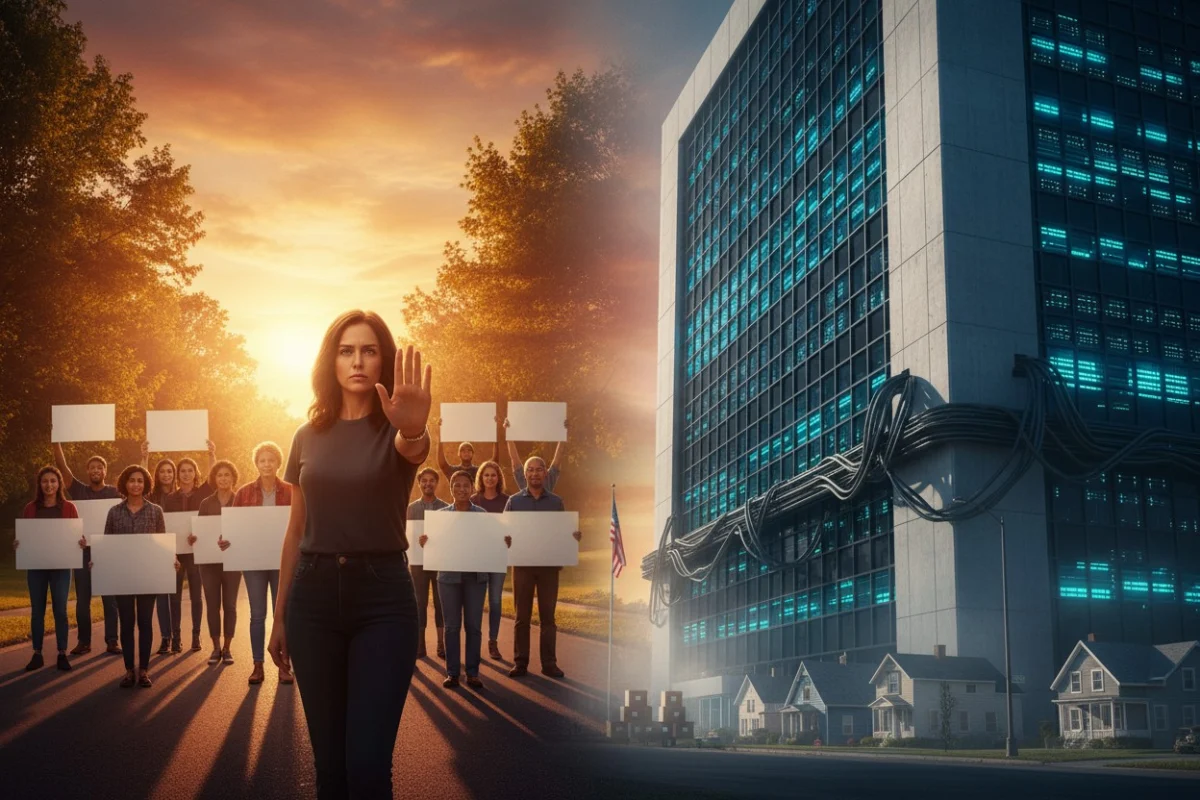
In the quiet, tree-lined suburbs of Southwest Memphis and the sprawling, arid plains of rural Texas, a new form of industrial infrastructure is rising—and it is meeting a wall of fierce, bipartisan resistance. These are not factories in the traditional sense, nor are they power plants, yet they are consuming the resources of both at an unprecedented scale. They are "hyperscale" data centers: the physical engines of the artificial intelligence boom.
Once welcomed as quiet, high-tech neighbors that promised tax revenue and a "digital-age" identity for local economies, these server farms have rapidly transformed into a combustible national issue. As the demand for AI computation explodes, the massive footprint of these facilities—both in terms of electricity consumption and water usage—has stripped away their anonymity, forcing a confrontation between the world’s most powerful tech conglomerates and the citizens living in their shadow.
The Chronology of a Backlash
The trajectory of this movement can be traced back to the post-pandemic surge in AI investment. In 2023 and 2024, data centers were still being courted with open arms by state governments hungry for the "Silicon Valley" stamp of approval. Economic development boards competed to offer the most generous tax abatement packages, viewing these facilities as the bedrock of the future economy.
However, the tide turned abruptly in 2025. As construction intensified, residents began to notice the tangible side effects: the persistent low-frequency hum of cooling fans, the massive transmission lines cutting through rural landscapes, and, most alarmingly, the steady upward creep of their utility bills.
By the first quarter of 2026, the sentiment had shifted from curiosity to organized rebellion. Data from Data Center Watch reveals that the resistance is no longer localized; at least 75 major projects, representing a staggering $130 billion in planned capital expenditure, were stalled or outright rejected by local planning boards during that three-month window alone. This is not a fringe movement led by activists; it is a cross-party coalition of farmers, suburban families, and small-business owners who have found common ground in their opposition to the "digital monoliths" occupying their communities.
The Economic Mismatch: Employment vs. Infrastructure
At the heart of the growing political firestorm is a fundamental disconnect between the promises made by tech developers and the reality experienced by local municipalities.
Developers consistently market these projects as job-creation engines. However, industry data tells a different story. Once the initial construction phase—which utilizes temporary labor—concludes, a hyperscale data center requires remarkably few permanent personnel. Depending on the scale, these facilities typically support only 20 to 50 full-time staff. They are, in essence, "warehouses for servers," not engines of job growth.
While the employment benefit remains negligible, the fiscal impact is profound. In states like Virginia and Georgia, aggressive tax incentives have resulted in over a billion dollars in lost public revenue. Critics argue that this money, which could have been reinvested in crumbling school infrastructure or local road networks, has effectively been gifted to multinational corporations.
Furthermore, the "cost-shifting" phenomenon has become a primary grievance. As these data centers demand vast amounts of power, the local utility grids often require massive, expensive upgrades. In many jurisdictions, residential ratepayers are seeing their own electricity bills climb to subsidize the infrastructure required to support the tech giants’ operations. As one Massachusetts council member famously lamented during a heated zoning hearing: "We don’t want to be in a situation where utility bills are going up because we are subsidizing the wealthiest corporations. If these companies are not planning to share their profits with our families, why should we be forced to share their expenses?"
Supporting Data: The Weight of Resource Consumption
The physical requirements of AI are staggering, and the numbers are fueling legitimate alarm among experts. Ben Green, a researcher at the University of Michigan, has been at the forefront of documenting the strain these facilities place on the nation’s resources. According to his findings, the exponential growth of data center demand could consume between 10 and 15 percent of the total U.S. electricity supply within just a few years.
Water usage is the second, perhaps more critical, pillar of the crisis. In drought-prone regions like Texas, where agriculture remains a vital economic driver, data centers compete directly with farmers for limited water supplies. Estimates suggest that by 2030, the cooling systems of these facilities could consume upwards of 400 billion gallons of water annually. For a farmer in a drought-stricken county, the sight of millions of gallons of water being evaporated to keep servers cool—while their own crops wither—is not just an economic concern; it is a moral outrage.
Official Responses and the Corporate "Charm Offensive"
Caught off guard by the intensity of the public backlash, tech firms have launched an unprecedented "charm offensive" to salvage their reputation and their multi-billion-dollar investments.
The strategies vary by region and company. Oracle has pivoted toward hyper-local philanthropy, sponsoring food pantries and funding community dinosaur parks in New Mexico to soften their corporate image. Meta has invested heavily in emotive, "feel-good" advertising campaigns designed to convince residents that their local data center is a gateway to the future. Microsoft has taken a more policy-focused approach, pledging in several key markets to cease seeking new tax breaks in an attempt to appease fiscal conservatives.
However, for many residents, these gestures feel like "too little, too late." The deep-seated distrust stems from a history of non-disclosure agreements (NDAs) and opaque deal-making between tech lobbyists and local government officials. Many communities only learned of the size and scale of these projects after the ink had dried on zoning approvals, leading to a pervasive feeling that the process was rigged from the start.
Implications: A Path Forward
As the conflict moves from zoning boards to the ballot box, the political landscape is shifting. Analysts suggest that the "third rail" of the upcoming election cycle will not be the existence of the data centers themselves, but the integrity of the politicians who facilitate them.
To prevent further electoral volatility, policy experts have proposed four pillars of reform:
- Dedicated Rate Classes: Data centers should be placed in a specific utility rate class with "take-or-pay" provisions. This ensures that the corporations, not the residents, bear the cost of the capacity they reserve.
- Automatic Clawbacks: If a company fails to meet its promised economic targets (such as job creation or tax contributions), the state should have the power to automatically claw back tax concessions.
- Mandatory Sustainability Standards: Instead of offering subsidies, states should trade speed of approval for strictly enforced sustainability benchmarks, such as closed-loop water recycling and 100% renewable energy commitments.
- End of NDAs: The practice of using non-disclosure agreements to prevent public debate on major infrastructure projects must end. Transparency is the only mechanism that can restore public trust.
The Ballot Box Beckons
The future of the American AI footprint is now being decided in town halls across the country. Industry insiders acknowledge that data centers are the backbone of the next economy, but they also concede that the current model of rapid, unchecked expansion is unsustainable.
The Georgia Public Service Commission provided a blueprint for how this issue can destroy a political career: by ignoring the concerns of ratepayers and favoring the interests of tech giants, commissioners found themselves facing a tidal wave of public anger that redefined their political futures.
The lesson for leaders is clear: the era of "easy wins" through secret deals is over. As the battle shifts to the ballot box, the politicians who survive will be those who recognize that they serve their constituents, not the corporations. The data center may be the most advanced machine ever built, but it is not more powerful than the voter who realizes that the cost of progress is being extracted directly from their own backyard.