By Kari McBride
The human experience is often measured by monumental milestones—the first steps of a child, the graduation ceremony, the professional breakthrough. We are conditioned to believe that life’s meaning is tethered to these cinematic events. Yet, for those navigating the relentless, often invisible landscape of chronic pain, life is rarely defined by grand spectacles. Instead, it is defined by the endurance of the intervals between them.
For many, the diagnosis of chronic illness or the onset of persistent pain acts as a sudden, unwelcome shift in perspective. It narrows the world, forcing a re-evaluation of what constitutes a "good" day. As I have navigated the complexities of life with chronic pain—both my own and my daughter’s—I have come to realize that the most profound moments of grace are not found in the spotlight, but in the quiet, fleeting instances of observation that we so often overlook.
The Chronology of Resilience: From First Steps to Daily Maintenance
The trajectory of my daughter’s life, much like my own, has been punctuated by long, grueling stretches of medical intervention. I remember her first steps as if they were yesterday, not because they were easy, but because they were earned. After 18 months defined by a blur of clinical appointments, sterile hospital rooms, and the repetitive, exhausting cycle of physical therapy, those first steps were a reclamation of agency.
Watching her swagger and sway down the hallway was a moment of overwhelming, visceral joy. At the time, well-meaning observers would often offer the platitude: "Savor this moment; it won’t happen again." I believed I understood the weight of that advice. I thought "savoring" meant clutching the memory tightly, fearing its inevitable transition into the past.
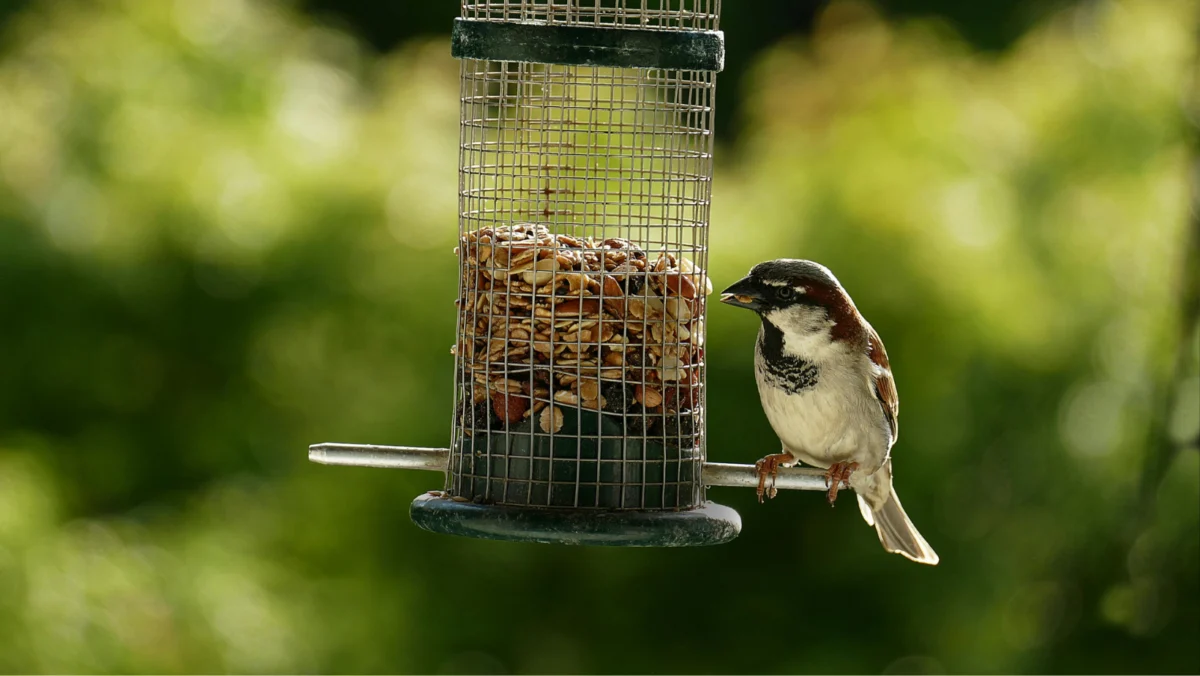
However, as my daughter grew into her teenage years, the nature of our challenges evolved. The "firsts" became fewer, replaced by the persistent, unglamorous reality of chronic pain management. It was during a recent, mundane negotiation over the placement of bird feeders that I realized how much my definition of "savoring" had been incomplete.
What began as a logistical chore—an addition to an already overburdened to-do list—morphed into a lifeline. We installed feeders in both the front and back yards, expecting little more than the responsibility of refilling seeds. Instead, these feeders became portals to a different way of existing.
The Science of Stillness: Supporting Data and Mindfulness
The shift in my perspective mirrors a growing body of research in behavioral psychology regarding the impact of "micro-moments" on chronic pain patients. While clinical medicine focuses on the mitigation of physical symptoms, environmental psychology suggests that "soft fascination"—a state of effortless attention, such as watching nature—can significantly reduce the cognitive load of persistent pain.
Studies conducted by the University of Exeter and other institutions have indicated that regular exposure to nature, even in small, localized doses, can lower cortisol levels and dampen the sympathetic nervous system’s "fight or flight" response. When I stand by the window, watching a dove descend onto the grass or a mockingbird hop with characteristic defiance along the edge of the feeder, my brain is momentarily diverted from the internal noise of physical discomfort.
This is not a cure. The pain does not vanish; the underlying pathology remains unchanged. However, the experience of the pain shifts. By intentionally observing the birds, I am engaging in a form of active mindfulness. I am choosing to stand still, to breathe, and to notice. In those specific, fleeting instants, the tight, suffocating grip of chronic pain loosens, if only by a fraction.
Official Perspectives: The Role of Pacing and Acceptance
Medical professionals specializing in chronic pain management often emphasize the importance of "pacing"—a strategy designed to help patients manage their energy and symptoms without crashing. But beyond the physical pacing of activity lies the psychological component of acceptance.
Dr. Elena Vance, a specialist in pain psychology, notes that "patients who integrate moments of sensory appreciation into their daily routine often report a higher quality of life, even when their objective pain scores remain stable. It is the transition from ‘pain-avoidance’ to ‘pain-living’ that makes the difference. Recognizing that you can exist simultaneously with pain and with beauty is a foundational pillar of modern pain management."
For my daughter and me, the bird feeder has become a physical manifestation of this pacing. It requires no physical exertion, yet it demands a mental commitment to pause. It is a daily acknowledgment that we are allowed to stop, to breathe, and to bear witness to the world outside our own immediate struggle.
Implications: Redefining "Savoring" in a Life of Pain
The implications of this shift are profound for anyone living with long-term health challenges. We are often told that if we cannot "fix" the pain, we have failed. This narrative is not only inaccurate but detrimental to mental health.
When the birds fly away—as they inevitably do—and reality draws me back inward, I am not defeated. The brief reprieve acts as a psychological anchor. It provides a point of reference: I know that a moment of peace is possible, and therefore, I know it is possible to survive until the next one.
Savoring is no longer about clinging to a "first" or a major achievement. It is about the deliberate act of noticing the small, transient details of existence. It is the realization that life is not just the sum of its triumphs, but the collection of its quietest, most unremarkable intervals.
Conclusion: The Quiet Choice to See
There is a distinct power in choosing to notice. In a life shaped by chronic pain, the days are often heavy with the weight of what we cannot do. By turning our attention to the mourning dove or the mockingbird, we choose to focus on what is happening, rather than what is missing.
These moments won’t all be as momentous as a child’s first steps. They are fragile, they are fleeting, and they pass quickly—unless we choose to stop and see them. Maybe this is what it truly means to savor a moment: not to hold it frozen in time, but to allow it to touch us while it lasts.
As I watch the feeder today, I realize that while I cannot control the pain, I can control the pause. And in that pause, I find the strength to continue. The birds will return, the seasons will change, and in the quiet, I will be waiting, noticing, and—in the truest sense—savoring.