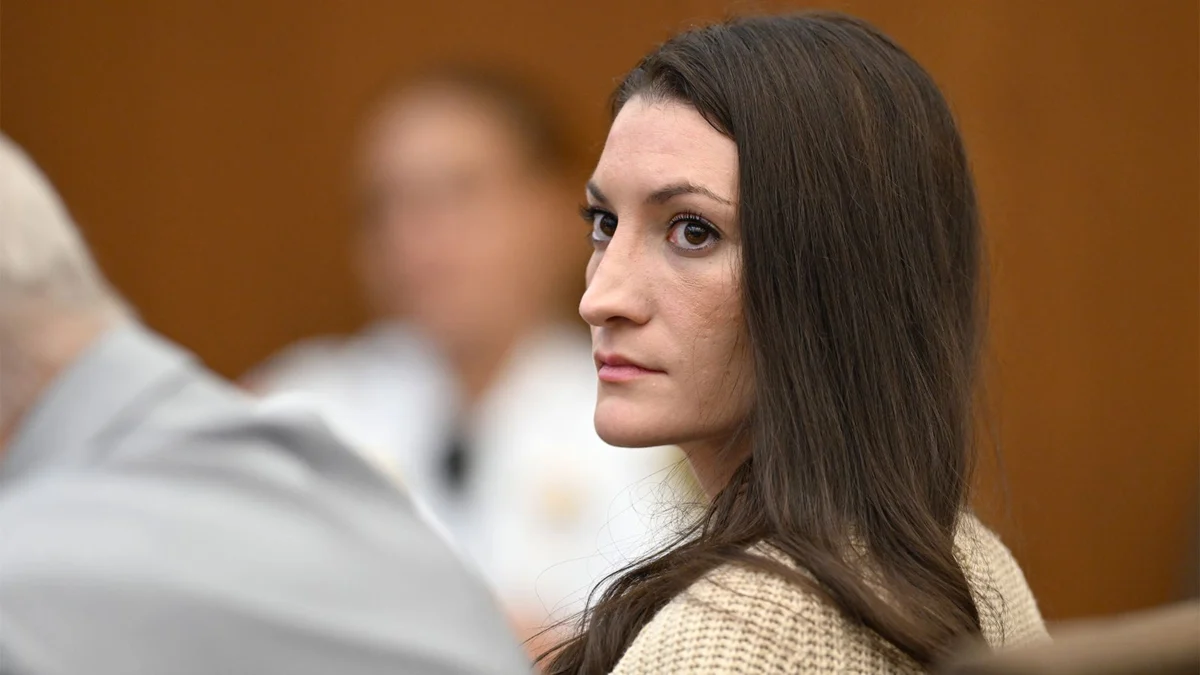
The high-stakes murder trial of Lindsay Clancy, the former Massachusetts labor and delivery nurse accused of strangling her three young children, entered a pivotal phase this week. As the defense rested its case on Friday, the courtroom proceedings pivoted to a tense battle of psychiatric experts, marking the beginning of the trial’s final act.
Clancy, 36, stands accused of the January 2023 murders of her children—5-year-old Cora, 3-year-old Dawson, and 8-month-old Callan. The tragedy, which unfolded in the quiet coastal town of Duxbury, Massachusetts, has sparked a national conversation about the intersection of severe mental health crises, motherhood, and the legal definition of criminal responsibility. While the defense maintains that Clancy was suffering from an acute, undiagnosed episode of postpartum psychosis, the prosecution argues that the acts were a calculated, premeditated choice.
The Tragedy in Duxbury: A Chronology of Events
The events of January 24, 2023, began as a seemingly mundane day in the Clancy household. Prosecutors allege that Lindsay Clancy orchestrated a sequence of events to ensure her husband, Patrick Clancy, would be out of the home. According to the timeline presented in court, she sent her husband to pick up takeout and medication, creating a narrow window of opportunity.
During that time, Clancy allegedly strangled all three of her children in the basement of their home. Following the act, she attempted to end her own life by jumping from a second-story window. The fall left her paralyzed from the waist down. When first responders arrived, they discovered the children; despite emergency efforts, they could not be saved.
In the months leading up to the incident, the defense has painted a picture of a woman struggling with an increasingly deteriorating mental state. Family members testified to the jury about Clancy’s frantic attempts to seek help, describing a series of appointments with psychiatrists and an evolving regimen of medications to treat severe anxiety, insomnia, and depression. The defense contends that this medical history is not merely a background detail, but the key to understanding the total collapse of her cognitive functions on the day of the killings.
The Expert Testimony: A Question of "Altruistic" Filicide
The climax of the defense’s case arrived with the testimony of Dr. Phillip Resnick, a renowned forensic psychiatrist who previously served as an expert witness in the infamous 2006 trial of Andrea Yates—a Texas mother who drowned her five children.
Dr. Resnick’s testimony provided the jury with a harrowing, clinical look into what he categorized as "altruistic filicide." He testified that upon interviewing Clancy four months after the killings, he found her to be suffering from severe depression and symptoms consistent with bipolar disorder. Most critically, he identified the presence of auditory hallucinations—specifically, a voice commanding her to kill her children.
"It was almost like she was a puppet and someone else was pulling the strings," Resnick told the court. He argued that Clancy’s psychological state had reached a point where she believed her children would suffer if they were left behind or if she were taken away from them. In a state of profound delusion, she convinced herself that killing them was an act of mercy, a way to ensure they would "go to heaven" together. According to Resnick, this was not an act of hostility, but a distorted, psychotic attempt to save them from a perceived greater tragedy.
The Prosecution’s Rebuttal: Challenging the Psychosis Narrative
The prosecution has mounted an aggressive rebuttal, aiming to dismantle the defense’s claim of insanity. Their strategy hinges on the assertion that while Clancy was undeniably suffering from a major depressive episode, she remained fully cognizant of her actions and capable of discerning right from wrong.
To counter Dr. Resnick, the Commonwealth called Dr. Avram Mack, a forensic psychiatrist. Dr. Mack’s testimony offered a starkly different interpretation of Clancy’s state of mind. While he acknowledged the severity of her depression, he explicitly testified that he found no evidence of mania or hypomania—the hallmarks of bipolar disorder—nor did he find that her mental state reached the clinical threshold of psychosis.
Dr. Mack emphasized that even if one accepts the premise that Clancy heard voices, the existence of psychosis does not automatically negate criminal culpability. "There’s no reason that psychosis in and of itself inhibits a person’s ability to know right from wrong," Mack stated. He pointed out that, by her own account, Clancy remembered the act of strangling her children and consciously spoke to them, saying "go to God," as she did so. The prosecution argues that this demonstrates a level of intent and awareness that contradicts the "puppet" narrative provided by the defense.
Supporting Data: The Complexities of Postpartum Mental Health
The medical community acknowledges that postpartum psychosis is a rare but devastating condition, occurring in approximately 1 to 2 per 1,000 births. Unlike postpartum depression, which is characterized by sadness and anxiety, postpartum psychosis often involves a complete break from reality.
The trial has highlighted the difficulty of treating these conditions within a medical system that often struggles to provide intensive, long-term psychiatric care. The defense’s evidence includes extensive medical records showing that in the weeks before the tragedy, Clancy was seeing doctors and adjusting medications. The core question for the jury is whether the medical system failed to identify the warning signs of psychosis, or whether the symptoms were successfully masked or misinterpreted by medical professionals at the time.
Implications for the Legal System
The case of Commonwealth v. Lindsay Clancy is poised to become a landmark study in the application of the "insanity defense" in cases of parental filicide. The legal standard for criminal responsibility in Massachusetts requires the jury to determine if the defendant, due to mental disease or defect, lacked the substantial capacity to appreciate the wrongfulness of their conduct or to conform their conduct to the requirements of the law.
If the jury accepts the defense’s argument, it would suggest that the legal system is evolving to better account for the severe, often invisible, biological and psychological shifts that occur during and after childbirth. If they reject it, it reinforces the state’s position that even in the face of profound mental illness, individuals must be held accountable for acts of violence.
The emotional weight of the trial is palpable. Jurors have been tasked with reconciling the image of a devoted mother and a dedicated nurse with the horrific nature of the crimes committed. As closing arguments approach next week, the jury will be forced to weigh the testimony of the forensic experts against the actions taken on that January day.
The outcome will carry immense weight, not only for the Clancy family but for the medical and legal communities at large. It forces a difficult inquiry: at what point does a medical crisis become a legal defense, and how does society hold space for the tragedies that defy simple explanation?
If you or someone you know is struggling with mental health or experiencing thoughts of suicide, help is available. You can call or text 988 to reach the Suicide & Crisis Lifeline in the United States, which provides 24/7, free, and confidential support.