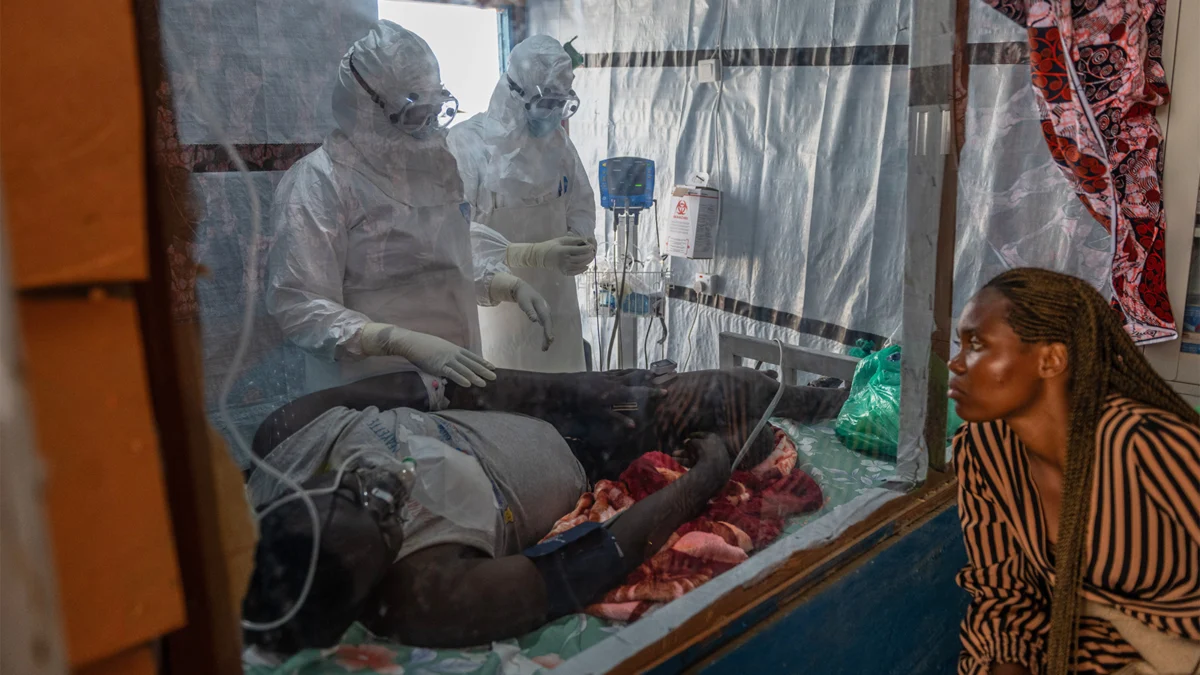
The Democratic Republic of the Congo (DRC) is currently grappling with a public health emergency of harrowing proportions. An Ebola outbreak, characterized by its extraordinary speed and reach, is tearing through the country’s vast eastern provinces. According to the Africa Centres for Disease Control and Prevention (Africa CDC) and local health authorities, the epidemic has not yet reached its apex, with experts warning that the true scale of the crisis could be as much as three times higher than currently reported figures.
As of the latest briefings, the outbreak has claimed 2,516 lives out of 5,290 confirmed cases. While these numbers are staggering, they are likely a significant undercount. Epidemiologists estimate that only 30% to 40% of actual cases are being captured by current surveillance systems. This failure to map the virus’s movement, combined with the unique characteristics of the specific strain involved, has placed the region on a trajectory to potentially surpass the deadliest Ebola crisis in history—the 2014–2016 West Africa epidemic, which resulted in over 11,000 deaths.
Main Facts: A Crisis of Unseen Proportions
The current situation in the DRC is defined by its velocity. By the 13th week following its official declaration, the outbreak had already generated ten times the number of cases and seven times the number of deaths compared to the corresponding period during the devastating 2014–2016 West African crisis.
A critical complicating factor is the strain of the virus: the Bundibugyo ebolavirus. Unlike the Zaire strain, which is more commonly associated with high-profile outbreaks, the Bundibugyo variant currently lacks approved vaccines or targeted medical treatments. Furthermore, the symptoms of this strain are often milder, which presents a double-edged sword: while patients may not suffer the same immediate, violent decline as with other strains, the relative lack of severity leads many to dismiss the illness, delay seeking care, or inadvertently continue their daily routines while infectious.
The geographical footprint of the outbreak is expanding rapidly. What began as a localized concern in three health zones has metastasized into a regional crisis, now spanning 56 health zones across six provinces. Recent reports confirm that the virus has reached Bas-Uele province, a region previously untouched by the current outbreak, signaling that the virus continues to outpace containment efforts.
Chronology: The Silent Spread
While health authorities declared the outbreak on May 15, retrospective analysis suggests that the virus had been circulating in the shadows long before the official announcement. Experts now believe the current wave began in the mining town of Mongbwalu as early as February. This three-month gap between the likely emergence of the virus and the public health response provided the pathogen with a critical window to seed itself across the region’s mobile, often displaced, population.
The timeline of the outbreak highlights the devastating cost of delayed detection:
- February: Estimated emergence of the Bundibugyo virus in the mining community of Mongbwalu.
- May 15: Official declaration of the Ebola outbreak by the DRC government.
- Weeks 1–13: A period of unprecedented acceleration, with infection rates dwarfing all historical precedents in the region.
- Present Day: The virus continues to breach new provincial borders, even as pockets of progress, such as in South Kivu—which has seen no cases for 79 days—provide rare glimpses of successful containment.
Supporting Data: The Breakdown of Surveillance
The efficacy of an Ebola response is traditionally measured by the percentage of cases that originate from known contacts. When an outbreak is effectively contained, 90% to 95% of new cases should be identified through contact tracing. Currently, less than 10% of new cases in the DRC are coming from known contact lists.
The Contact Tracing Gap
The Africa CDC has highlighted a catastrophic shortfall in surveillance. While official data might suggest a nominal contact tracing rate of 82% based on those actively followed, this figure is deceptive. Based on the expected average of 60 contacts per confirmed case, the total volume of contacts for the 1,663 cases recorded in a recent three-week window should have been 99,780. Instead, responders reached only a fraction of that number. When calculated against the true expected volume, the actual contact tracing rate stands at a dismal 16%.
Community Mortality
Perhaps the most alarming statistic is the location of deaths. On August 17, an astonishing 97% of reported Ebola deaths occurred in the community rather than in specialized treatment centers. This indicates that the vast majority of patients are dying at home, likely without medical intervention and potentially exposing family members and neighbors to the virus before their passing. Despite this trend, only 20% of health alerts are currently generated from within the community, suggesting a deep-seated disconnect between the public and health responders.
Official Responses and Strategic Challenges
The response effort is hamstrung by a complex web of environmental, political, and social obstacles. The eastern DRC is home to a highly mobile population, frequently displaced by ongoing armed conflict. This instability makes it nearly impossible to maintain consistent health monitoring or vaccination campaigns.
Yap Boum, PhD, MPH, the head of emergency preparedness and response at the Africa CDC, has been vocal about the systemic failures currently hindering the response. The lack of community trust remains a primary hurdle. Misinformation—fueled by the belief that the outbreak is a fabrication or the result of external interference—has led many to shun medical authorities. In some instances, families prefer traditional medicine, or they fear the harsh reality of isolation wards, especially given that early symptoms of Bundibugyo may mirror less lethal, common illnesses.
Furthermore, the case fatality rate (CFR) provides a stark illustration of the uneven quality of care. While the national average stands at 46.7%, the rate in North Kivu—a densely populated province—is a harrowing 68.2%. This discrepancy suggests that where a patient lives dictates their likelihood of survival, with infrastructure and local security being the deciding factors.
Implications: The Path Forward
The situation in the DRC is a grim reminder of the fragility of global health security. The rapid expansion of the Bundibugyo virus, combined with the lack of therapeutic countermeasures, necessitates a radical shift in strategy.
Bridging the Trust Deficit
Without a concerted effort to engage local community leaders, the death toll will continue to climb. The high rate of community deaths suggests that the "treatment center" model of response is failing to reach the people who need it most. Mobile clinics, community-based surveillance, and a massive increase in public education regarding the specific, milder symptoms of this strain are essential to encourage early reporting.
Surveillance and Containment
The 16% contact tracing rate is a "red alert" for international health agencies. To bring the outbreak under control, authorities must move away from reactive tracing and toward a more aggressive, predictive mapping model. This requires increased resources to track the migration of people in conflict-prone areas and the deployment of more rapid-response teams capable of operating in volatile environments.
The Need for Scientific Investment
The absence of a vaccine for the Bundibugyo strain is a significant scientific vulnerability. The global medical community must accelerate research into diagnostic tools and therapeutic interventions specific to this virus. Relying on protocols designed for the Zaire strain has proven insufficient in both medical efficacy and public perception.
As the outbreak continues to move at an unprecedented pace, the international community is watching with bated breath. The data provided by the Africa CDC serves as both a map and a warning: the window to contain this disaster is closing. Without a fundamental change in how the response is structured—shifting from centralized containment to decentralized, community-integrated care—the current crisis risks becoming a defining tragedy of modern public health. The people of eastern Congo, already weary from years of conflict, now face a silent, invisible enemy that is proving far more difficult to defeat than any they have faced before.