











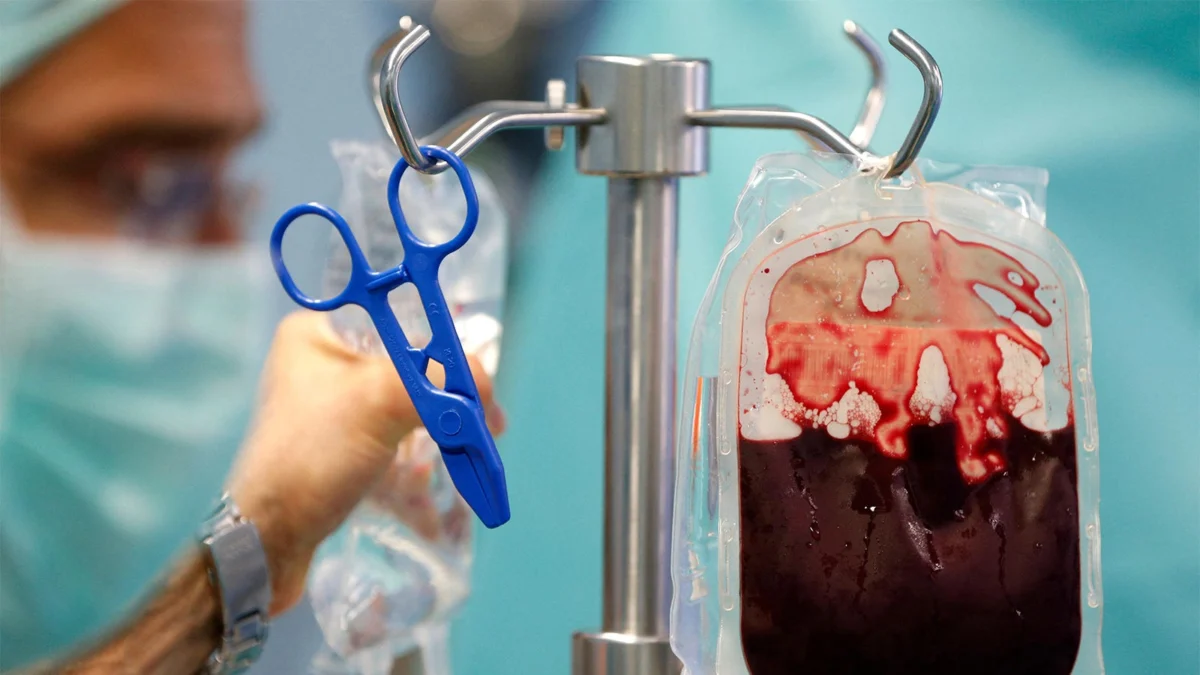
The safety of the global blood supply is a cornerstone of modern medicine. Every year, millions of life-saving transfusions are performed worldwide, relying on rigorous screening protocols designed to detect infectious agents like HIV, hepatitis, and syphilis. However, a growing body of scientific inquiry is beginning to challenge our understanding of what might be lurking in the plasma. Recent research suggests that amyloid-beta—the misfolded protein hallmark of Alzheimer’s disease and cerebral amyloid angiopathy (CAA)—could potentially be transmissible through blood transfusions, sparking a complex debate among neurologists, public health officials, and hematologists.
The Nature of the Concern: Protein Misfolding and "Seeds"
At the center of this controversy is the concept of "seeded" protein misfolding. For decades, the medical community has recognized that certain neurodegenerative diseases, most notably prion diseases like Creutzfeldt-Jakob disease (CJD), are caused by infectious, misfolded proteins. These proteins act as templates, or "seeds," that induce healthy proteins in the host to adopt the same abnormal, disease-causing shape.
In a recent Lancet Viewpoint article, a team led by John Collinge, MD, of University College London, posited that amyloid-beta may behave in a manner analogous to prions. If amyloid-beta seeds can be introduced into the bloodstream through blood products, they might potentially travel to the brain, triggering a chain reaction of protein aggregation that could lead to cerebral amyloid angiopathy (CAA) or, potentially, Alzheimer’s-related pathology decades later.
A Chronology of Discovery: From Cadavers to Blood Banks
The hypothesis that amyloid-beta could be transmitted iatrogenically—through medical procedures—did not emerge in a vacuum. It is the result of years of retrospective investigation into historical medical practices.
2015: The First Warning Signs
The scientific community was first alerted to the possibility of amyloid transmission in 2015, when Collinge and his team reported that patients who had been treated with cadaver-derived human growth hormone (c-hGH) in childhood had developed Alzheimer’s-like pathology. These patients had died of iatrogenic CJD, but autopsies revealed the presence of amyloid-beta deposits that were not explained by the CJD itself, suggesting the growth hormone preparations were contaminated with amyloid "seeds."
2017–2023: Establishing the Pattern
Following the 2015 report, researchers identified similar findings in patients who had undergone neurosurgical procedures involving cadaveric dura mater—a tissue membrane often used in brain surgery. These patients developed early-onset CAA, further reinforcing the idea that amyloid-beta could be transmitted via medical tools or biological products.
2023: The Scandinavian Epidemiological Signal
The conversation shifted from rare surgical accidents to the broader blood supply in 2023. A landmark retrospective study involving over 1 million patients in Sweden and Denmark examined the health outcomes of individuals who received red blood cell transfusions. The researchers discovered a statistically significant association: recipients of blood from donors who later developed multiple spontaneous intracerebral hemorrhages (ICH)—a common symptom of CAA—were at a higher risk of developing spontaneous ICH themselves.
2024: The Evidence Deepens
Building on these findings, Collinge’s team published a case series in 2024 detailing children who had been treated with growth hormone contaminated with amyloid-beta. These patients exhibited brain changes consistent with Alzheimer’s disease, providing further evidence that these proteins could indeed act as transmissible agents.
Supporting Data and Biological Plausibility
The argument for the transmissibility of amyloid-beta rests on the biological plausibility of protein seeding. Unlike viruses or bacteria, which have genetic material that can be easily detected via PCR or antibody tests, proteins are native to the human body. Detecting a "misfolded" version of a common protein within a complex biological fluid like blood is a formidable analytical challenge.
The Scandinavian study serves as the primary piece of epidemiological evidence. While the study cannot confirm a definitive causal link—because brain autopsies were not performed on the recipients to confirm the presence of CAA—the correlation is striking. Critics of the theory, however, point to the "small signal" of risk. They argue that if blood transfusion were a significant driver of Alzheimer’s or CAA, the global prevalence of these conditions would be vastly different, or we would see clusters of disease among individuals with high transfusion histories.
Official Responses and the Scientific Divide
The medical community is currently divided on how to interpret these findings. While the potential for risk is acknowledged as a "justifiable concern," there is significant pushback regarding the public health implications and the potential for unnecessary panic.
The Proponents of Caution
Dr. Collinge and his co-authors emphasize that while the risks are currently undefined, they are too significant to ignore. "Rigorous science will help find answers, but in the meantime, public health officials and blood transfusion services are faced with difficult decisions and urgently require further data," the team noted. They argue that the priority must be the development of "feasible and accurate screening assays" that could identify amyloid-beta seeds in blood donations.
The Skeptics’ Perspective
Other experts warn against drawing premature parallels between amyloid-beta and prions. Bart De Strooper, MD, PhD, of University College London, has been a vocal critic of the alarmist tone that some have attached to the research.
"To make any parallels with prions is in my view premature and risks unwarranted public fear without the evidence to back it up," De Strooper stated via the U.K. Science Media Center. He argues that the evidence remains largely circumstantial and that the risk, if it exists at all, is likely infinitesimal. He warns that suggesting blood donations might be unsafe could lead to a decline in blood donation rates, which would pose a much more immediate and severe threat to public health than the theoretical risk of amyloid transmission.
Susan Kohlhaas, PhD, of Alzheimer’s Research U.K., echoes this sentiment of measured inquiry. While she acknowledges the existence of a "knowledge gap," she notes that the primary goal should be systematic, controlled research to establish the parameters of risk, rather than policy changes that are not yet supported by clinical data.
Implications for Public Health and Future Research
The debate over amyloid-beta transmission carries profound implications for how we view neurodegenerative diseases and blood safety. If it is eventually proven that these proteins can be transmitted via transfusion, it would fundamentally change the definition of Alzheimer’s and CAA from strictly genetic or idiopathic conditions to potentially iatrogenic ones.
Strategic Priorities
For researchers, the path forward is clear but difficult:
- Developing Detection Technology: Current blood screening tests are designed for pathogens. New assays must be developed that can detect the specific misfolded conformation of amyloid-beta.
- Large-Scale Longitudinal Studies: To validate the Scandinavian findings, researchers need to track large cohorts of transfusion recipients over decades, using modern neuroimaging (like PET scans) to look for early markers of amyloid deposition.
- Risk-Benefit Analysis: Public health officials must weigh the theoretical risk of protein transmission against the life-saving benefits of blood transfusions. In many cases, the immediate need for blood is a matter of life or death, while the potential for neurodegeneration is a long-term, slow-developing concern.
The Need for Nuance
The narrative surrounding this issue must be handled with extreme care. The history of medicine is littered with examples where preliminary findings led to mass public anxiety before the full context was understood. The researchers involved in the Lancet Viewpoint are not calling for a halt to transfusions; they are calling for transparency, funding, and a rigorous scientific approach to a question that was, until recently, outside the realm of possibility.
Conclusion
The possibility that Alzheimer’s-related proteins could be transmitted through the blood supply represents a frontier in modern neurology. It challenges our understanding of how neurodegenerative diseases propagate and demands a new level of scrutiny for blood safety. While the evidence to date is suggestive rather than conclusive, it highlights the importance of continued investment in neurobiology and blood science.
For now, the consensus among experts is that patients should not fear life-saving transfusions. The benefits of modern blood banking far outweigh the theoretical, yet-to-be-proven risks of amyloid transmission. However, the "silent seed" hypothesis serves as a vital reminder that our understanding of biology is still evolving, and that the most effective way to protect public health is through rigorous, transparent, and objective scientific inquiry. As the global population ages, and the prevalence of neurodegenerative conditions rises, the answers to these questions will become increasingly central to the future of healthcare.