








ALTADENA, CA — In a landmark move aimed at addressing the intersecting crises of youth mental health and digital safety, Active Minds, the nation’s premier nonprofit for youth mental health advocacy, has announced a massive national expansion of its programming. Bolstered by a $5 million grant from Google.org, the initiative seeks to equip more than 100,000 youth and young adults across the United States with the tools necessary to navigate a tech-driven world while fostering emotional resilience.
The announcement, made on June 12, 2026, marks a pivotal shift in how mental health support is delivered to Gen Z and Gen Alpha. Rather than traditional top-down approaches, this initiative focuses on youth-led co-creation, allowing students to design the very digital safety solutions and community wellbeing strategies they use.
I. Main Facts: A $5 Million Catalyst for National Change
The partnership between Google.org and Active Minds represents one of the largest private-sector investments in peer-led mental health programming to date. At its core, the initiative is designed to scale Active Minds’ proven model of student advocacy to 154 high schools nationwide. The primary objective is to reach 100,000 young people by 2028, providing them with the "mental health literacy" required to manage the pressures of a digital-first existence.
Key components of the expansion include:
- The Active Minds Program Fund: A dedicated resource to ensure that under-resourced schools, rural communities, and organizations serving youth of color can implement high-quality mental health programming without financial barriers.
- Digital Safety & AI Integration: Specialized curriculum focused on the responsible use of emerging technologies, including generative AI, and the development of "foundational digital safety skills."
- Peer-to-Peer Networks: Strengthening the infrastructure that allows students to support one another, reducing the stigma associated with seeking help and creating a "culture of care" within educational environments.
The initiative acknowledges a fundamental reality of modern adolescence: technology is no longer an external tool but a core environment where young people learn, socialize, and build their identities. By integrating mental health advocacy with digital literacy, the program aims to close the gap between the rapid evolution of technology and the emotional support systems available to those who use it most.
II. Chronology: From Grassroots Advocacy to National Scale
The journey toward this national expansion began with Active Minds’ long-standing commitment to changing the culture around mental health. Founded by Alison Malmon in 2003 following the suicide of her brother, the organization has grown from a single campus chapter to a national movement.
The partnership with Google.org evolved through a shared recognition that the digital landscape was becoming a primary stressor for youth. Throughout 2024 and 2025, pilot programs were tested to see how digital wellbeing could be integrated into standard mental health curricula.
The timeline reached a critical juncture in early 2025 with the devastating Eaton Fire in California. The disaster served as a stark reminder of how community trauma—both physical and emotional—can be amplified by digital connectivity. In the wake of the fire, students in the Pasadena Unified School District (PUSD) became a focus group for localized resilience.
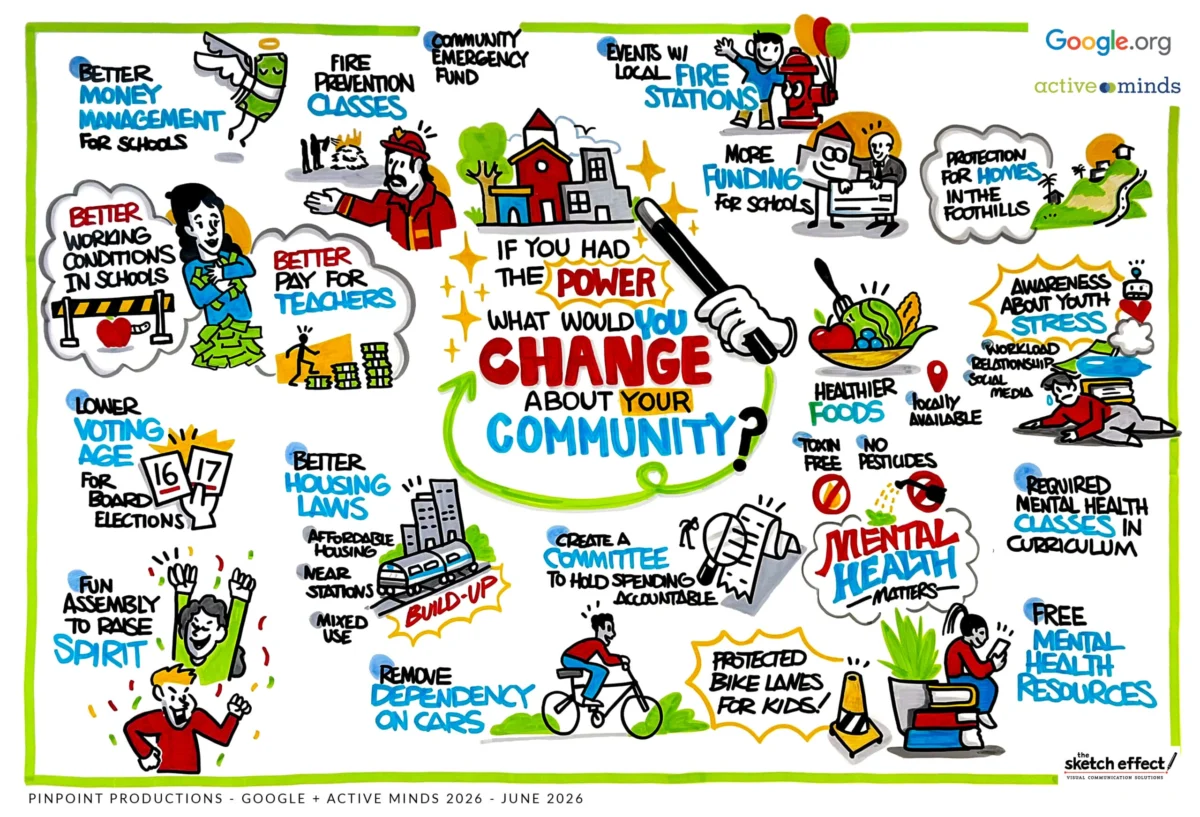
On June 12, 2026, the official launch event took place in Altadena, CA. The event was not merely a press conference but an interactive workshop. High school students collaborated with local artists to create a live mural depicting their community’s needs. This workshop served as a "proof of concept" for the national rollout, demonstrating how student voices could directly inform policy and programming. The ideas generated during this session were immediately presented to a panel of industry leaders and policymakers, setting a new standard for student-led advocacy.
III. Supporting Data: Quantifying the Impact
The scale of this initiative is supported by rigorous data and a strategic allocation of resources. The $5 million grant from Google.org is specifically earmarked to overcome the "resource gap" that often prevents mental health services from reaching the most vulnerable populations.
Target Demographics and Reach:

- 154 High Schools: The program will target a diverse range of schools, prioritizing those in "mental health deserts"—areas where professional psychiatric services are scarce.
- 100,000 Youth: The 2028 goal of 100,000 equipped individuals is part of a broader "1,000,000 by 2030" vision held by Active Minds.
- Community Diversity: A significant portion of the Program Fund is reserved for rural communities and Title I schools, where budget constraints often relegate mental health to a secondary priority.
The Resilience Metric:
Research cited by Active Minds suggests that peer-led interventions are up to 60% more effective in reaching marginalized youth than traditional clinical outreach. By training "peer ambassadors," the program creates a multiplier effect. Each trained student is estimated to influence at least ten of their peers, creating a self-sustaining ecosystem of support.
Digital Safety Indicators:
With the rise of AI, 74% of teenagers report feeling overwhelmed by the pace of technological change. The Google-supported curriculum addresses this by focusing on "agency"—the belief that a user has control over their digital environment. Data from pilot phases showed a 40% increase in student confidence regarding "responsible AI usage" and "digital boundary setting" after completing the Active Minds modules.
IV. Official Responses: Voices of Leadership
The launch featured a convergence of voices from the nonprofit, corporate, and legislative sectors, all emphasizing the proactive nature of the initiative.
Alison Malmon, Founder and Executive Director of Active Minds, highlighted the necessity of meeting youth where they are. "Youth and young adults are navigating an increasingly complex world where mental health, technology, and connection are deeply intertwined," Malmon stated. "This support from Google.org allows us to significantly expand our work, ensuring that more young people have access to the stories and resources that help them feel seen and supported."
Dr. Megan Jones Bell, Senior Director of Clinical at Google, framed the partnership as a matter of corporate responsibility and proactive protection. "At Google, we believe that child safety and digital wellbeing warrant unique, proactive protections," said Dr. Bell. "By supporting Active Minds to put youth at the center of this movement, we are championing student-led leadership that shifts the paradigm toward proactive empowerment. This gives the next generation the tools they need to confidently navigate and shape a healthy digital future."
Assemblymember John Harabedian (D-Pasadena) spoke to the local impact, particularly regarding the recovery from the Eaton Fire. "The youth of Pasadena Unified have shown immense resilience, but we cannot overlook the compounding pressures they face," Harabedian noted. "This program empowers them to play an active, vital role in building community resilience. I am proud to see California’s future leaders at the forefront of this movement, using their voices to inform the policies that govern our state."
V. Implications: Shaping the Future of Digital Citizenship
The implications of this $5 million expansion extend far beyond the immediate 154 schools. This initiative represents a new blueprint for "Digital Citizenship"—one that treats mental health as a foundational component of technology use rather than an afterthought.
1. Redefining "Safety":
Historically, digital safety focused on blocking "bad" content. The Active Minds/Google approach shifts the focus to "internal safety"—developing the emotional regulation and critical thinking skills needed to handle the "good, the bad, and the complex" of the internet. This shift is crucial as AI makes the distinction between real and synthetic content increasingly blurred.
2. Decentralizing Mental Health Care:
By empowering students to be the primary advocates, the program alleviates the burden on overworked school counselors. It creates a "triage" system where students can handle low-level peer support, allowing professionals to focus on acute crises. This model is likely to be studied by educational departments nationwide as a solution to the chronic shortage of mental health professionals in schools.
3. Influencing Tech Policy:
Because the program bridges the gap between youth voices and decision-makers, it creates a feedback loop for tech companies. The insights gained from 100,000 students navigating these tools will likely inform future product development at Google and beyond, leading to platforms that are "safe by design."
4. Long-term Community Resilience:
As seen in the Altadena launch, the integration of disaster recovery with mental health advocacy suggests that "wellbeing" is a holistic endeavor. By teaching students to advocate for their needs in the wake of a wildfire, the program prepares them to advocate for their needs in the face of any future societal or technological disruption.
In conclusion, the partnership between Active Minds and Google.org is more than a financial transaction; it is a strategic alignment aimed at the heart of the modern youth experience. By investing in the agency of young people, the initiative seeks to ensure that the leaders of tomorrow are not just tech-savvy, but emotionally resilient and empowered to build a healthier society, both online and off.