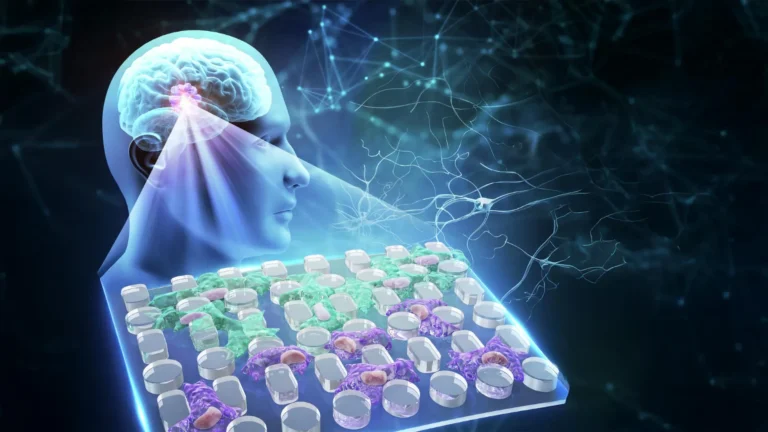
In the persistent battle against oncology’s most elusive adversary—the dormant cancer cell—a team of scientists at ETH Zurich has unveiled a groundbreaking approach that could fundamentally alter how we treat drug-resistant tumors. By utilizing a sophisticated, light-sensitive molecular switch, researchers have successfully forced dormant lung cancer cells out of their protective "sleep" state, rendering them once again susceptible to conventional chemotherapy and targeted therapies.
The Problem: The "Sleeping" Tumor
For decades, clinicians have been baffled by the phenomenon of cancer recurrence. A patient may respond brilliantly to initial chemotherapy, only to see the cancer return months or years later. The culprit is often cellular dormancy. Some cancer cells, sensing the hostile environment created by drug treatments, enter a state of metabolic quiescence. They stop dividing and effectively "hibernate," allowing them to bypass the mechanisms of most anti-cancer drugs, which are designed to attack rapidly proliferating cells.
One of the primary drivers of this dormancy in cancers like non-small cell lung cancer is the presence of stress hormones. When these hormones bind to glucocorticoid receptors within tumor cells, they act as a biological "off" switch for cell division. While these receptors are vital for regulating inflammation and immune response in healthy tissue, their over-activation within a tumor creates a sanctuary for cancer cells to hide. Until now, the challenge has been that disabling these receptors systemically—throughout the entire body—would be catastrophic for a patient’s immune and endocrine health.
Chronology of a Scientific Breakthrough
The path to this discovery was a multi-disciplinary effort, spanning years of collaboration between departments at ETH Zurich.
- Initial Conceptualization: The project began with the identification of glucocorticoid receptors as the "gatekeepers" of cancer dormancy. The team realized that if they could selectively degrade these receptors only within the tumor, they could force the cells to "wake up" and resume division, thereby re-exposing them to treatment.
- Engineering the Switch: Working under the guidance of Professor of Epigenetics and Neuroendocrinology Katharina Gapp, the team turned to the cell’s own protein recycling machinery—the ubiquitin-proteasome system. They aimed to trick the cell into labeling its own glucocorticoid receptors as "waste" to be destroyed.
- Molecular Synthesis: The team, led by Professor of Organic Synthesis Erick Carreira, synthesized a "molecular switch"—a three-part structure consisting of a receptor-binding segment, a degradation-tagging enzyme, and a light-sensitive connector.
- Validation: Laboratory tests confirmed that in darkness, the connector remained straight, facilitating the destruction of the receptor. When exposed to specific light wavelengths, the connector bent, rendering the destruction mechanism inactive.
- Proof of Concept: In 2023 and 2024, the team successfully demonstrated that this system could effectively "wake" dormant lung cancer cells in laboratory cultures, reversing their dormant gene expression patterns.
Supporting Data and Mechanism
The core of this innovation lies in its modularity. The molecular switch functions like a precision-guided chemical "degrader." By tethering a receptor-binding ligand to an E3 ligase (the enzyme responsible for tagging proteins for disposal), the researchers created a system that forces the cell to recycle its own glucocorticoid receptors.
The "connector" is the technological masterstroke. Using sophisticated organic chemistry, the researchers developed a linker that undergoes a conformational change when hit with light. In the absence of light, the linker is extended, allowing the E3 ligase to reach the receptor and mark it for destruction. Once the receptor is marked, the cell’s internal machinery, the proteasome, dismantles it.
When the researchers introduced light, the linker bent, pulling the ligase away from the receptor. This spatial separation halts the tagging process immediately. This "on/off" capability allows for a level of spatial control never before seen in pharmacology. By focusing a light source on the tumor core, doctors can ensure the destruction mechanism is active inside the cancer, while turning it off in the surrounding healthy tissue where light may penetrate or scatter.
Official Responses and Expert Perspectives
"This system is based on existing medical technology and therefore offers a realistic prospect of localized therapies," says Robin Scheuplein, joint first author of the study and a doctoral student at ETH Zurich. Scheuplein emphasizes that the team’s approach is not just about killing cancer; it is about restoring the vulnerability of the cancer cell.
The implications for clinical safety are paramount. Because the system is reversible and controllable, it mitigates the systemic risks associated with traditional hormone-blocking therapies. "Activity can therefore be strictly limited to the tumor core, preserving the surrounding tissue and causing significantly fewer side effects. The effect is reversible and can be controlled precisely," Scheuplein added.
While the results in vitro are highly promising, the research team remains cautious. "Of course, this will now need to be verified in living organisms as well," Scheuplein noted. The next phase of research will involve transitioning from cell cultures to in vivo models, where factors like blood flow, tissue density, and complex immune interactions will test the system’s robustness.
Implications: The Future of Precision Oncology
The potential applications of this technology extend far beyond lung cancer. The researchers believe their platform can be adapted to target any number of receptors involved in malignant progression.
1. Broadening the Horizon
The team is already looking at the estrogen receptors prevalent in breast cancer and the androgen receptors that fuel advanced prostate cancer. By simply swapping the "binding" portion of the molecular switch, they can potentially customize the system to wake up different types of dormant tumors, making them sensitive to current standard-of-care treatments.
2. Overcoming the "Depth" Barrier
One of the most significant technical hurdles is light penetration. Visible light can only reach a few millimeters into human tissue. For lung cancer, this is manageable via an endoscope, a thin, tube-like instrument that can be inserted into the airways to deliver light directly to a tumor site. However, for deep-seated tumors, the team is working on "near-infrared" versions of the switch. Near-infrared light has a longer wavelength, allowing it to penetrate deeper into biological tissues with less scattering and less damage to healthy cells.
3. A Research Tool for the Future
Even before it reaches the clinic, this technology serves as a powerful research instrument. By allowing scientists to switch receptors on and off in real-time, researchers can map out the complex signaling pathways that allow cancer cells to communicate with their environment. This could lead to a deeper understanding of tumor microenvironments and the discovery of other metabolic vulnerabilities that are currently hidden from view.
Conclusion
The ETH Zurich breakthrough represents a shift from "blunt force" chemotherapy to a "surgical" molecular approach. By hijacking the cell’s own recycling system and applying the precision of light-based control, the researchers have created a blueprint for a future where dormant cancer cells can no longer hide. While clinical application remains several years away, the ability to selectively wake and destroy the "hidden" drivers of cancer recurrence offers a new, highly hopeful frontier in the effort to move cancer from a lethal diagnosis to a manageable, or even curable, condition. As the team moves toward in vivo trials, the medical community will be watching closely, waiting to see if this light-based intervention can truly extinguish the embers of cancer before they ignite again.