











By Political Correspondent
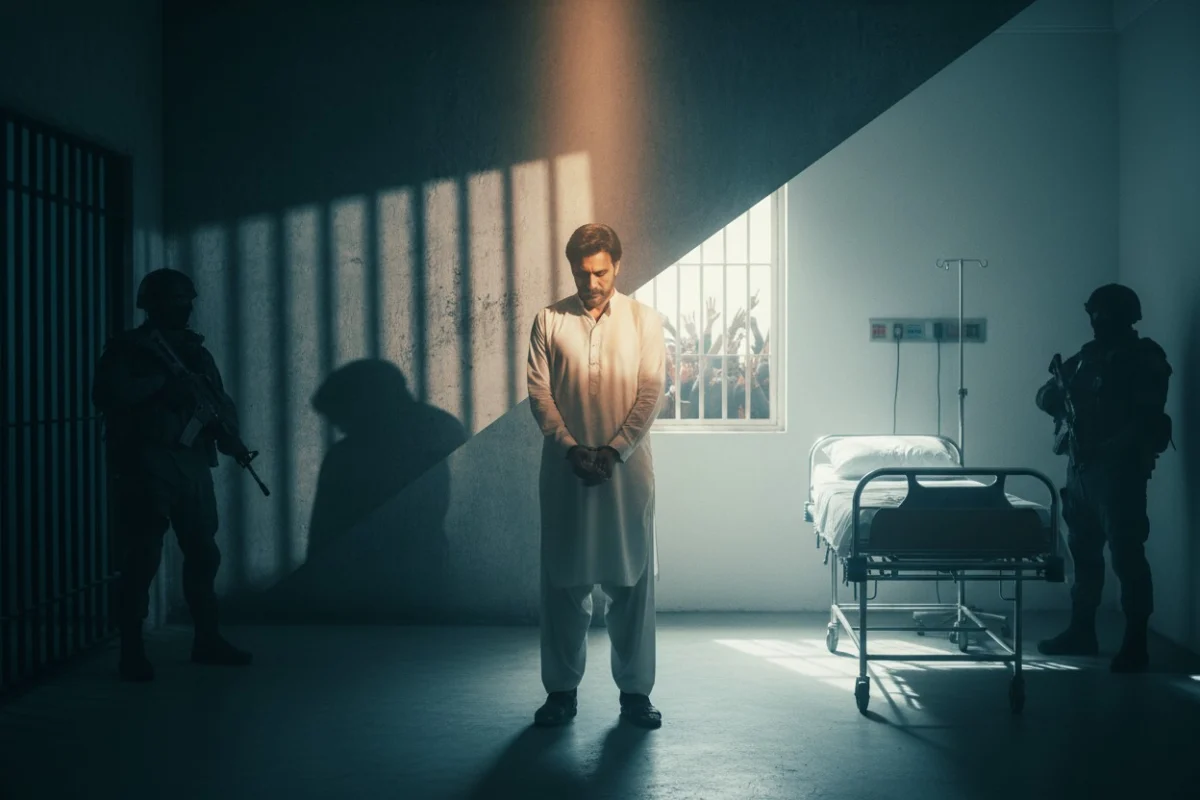
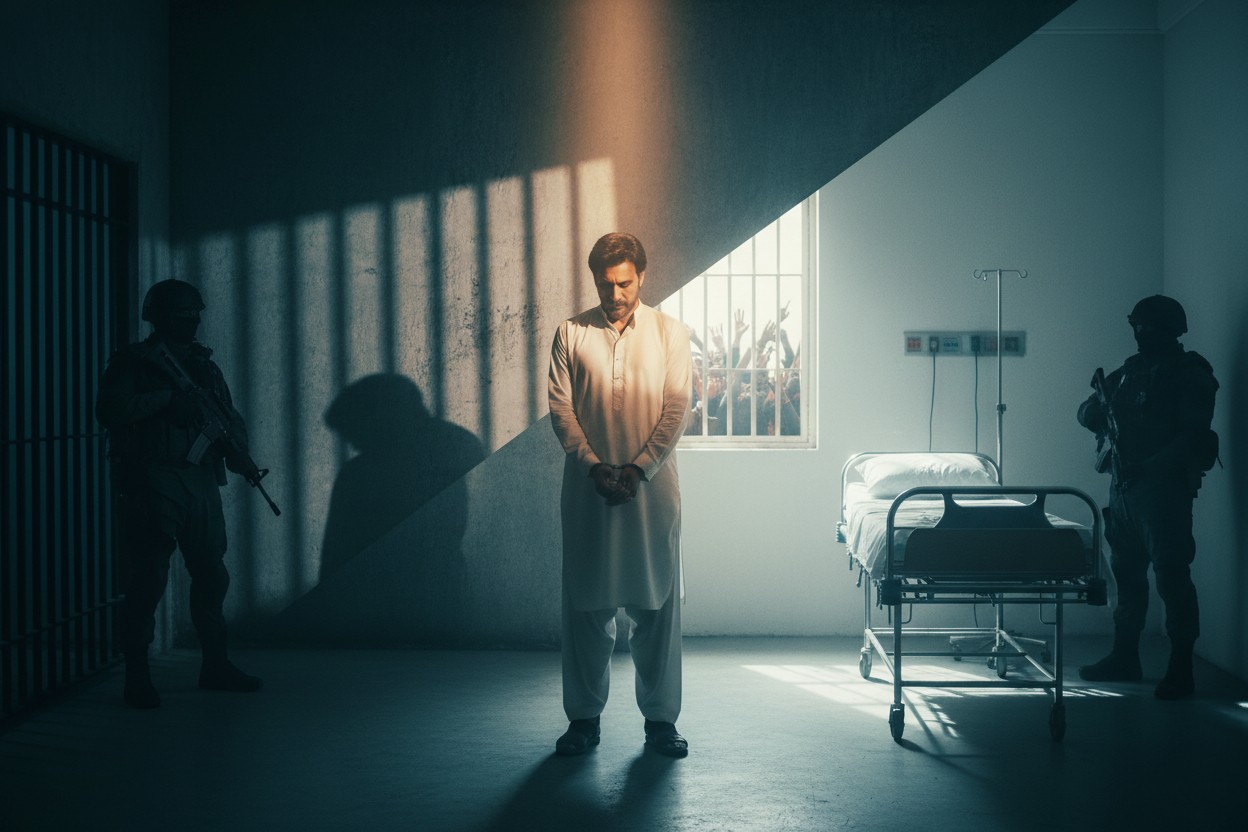
Former Pakistani Prime Minister Imran Khan was returned to the high-security Adiala Jail in Rawalpindi early Friday morning, following a brief medical assessment at Shifa International Hospital in Islamabad. The transfer, executed under heavy security, has sparked fresh controversy, with the Pakistan Tehreek-e-Insaf (PTI) party accusing the government of violating a Supreme Court directive and raising renewed concerns regarding the transparency of the former leader’s health status.
The maneuver concludes a whirlwind 24-hour period that saw the government scramble to comply with a Supreme Court order that had mandated Khan remain under medical supervision until September 16. Instead, authorities moved the cricketer-turned-politician back to prison after only a few hours of evaluation, citing a clean bill of health from a panel of state-sanctioned physicians.
The Chronology of a Disputed Transfer
The events leading up to Friday’s transfer reflect the ongoing friction between the judiciary, the current administration, and the PTI. On Tuesday, a three-judge panel of the Supreme Court of Pakistan issued a landmark ruling requiring the government to transport the incarcerated founder of the PTI to a private medical facility in Islamabad within 48 hours. The court’s intent was clear: to ensure that the former prime minister received an independent, comprehensive medical examination to address growing concerns about his deteriorating health.
While the court mandated that Khan remain at Shifa International Hospital until September 16, he was abruptly transported back to Rawalpindi in the early hours of Friday morning. PTI representatives have highlighted that the transfer occurred just past the court-imposed deadline, leading the party to threaten a contempt of court petition against the government.
The transit itself was a massive logistical undertaking. Hundreds of security personnel were deployed to secure the 30-kilometer route between the hospital and the prison, while supporters of the former prime minister gathered along the roadside, chanting slogans and expressing solidarity as the convoy passed. Upon his arrival at the hospital, the facility was placed under an unprecedented security lockdown, effectively isolating Khan from both his legal team and the public.
Official Responses and Medical Contradictions
The government’s narrative remains steadfast: Imran Khan is in stable condition and does not require prolonged hospitalization. Information Minister Attaullah Tarar took to social media platform X shortly after the transfer to confirm that a multi-disciplinary team—comprising an ophthalmologist, a cardiologist, and a general physician—had conducted a "detailed examination."
"After the completion of this entire process, he was transferred back to Adiala Jail," Tarar stated, asserting that the team had declared Khan "medically fit."
However, this official account stands in stark contrast to the claims made by Khan’s legal counsel and family. For months, his lawyers have argued that his health has suffered significantly under the harsh conditions of his incarceration. Specific concerns have been raised regarding a marked decline in his vision, particularly in his right eye, which his legal team claims has been neglected by prison authorities.
The government had previously attempted to block the Supreme Court’s order, filing an appeal that suggested no immediate treatment was necessary. This defensive stance has fueled skepticism among Khan’s supporters. Naureen Niazi, Khan’s sister, has been vocal about the lack of transparency, noting that the family has been systematically denied access to him. "We don’t really know his real condition because they don’t let our doctors see him," Niazi said in a previous statement. "So we can’t trust what they are saying."
Political and Legal Underpinnings of the Crisis
Imran Khan’s legal woes are extensive and, according to his supporters, inherently political. Since his ouster from power in 2022, the former prime minister has faced a barrage of charges. Among the most significant are convictions related to the alleged sale of state gifts—a charge he vehemently denies. In December 2025, a court sentenced Khan and his wife, Bushra Bibi, to 17 years in prison for the unlawful retention and sale of high-value gifts, an indictment the PTI maintains was orchestrated to neutralize him as a political threat.
The broader context of these legal maneuvers points toward a deliberate effort to sideline the PTI. Ahead of the 2024 general elections, the party faced significant hurdles, including being barred from participating under its own banner, which critics argue was a direct attempt to disenfranchise his massive support base.
The political polarization in Pakistan has been compounded by the lack of independent information regarding the state of the country’s high-profile detainees. The "death cell" conditions described by his son, Kasim Khan—who reported in November that his father was being held in isolation with no communication—have become a rallying cry for PTI supporters who view his detention as a human rights crisis.
Implications for Pakistan’s Democratic Trajectory
The controversy surrounding Khan’s health is a microcosm of the larger struggle for democratic integrity in Pakistan. The tension between the judiciary and the executive branch is palpable, with the Supreme Court’s attempt to assert oversight over the government’s treatment of a political prisoner being met with resistance.
The threat of contempt proceedings by the PTI highlights the fragility of the legal process. If the government is found to have bypassed the court’s order to keep Khan at the hospital until September 16, it could lead to a constitutional standoff that further destabilizes an already fragile administration.
Furthermore, the lack of independent verification regarding Khan’s health has invited international scrutiny. As global observers and human rights organizations continue to monitor the situation, the Pakistani government faces the dual challenge of maintaining order while navigating the optics of a high-stakes legal battle.
A Stalled Future
As of Friday, the status quo has been restored: Imran Khan is back in Adiala Jail, and the government maintains that he is fit for custody. Yet, the underlying issues remain unresolved. The PTI shows no sign of backing down, and the legal battle over the terms of Khan’s imprisonment is likely to intensify.
The reliance on state-appointed doctors to provide "fitness" certifications has failed to satisfy the public’s demand for transparency. In an era where disinformation is rampant and international alliances are increasingly focused on the preservation of democratic norms, the treatment of a former prime minister remains a critical litmus test for the state of Pakistani democracy.
Whether the Supreme Court will take further action against the government for the premature transfer remains the primary question. For now, Imran Khan remains a figure of intense political gravity, his incarceration serving as the focal point for a nation grappling with its own internal divisions and the uncertainty of its political future.
Summary of Key Developments
- August 2023: Imran Khan is incarcerated at Adiala Jail following his conviction on various charges.
- December 2025: Khan and his wife receive a 17-year sentence regarding the "state gifts" case.
- September 2026 (Tuesday): The Supreme Court orders Khan to be moved to Shifa International Hospital for medical evaluation within 48 hours.
- September 2026 (Friday): Khan is transferred to the hospital, examined by a panel of doctors, and returned to jail within hours, bypassing the court-ordered stay until September 16.
- Current Status: PTI has threatened contempt of court proceedings, while the government maintains Khan is in good health.
Supporting Data and Context
- Legal Standing: Khan’s defense team continues to challenge the validity of his convictions, labeling them as politically motivated.
- Security Infrastructure: The massive police presence during the hospital transfer highlights the government’s concern over potential unrest among Khan’s support base.
- International Perspective: The case has drawn comparisons to wider global debates regarding the intersection of political power, legal justice, and human rights, with various observers monitoring the consistency of judicial mandates in the region.
The situation remains fluid, with legal analysts suggesting that the Supreme Court’s reaction to the government’s actions will likely dictate the next phase of this ongoing political drama. For now, the gates of Adiala Jail remain closed, but the pressure from the streets and the courtroom continues to mount.