








25 August, 2026
By Barbara Hoffmann, Advocacy Council Chair, European Respiratory Society
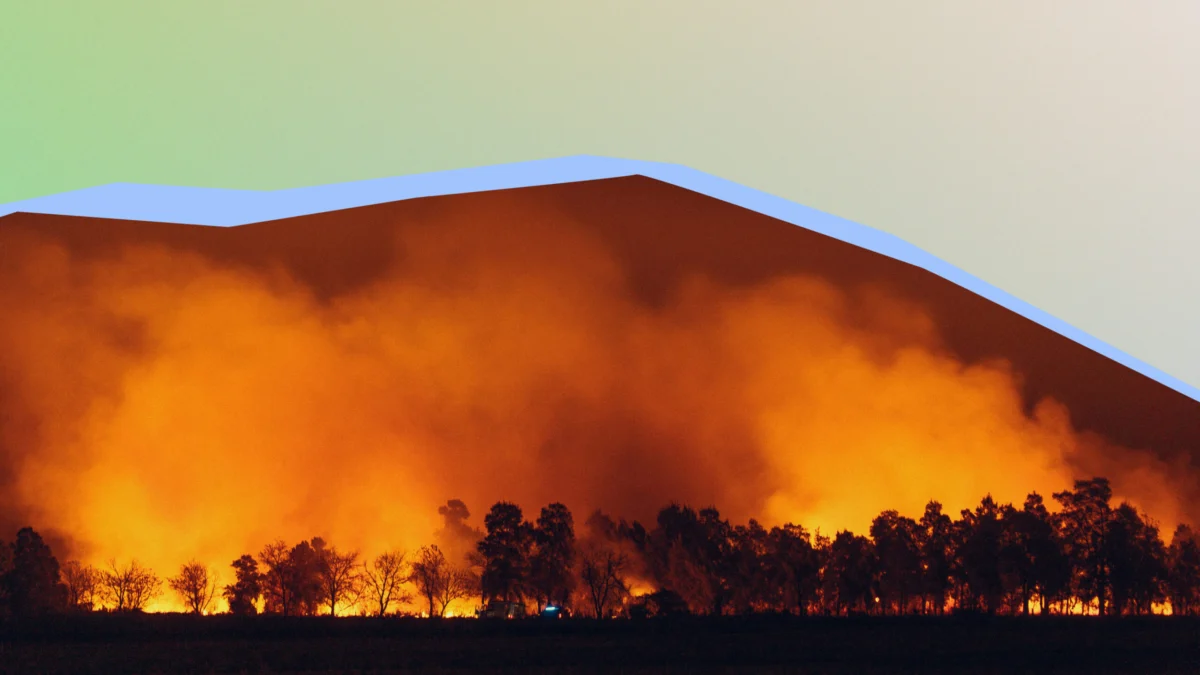
As the summer of 2026 draws to a close, the European continent finds itself grappling with an adversary that no longer respects borders or seasons. What was once considered a cyclical, manageable environmental challenge has transformed into a persistent, existential threat. Across the Mediterranean and into the heart of Western Europe, the sky has turned a haunting, toxic orange, and the air has become a vehicle for widespread respiratory distress.
We are no longer discussing "wildfire season" as a temporary nuisance. We are witnessing a fundamental shift in the European climate, one that is placing an unprecedented burden on our lungs, our hospitals, and our policy frameworks.
The Escalating Inferno: Main Facts and Current Reality
The statistics emerging from this year’s fire season are not merely numbers; they are indicators of a system in crisis. According to data provided by the World Health Organization (WHO) Regional Director for Europe, Hans Kluge, the scorched earth of 2025 totaled 2.2 million hectares—an area exceeding half the size of Switzerland. This figure represents a staggering 57% increase from just four years prior, illustrating a trend of exponential growth in wildfire severity.
The 2026 data confirms that this upward trajectory remains unchecked. Portugal and Spain, the traditional epicenters of European wildfires, have reported an increase of more than 100% in burned area compared to the same period in 2025. These are not merely forest fires; they are atmospheric events that carry the toxic byproducts of combustion—carbon monoxide, nitrogen oxides, and fine particulate matter—across thousands of kilometers, affecting urban populations that are thousands of miles from the nearest flame.
A Chronology of Environmental Decay
To understand the current crisis, one must look at the rapid degradation of our air quality over the last two years:
- 2024: A year marked by record-breaking heat, setting the stage for increased vegetation dryness across the Iberian Peninsula and Southern France.
- 2025: The "Year of the Record," where the 2.2 million-hectare threshold was breached, signaling that the warming of the Mediterranean basin was creating a tinderbox effect.
- July 2026: Copernicus Atmosphere Monitoring Service (CAMS) data confirmed that wildfire emissions in France were tracking to be among the highest in the past 24 years.
- August 2026: As of late August, the European Respiratory Society (ERS) has documented a surge in emergency admissions across major urban centers, directly correlating with sustained periods of "hazardous" air quality ratings.
This chronology reveals a clear pattern: as global temperatures rise, the "recovery time" for European forests decreases, and the frequency of high-intensity fires increases. The environment is not just changing; it is failing to protect us from the very emissions it generates when it burns.
Toxic Air: Supporting Data on Particulate Matter
The health implications of these fires are best measured in PM2.5—fine particulate matter small enough to penetrate deep into the lungs and enter the bloodstream. The levels recorded this year are nothing short of catastrophic.
In Bordeaux, France, the situation became dire in mid-summer, with PM2.5 concentrations peaking at over 300 micrograms per cubic meter. To put this in perspective, this concentration is approximately 20 times the WHO’s recommended limit for safe 24-hour exposure and more than ten times the legal threshold set by the European Union.
Similarly, Madrid has been shrouded in smog, with air quality sensors frequently registering between 80 and 100 micrograms per cubic meter. These levels are six times the WHO recommended limit. When citizens walk the streets of these cities, they are not just breathing air; they are inhaling a cocktail of combustion byproducts that trigger acute respiratory failure, exacerbate chronic obstructive pulmonary disease (COPD), and increase the risk of cardiovascular incidents.
Official Responses: A Health Emergency Beyond the Flames
The medical community has been vocal in characterizing this as a public health emergency. Dorota Jarosinska of the WHO’s European Centre for Climate Change, Environment and Health has correctly identified that the wildfire crisis is a "true health emergency" that persists long after the flames are extinguished.
The "hidden" cost of these fires is the silent impact on health systems. When air quality index (AQI) values spike, hospital emergency departments do not see a linear increase in patient volume; they see a surge. Patients with asthma, bronchitis, and pre-existing heart conditions flood clinics, often at a time when the healthcare workforce is already depleted by summer leave or the strain of managing heat-related illnesses.
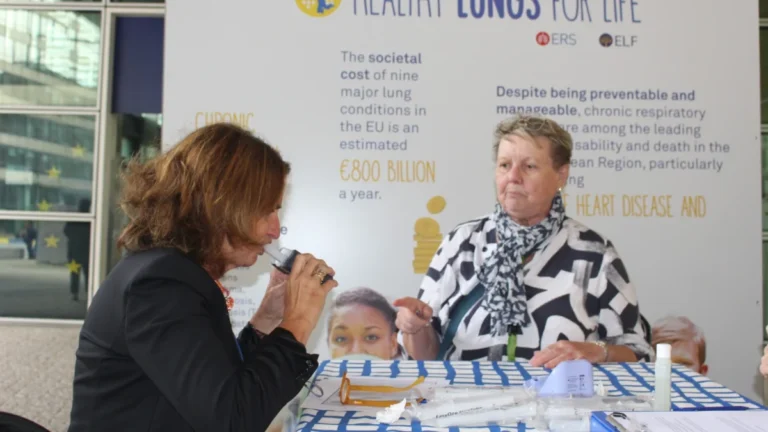
The European Respiratory Society (ERS) and the European Lung Foundation (ELF) have emphasized that our current healthcare infrastructure is not designed for this "new normal." We are operating on a model of reactive medicine, waiting for patients to collapse before we provide care, rather than investing in the systemic resilience required to handle the predictable surges caused by climate-driven disasters.
The Broader Implications: A Call to Action
The health and safety of the European population cannot be divorced from the health of our environment. The implications of our current path are severe:
1. The Erosion of Public Health Resilience
Our health systems are currently in a state of constant, low-level crisis. The compounding effects of heatwaves—which cause dehydration, heatstroke, and renal failure—and wildfire smoke, which causes respiratory failure, create a "double-jeopardy" scenario for the elderly and the vulnerable. Without additional staff, better ventilation in public buildings, and robust surge capacity in hospitals, we are failing our most at-risk citizens.
2. The Policy-Science Gap
There remains a profound disconnect between climate science and policy implementation. While the evidence is unequivocal—that climate change is the primary driver of these fires—the political will to enact deep, systemic decarbonization remains sluggish. Policymakers often prioritize short-term economic interests over the long-term health of their constituents.
3. The Need for "Defend Science"
Through our Defend Science, Protect Public Health campaign, the ERS is calling for a paradigm shift. We are demanding that European governments:
- Fund Healthcare Systems: Allocate specific, dedicated funding to respiratory clinics and emergency services to handle climate-induced surges.
- Integrate Air Quality Data: Use real-time monitoring to trigger public health alerts, such as mandatory indoor air filtration in schools and elderly care homes.
- Implement Evidence-Based Climate Policy: Accelerate the transition away from fossil fuels. We cannot "manage" our way out of this crisis if the atmospheric conditions continue to warm.
Conclusion: The Closing Window
We are currently in a race against time. The window of opportunity to prevent the most catastrophic outcomes of climate change is rapidly closing. If we do not act to curb global emissions and invest in the structural integrity of our healthcare systems, the summers of 2027, 2028, and beyond will be even more punishing.
A secure Europe is not one that merely builds higher barriers or thicker walls; it is one that understands that public health is an environmental issue. We need a society that is prepared before the smoke arrives, rather than one that scrambles in panic when the air becomes unbreathable.
The science is clear. The data is indisputable. The health of our patients depends on our ability to prioritize the planet over the profits of those who continue to drive us toward this precipice. It is time for our leaders to stop treating the wildfire crisis as an unfortunate accident and start treating it as the urgent, structural health emergency that it truly is.