











EDITOR’S NOTE: This story includes discussion of suicide and violence. If you or someone you know needs help, the National Suicide and Crisis Lifeline in the U.S. is available by calling or texting 988.
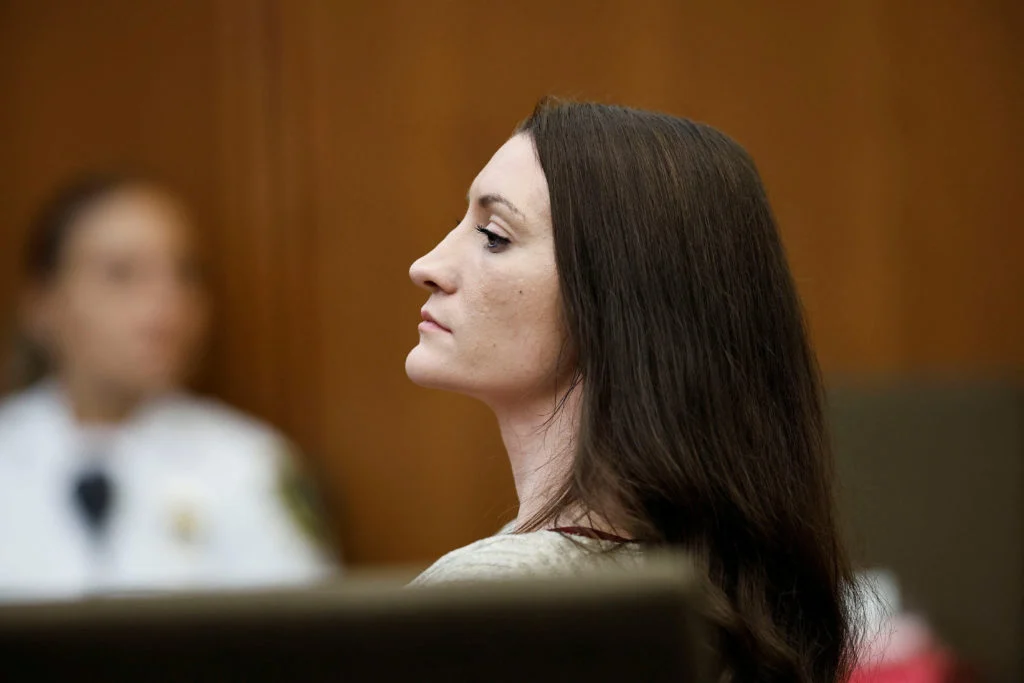
PLYMOUTH, Mass. — The fate of Lindsay Clancy, a former labor and delivery nurse accused of strangling her three young children in January 2023, now rests in the hands of a jury. As deliberations begin in Plymouth Superior Court, the trial has transcended the specifics of a single criminal case, evolving into a searing national conversation about the adequacy of the American mental healthcare system, the volatility of postpartum illness, and the complex legal definition of criminal responsibility.
The jury is tasked with determining whether Clancy was legally insane at the time she killed her children—Cora, 5; Dawson, 3; and 8-month-old Callan—at their Duxbury, Massachusetts, home. While the defense maintains that she was suffering from severe postpartum psychosis, the prosecution argues that her actions were a premeditated, rational choice made by a woman who felt overwhelmed by her circumstances.
The Core Legal Conflict: Accountability vs. Illness
The trial has pitted two starkly different narratives against one another. Defense attorney Kevin Reddington has characterized Clancy’s actions not as those of a malicious killer, but as the tragic result of a mental health emergency gone untreated. Reddington argues that the medical establishment failed his client, providing "lousy care" that left a suffering mother to navigate a terrifying descent into psychosis alone.
Conversely, the Plymouth County District Attorney’s office has adamantly rejected the notion that the healthcare system is on trial. Prosecutor Jennifer Sprague, in her closing arguments, contended that Clancy was fully aware of the illegality of her actions. According to the state, Clancy "planned the killings" by manipulating her husband’s schedule—sending him on errands for food and medication to ensure she had the necessary window of time to carry out her plan.
"She was depressed. She was exhausted. She was done," Sprague argued, positing that Clancy viewed her children as a "protective factor" that prevented her from ending her own life. In the prosecution’s view, Clancy’s decision to kill them was an intentional, albeit horrific, choice.
Chronology of a Tragedy
The events leading up to the January 2023 tragedy paint a picture of a rapid decline. According to testimony, Clancy had been actively seeking help for her mental health in the months preceding the deaths. She had visited multiple providers, was voluntarily admitted to a psychiatric facility, and had expressed her "horrible, intrusive thoughts" to family members.
- December 2022: Clancy discloses to her husband and mother that she is experiencing intrusive, suicidal, and harmful thoughts. Despite these disclosures, she reportedly hides the severity of these thoughts from her medical providers, fearing that her children might be removed from her care by child protective services.
- January 2023: On the day of the killings, prosecutors allege that Clancy carefully coordinated her husband’s movements. She checked maps to determine how long he would be away to pick up takeout and subsequently sent him to a pharmacy, creating the isolation she needed.
- Post-Incident: Clancy survived a serious suicide attempt at the scene. Following her recovery, she was charged with the murders of her three children.
- The Trial: Spanning five weeks, the trial featured testimony from over 80 witnesses, including family members, psychiatric experts, and the defendant’s husband, Patrick Clancy.
Expert Testimony and Forensic Analysis
The courtroom became a stage for clashing psychiatric theories. Dr. Phillip Resnick, a forensic psychiatrist and expert in filicide (the killing of a child by a parent), testified for the defense. Dr. Resnick, who notably served as an expert in the 2006 trial of Andrea Yates, described Clancy as "clearly psychotic" on the day of the murders. He likened her mental state to being "a puppet" with someone else pulling the strings, arguing that her actions were an example of "altruistic" filicide—a phenomenon where a parent kills their children out of a misguided sense of love, believing they are saving them from a world of suffering.
The prosecution countered with their own expert, forensic psychologist Dr. Kirk Heilbrun. Dr. Heilbrun disagreed with the assessment of acute psychosis, arguing instead that Clancy’s actions were driven by a desperate, yet rational, desire to die. "She retained an awareness of the illegality of killing others," Heilbrun testified, asserting that while Clancy suffered from depression and bipolar disorder, she was nonetheless criminally responsible for her actions.
The Reality of Postpartum Psychosis
Beyond the courtroom, the case has brought much-needed attention to postpartum psychosis, a rare but devastating condition that affects roughly 1 to 2 out of every 1,000 women following childbirth. Unlike the more commonly discussed "baby blues" or postpartum depression, postpartum psychosis is a medical emergency.
Symptoms often manifest within the first few weeks after delivery and include:
- Hallucinations and Delusions: Losing touch with reality, sometimes involving command voices.
- Severe Mood Swings: Rapid cycling between mania and profound, suicidal depression.
- Disorganized Thinking: An inability to process reality, often accompanied by insomnia and extreme agitation.
Experts emphasize that the condition is treatable, often requiring inpatient psychiatric care, medication, or electroconvulsive therapy (ECT). The challenge, however, remains the stigma surrounding the condition and the systemic barriers to rapid, effective mental health intervention.
Systemic Implications: A Broken Care Model?
Defense attorney Kevin Reddington has been vocal in his critique of the "telemedical" approach to psychiatric care. He argued that the reliance on 25-minute Zoom appointments and standardized, computerized forms for patient assessment is insufficient for mothers in acute crisis. By labeling the medical providers as "box-checking robots," the defense highlighted a growing frustration with a mental health system that many argue is underfunded, impersonal, and ill-equipped to handle the nuances of perinatal mental health.
Conversely, the prosecution’s argument rests on the idea of individual agency. By asserting that Clancy had "an abundance of resources," they are cautioning the jury—and the public—against using the failures of a health system to excuse individual criminal conduct. This tension underscores the difficulty of the jury’s task: determining the fine, often invisible, line between a brain overtaken by illness and a mind making a conscious, criminal decision.
The Burden of Deliberation
As Judge William Sullivan instructed the jury, the standard of "proof beyond a reasonable doubt" does not require absolute certainty, but rather an "abiding conviction to a moral certainty." The jurors, who have sat through weeks of gut-wrenching testimony, are now tasked with the weight of deciding the legal status of a woman whose actions have shattered a family and left a community reeling.
Outside the courthouse, the atmosphere remains charged. Supporters wearing pink have gathered to advocate for better maternal mental health care, emphasizing that "we need to believe women" and that the tragedy could have been prevented with better community and clinical support.
As the trial concludes, the case of Lindsay Clancy serves as a haunting reminder of the fragility of the human mind and the critical, often life-or-death, importance of a healthcare system that must do more than just prescribe medication. Whether the jury finds her guilty or not guilty by reason of lack of criminal responsibility, the legal verdict will be only one chapter in a much larger, unresolved debate about how society supports—or fails to support—mothers in crisis.