










Published: August 27, 2026
In the modern yoga studio, the atmosphere is often one of quiet intensity. Yet, amidst the collective breath and the rhythmic flow of movement, a subtle, often silent, struggle frequently unfolds: the trap of comparison. It is a phenomenon as old as the practice itself—the tendency to look at the yogi on the adjacent mat, note their depth in a forward fold or the grace of their balance, and subsequently diminish one’s own progress through the lens of self-judgment.
Reflecting on the wisdom curated from Yoga Journal’s extensive archives—specifically from the May-June 2002 issue—we revisit the profound teachings surrounding Upavistha Konasana (Wide-Angled Seated Forward Bend). This asana serves as a potent microcosm for the psychological hurdles practitioners face, offering not just a physical opening of the hips, but a mental opening toward samtosha, or contentment.
The Psychology of the Mat: Beyond Comparison
The Burden of the "Comparison Trap"
When we observe others during a practice, the human brain is hard-wired to evaluate. We see strength, we see flexibility, and we see balance. While these observations can spark inspiration, they often curdle into envy, pride, or low self-esteem. This competitive impulse is antithetical to the goals of yoga.
Patanjali, the sage who codified the Yoga Sutras, introduced samtosha as the second niyama, or rule of ethical conduct. Samtosha is the practice of radical contentment—the recognition that, regardless of where your limbs land in a pose, your current placement is exactly where you are meant to be. As Buddhist teacher Pema Chödrön famously advises, "Start where you are." In the context of Upavistha Konasana, this is not merely a suggestion; it is the fundamental requirement for the pose to function as a tool for self-discovery rather than a metric for physical achievement.
Chronology and Evolution of the Pose
Historical Context
Upavistha Konasana has been a staple of hatha yoga for decades, but its integration into Western practice saw a surge in the early 2000s as teachers began emphasizing the restorative, rather than purely aesthetic, benefits of the posture. The transition from the "achievement-based" model of the 1990s to the "mindfulness-based" model of the 2000s marked a pivotal shift in how the pose is taught today.
The Energetic Anatomy
Upavistha Konasana specifically targets the second chakra, or Svadhisthana, located in the sacrum and pelvic bowl. Often associated with the element of water, this energy center governs our fluidity, our ability to adapt, and our reproductive health. The pose forces a physical surrender—a "going with the flow" that mirrors the psychological surrender required to let go of judgment. When we allow the hamstrings, groins, and hips to open, we are not just working on tissue elasticity; we are training the nervous system to remain calm in the face of tension.
Technical Mastery: A Step-by-Step Methodology
Phase 1: The Supported Introduction (The "Wall Method")
For many, the standard seated version of this pose can feel daunting. To build confidence and safety, experts recommend starting in a supine position (lying on the back) with legs against a wall.
- Alignment: Sit with your left shoulder close to a wall, thighs parallel to the vertical surface.
- Transition: Swing your legs up the wall, using your forearms for support as you recline.
- Adjustment: If the lower back rounds or the tailbone lifts, inch further away from the wall until the spine feels neutral against the floor.
- Breathwork: With the legs in a V-shape, focus on the exhalation. Let gravity do the work, ensuring no strain is felt in the inner knees. This "gravity-assisted" approach protects the back while allowing for a deep, safe opening of the hip adductors.
Phase 2: The Seated Foundation
Once the body has acclimated to the sensation, transitioning to the center of the room requires careful structural alignment.
- Elevate the Pelvis: Use a folded blanket to sit upon. This subtle elevation maintains the natural lumbar curve, preventing the common "slouch" that occurs when hamstrings are tight.
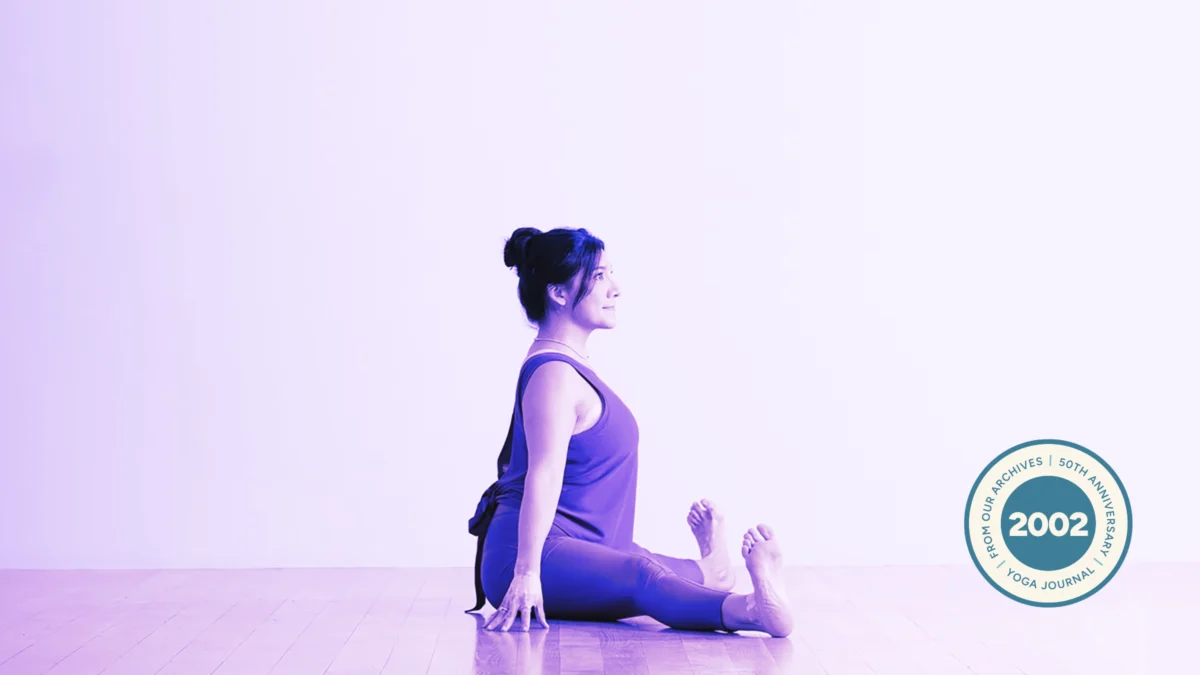
- Engagement: With the legs in a wide V, keep the kneecaps and toes pointing toward the ceiling. The heels should lengthen away from the knees, creating a firm, grounded base.
- Spinal Integrity: Imagine the base of the skull lifting toward the ceiling as the sitting bones sink into the earth. This creates the "long, light spine" necessary for a sustainable forward fold.
Phase 3: The Art of the Forward Fold
The forward bend should only be attempted when the spine can remain straight. If the lumbar curve begins to push backward, the body is signaling that the fold is premature. One must hold the position of the upright V until the hips have truly released. Only then should the practitioner slowly hinge from the hip creases, not the waist, to fold forward.
Supporting Data: The Benefits of Restorative Variations
For those seeking the benefits of Upavistha Konasana without the intensity of a deep stretch, the restorative approach provides a bridge to stillness.
| Variation | Benefit | Target Area |
|---|---|---|
| Chair Support | Reduces spinal strain | Lower back/Lumbar |
| Bolster Support | Promotes nervous system rest | Parasympathetic nervous system |
| Wall Support | Relieves circulatory pressure | Sacrum/Pelvic floor |
By utilizing chairs or bolsters to support the torso, the practitioner remains in the pose for longer durations (often 5–10 minutes). This extended time allows the connective tissue (fascia) to soften, providing a sense of "sweetness" or samtosha that is rarely achieved in a rapid-fire, performance-oriented class.
Official Perspectives: Expert Consensus
The consensus among modern yoga therapists is that Upavistha Konasana is an essential diagnostic tool. It reveals the practitioner’s relationship with their own limits.
"The moment the eyes begin to wander around the room, the practice ends," notes a senior instructor. "The pose is not about how wide your legs are; it is about how wide your awareness is."
When the gaze wanders, it is a signal to close the eyes. By turning the sensory input inward, the student can identify where they are holding tension—be it in the jaw, the shoulders, or the inner thighs—and consciously release it. This internal dialogue is what separates exercise from yoga.
Implications: Integrating Surrender into Daily Life
The true value of Upavistha Konasana lies in its ability to act as a metaphor for life. We are all, in various ways, sitting in a "wide-angle" position—stretching toward our goals, feeling the resistance of our current circumstances, and observing the "limber" successes of others.
The Lesson of Resistance
When we resist the pose, we create tension. When we resist our life path, we create suffering. By practicing the act of "relaxing into what is" during the 5–10 breaths of the asana, we are conditioning our minds to accept the reality of our current situation without the immediate impulse to judge or force change.
Conclusion
As you walk away from your mat, the practice of Upavistha Konasana persists. It asks you to carry the same curiosity and lack of judgment into your professional and personal life. Whether you are folding deeply into the challenges of your career or sitting upright in the quietude of your home, remember the lesson of the second chakra: be like water. Move with the flow, respect your own boundaries, and trust that your timing is, and has always been, perfect.
Start where you are. The rest will follow.