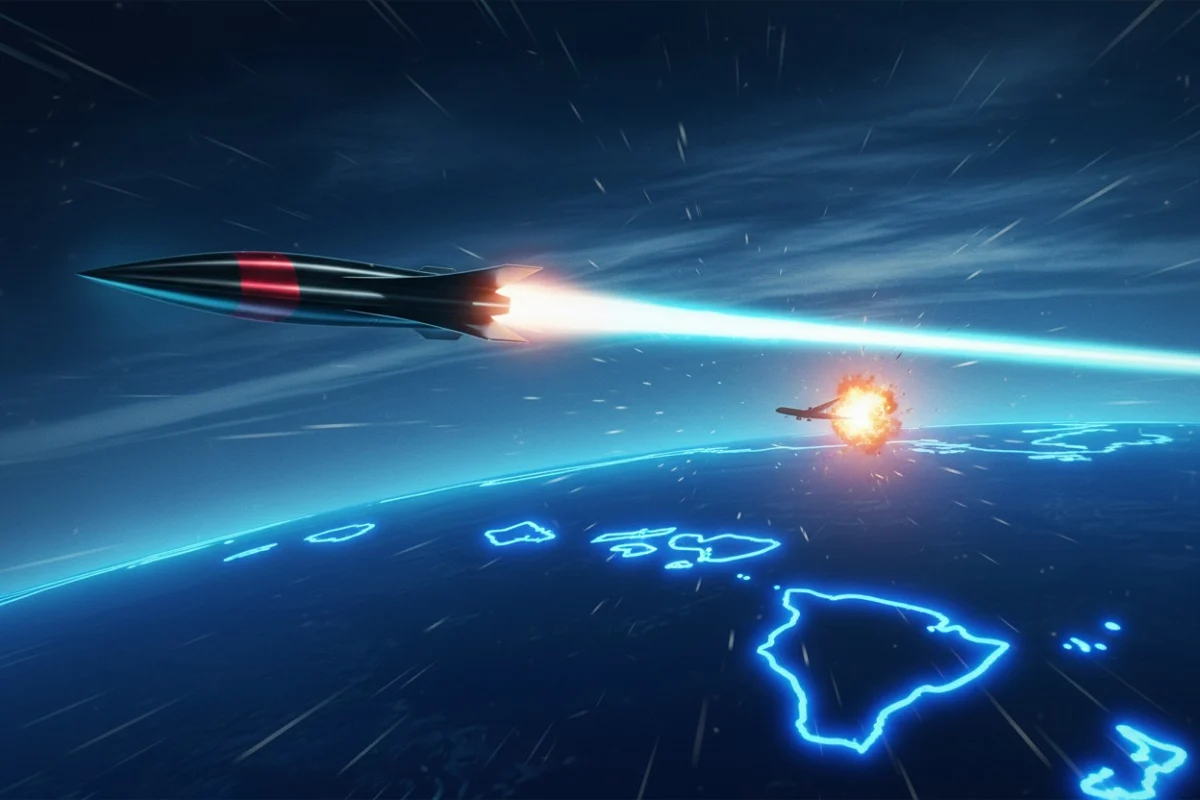
The landscape of modern aerial warfare is undergoing a seismic shift. Defense analysts and intelligence officials are sounding the alarm over a transformative development from the People’s Republic of China: the successful deployment and testing of an air-launched hypersonic glide vehicle (HGV). This weapon system, capable of striking high-value support aircraft from beyond visual range, threatens to dismantle the operational architecture that has underpinned U.S. power projection in the Indo-Pacific for decades.
As the People’s Liberation Army (PLA) refines its ability to strike with near-instantaneous speed and unpredictable maneuverability, the United States finds itself grappling with both a technological disadvantage and a precarious depletion of its missile interceptor inventories.
I. Main Facts: The Anatomy of a New Threat
The emergence of the air-launched HGV represents a significant evolution in China’s "Anti-Access/Area Denial" (A2/AD) strategy. Unlike traditional ballistic missiles, which follow a predictable, parabolic trajectory, HGVs detach from their launch vehicle—typically a ballistic missile—and glide through the upper atmosphere at speeds exceeding Mach 5.
Technical Capabilities
- Maneuverability: Unlike conventional interceptors, these vehicles can perform evasive maneuvers mid-flight, making them virtually impossible for existing radar and missile defense systems to track and target reliably.
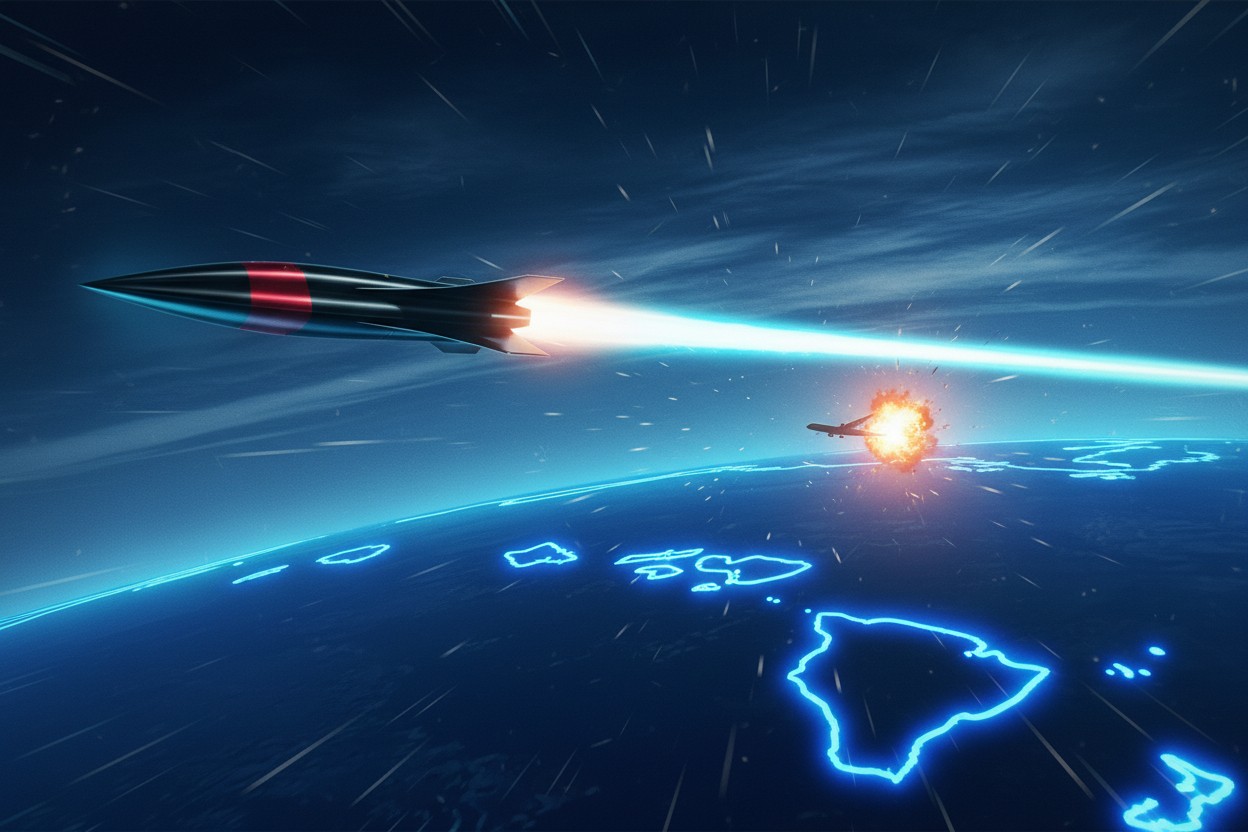
- The Launch Platform: By integrating hypersonic warheads onto platforms like the DF-17 and the long-range DF-27, China has extended its reach from regional threats to intercontinental capabilities. The DF-17 provides a range of approximately 1,500 miles, while the DF-27 is estimated to have a reach of 5,000 miles, placing critical assets in Hawaii within striking distance.
- Targeting Logic: The primary objective of this new capability is not necessarily to strike primary fighter jets, but to neutralize the "enablers"—the AWACS (Airborne Warning and Control System) command planes, aerial refueling tankers, and electronic warfare platforms that keep the U.S. air fleet operational.
II. Chronology: The Road to Operational Maturity
China’s journey toward hypersonic supremacy was not an overnight occurrence but a deliberate, decade-long investment in cutting-edge aerospace engineering.
- 2014: The PLA initiates testing on an intercontinental ballistic missile tipped with a hypersonic glide warhead. This marked the beginning of a systematic effort to bypass Western missile defense grids.
- 2021: Defense Intelligence Agency (DIA) assessments conclude that China likely reached "initial operational status" with its hypersonic systems. The July 2021 test of a new intercontinental delivery system was described by U.S. Strategic Command as a "technological achievement" that fundamentally altered the calculus of strategic stability.
- 2023–2025: Rapid expansion of the PLA’s missile arsenal continues, with the integration of air-launched capabilities into existing cruise missile platforms.
- 2026: The current state of play. Defense specialists note that the U.S. is now estimated to be "several years behind" China and Russia in the development and field deployment of hypersonic offensive weaponry.
III. Supporting Data: The Industrial and Inventory Gap
A critical, often overlooked aspect of this technological race is the disparity in industrial capacity. A top-secret Department of War assessment, known as the "Overmatch Brief," highlights a sobering reality: China’s ability to mass-produce relatively cheaper, highly lethal weapons allows it to sustain a volume of fire that the U.S. manufacturing base is currently unequipped to match.
Inventory Depletion
The Center for Strategic and International Studies (CSIS) has highlighted a critical vulnerability in the U.S. defensive posture. Prior to 2026, extensive operations in the Middle East resulted in the expenditure of nearly 50% of U.S. inventories of Patriot, THAAD, and PrSM (Precision Strike Missile) interceptors. Current counts suggest only 820 Patriot and 280 THAAD interceptors remain. This deficit makes the U.S. increasingly reliant on a "thin" defense screen that is inherently ill-equipped to handle the saturation tactics that a hypersonic-enabled PLA could employ.
IV. Official Responses: The Silence of the Defenses
The U.S. government has begun to publicly acknowledge the severity of this gap, moving away from past reticence. In April 2026, senior officials within the War Department provided stark testimony before the Senate Armed Services Committee.
Assistant Secretary of War for Space Policy, Marc Berkowitz, delivered a sobering admission to lawmakers: the current U.S. homeland defense system is "very limited." Designed primarily to counter small-scale threats from rogue nations, the existing infrastructure is effectively blind and defenseless against the hypersonic capabilities of peer competitors like China and Russia.
"We have no effective defense against hypersonic and cruise missiles of this class," Berkowitz stated. This admission has triggered an urgent push for the development of a new generation of highly mobile, long-range radars capable of tracking objects that move at ten times the speed of sound, though the deployment of such systems remains in the research and development phase.
V. Implications: The Taiwan Scenario and Beyond
The strategic implications of these developments are most acute regarding the Taiwan Strait. Analysts warn that in any conflict scenario, the loss of U.S. support assets—tankers and AWACS—would lead to the rapid degradation of American aerial combat effectiveness. Without these "force multipliers," U.S. fighter squadrons would be forced to operate at limited range and without the crucial data links that define modern, networked warfare.
The Power Shift
- Guam’s Vulnerability: U.S. bases on Guam, previously considered secure rear-staging areas, are now well within the strike envelope of the DF-17’s HGV payload.
- Strategic Stability: The "breathtaking expansion" of China’s nuclear and conventional missile arsenal—now exceeding 3,250 ballistic weapons—has forced a total re-evaluation of the U.S. deterrence strategy. The ability of China to hold the continental United States at risk with systems like the DF-41, combined with regional hypersonic dominance, suggests that the traditional "Pacific Umbrella" is fraying.
- The Cost of Sophistication: The U.S. remains wedded to hyper-sophisticated, high-cost platforms. The "Overmatch Brief" suggests that in a high-intensity, peer-to-peer conflict, the U.S. would face a "replacement crisis"—the inability to manufacture or deploy replacements fast enough to counter the sheer volume of Chinese missile fire.
Conclusion: A New Era of Uncertainty
The rise of the air-launched hypersonic glide vehicle is not merely an incremental upgrade in weaponry; it is a fundamental challenge to the established order of the Pacific. As Beijing continues to iterate on its hypersonic delivery systems, the U.S. defense establishment finds itself in a race against time.
The path forward, according to defense experts, requires a dual-track strategy: an immediate acceleration in the development of next-generation tracking radar and defensive interceptors, and a massive pivot toward an industrial strategy that prioritizes high-volume, cost-effective production. Until these measures are realized, the Pacific theater will remain a space of profound strategic uncertainty, where the balance of power rests on the edge of a hypersonic blade.