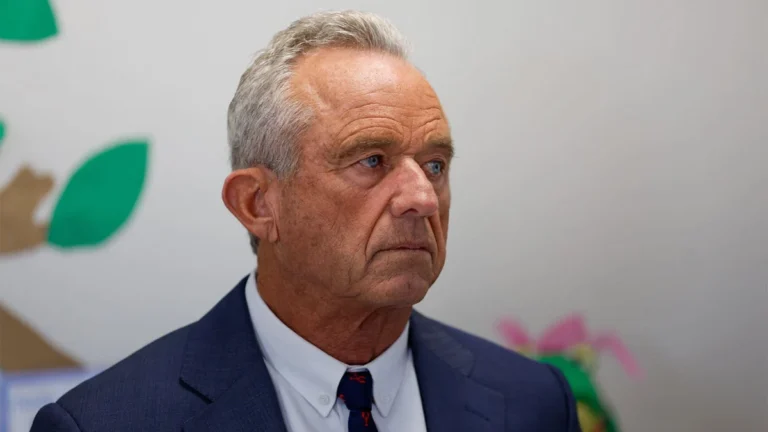








NEW YORK — Newly surfaced documents have cast significant doubt on the veracity of testimony provided to the U.S. Senate by Health and Human Services (HHS) Secretary Robert F. Kennedy Jr. during his contentious confirmation process last year. The documents, obtained by The Associated Press and The Guardian, directly challenge Kennedy’s repeated assertions that his 2019 visit to Samoa—which occurred shortly before a catastrophic measles outbreak—had "nothing to do with vaccines."
The revelation arrives at a precarious time for the administration, as lawmakers grapple with a growing pattern of broken promises and shifting narratives from the nation’s top health official.
The Discrepancy: A Written Intent
During his confirmation hearings, Kennedy, a long-time figurehead of the anti-vaccine movement, faced rigorous questioning from senators concerned about his past rhetoric. When pressed on his 2019 visit to the Pacific island nation, Kennedy was emphatic. Under oath-adjacent testimony, he told the Senate Finance Committee, "I went there, nothing to do with vaccines. I went there to introduce a medical informatics system that would digitalize records in Samoa and make health delivery much more efficient."
However, a letter dated January 20, 2019, written by Kennedy on the letterhead of his nonprofit, Children’s Health Defense (CHD), paints a drastically different picture. In the correspondence addressed to the then-Prime Minister of Samoa, Tuilaepa Sailele Malielegaoi, Kennedy explicitly requested to study the country’s measles, mumps, and rubella (MMR) vaccine program following the tragic deaths of two children who had received the inoculation.
The word "vaccine" or "vaccination" appears eight times in the letter. In the text, Kennedy wrote: "I would propose my team conduct detailed health informatics assessment in Samoa of what happened with your MMR vaccines." He further speculated that the children’s deaths could be attributed to manufacturing issues, suggesting an investigative intent that contradicts his later claims of a purely administrative mission.
Chronology of a Controversial Visit
To understand the gravity of these findings, one must look at the timeline of events that unfolded in Samoa between 2018 and 2019.
- July 2018: Two young children in Samoa pass away shortly after receiving an MMR vaccine. The subsequent investigation concludes that the deaths were caused by human error—specifically, the improper preparation of the vaccine by two nurses—rather than the vaccine itself. Both nurses were later convicted of manslaughter.
- Late 2018 – Early 2019: The Samoan government halts all vaccination efforts for 10 months to restore public confidence. During this window of suspended immunization, vaccination rates across the islands plummet to dangerously low levels.
- January 2019: Robert F. Kennedy Jr. sends his formal proposal to the Samoan Prime Minister, requesting to study the MMR program under the guise of "health informatics."
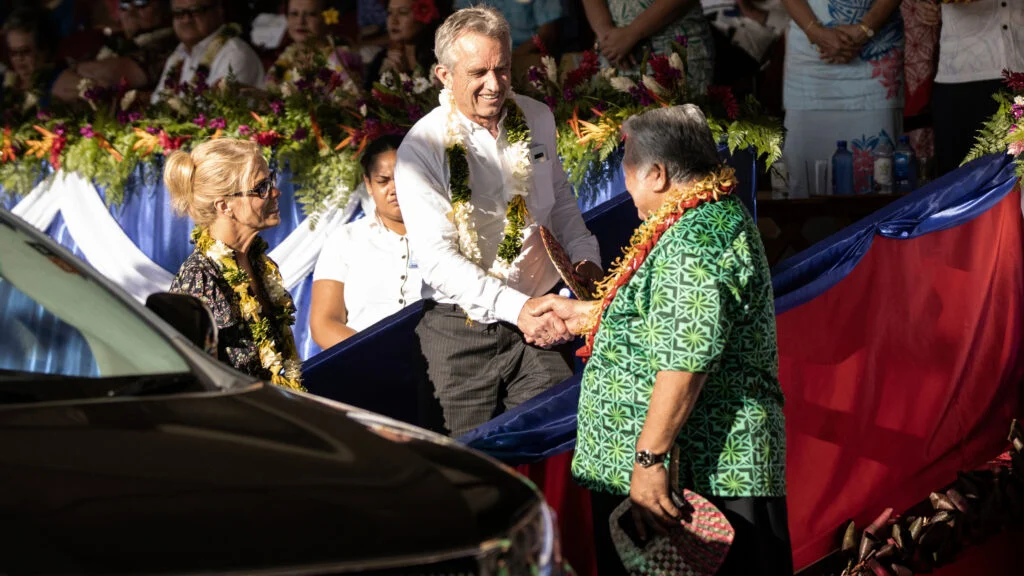
- May–June 2019: Kennedy, accompanied by his wife, actor Cheryl Hines, and staff from Children’s Health Defense, arrives in Samoa. While there, he engages with local anti-vaccine activists.
- Late 2019: With immunity levels at historic lows, a massive measles outbreak strikes the nation, resulting in 83 deaths, the overwhelming majority of whom were children under the age of five.
Public health experts have long argued that the presence of high-profile anti-vaccine advocates during this fragile period served to embolden local skepticism, ultimately facilitating the severity of the outbreak.
The Confirmation Process and Broken Pledges
The revelation concerning the Samoa letter is only the latest in a series of controversies surrounding Kennedy’s confirmation. Kennedy’s path to the cabinet was arguably one of the most difficult in recent history. He secured his position only after providing specific assurances to skeptical Republican lawmakers, most notably Sen. Bill Cassidy of Louisiana.
Cassidy, a physician, had made his support contingent on Kennedy’s promise to uphold established vaccine policy and maintain the integrity of federal advisory committees. Kennedy assured the committee he would keep the Advisory Committee on Immunization Practices (ACIP) intact. Shortly after his confirmation, however, Kennedy effectively dismantled the committee, ousting all 17 members and replacing them with his own hand-picked advisors.
"The commitments that were made to me have been violated," Senator Cassidy remarked in a candid interview on CBS’s Face the Nation this past June. The revelation of the Samoa letter now suggests that the deception may have begun long before Kennedy took office.
Official Responses and Legal Implications
The Department of Health and Human Services has mounted a vigorous defense of the Secretary. In response to inquiries regarding the newly unearthed letter, an HHS spokesperson stated that the Samoa visit "was unrelated to vaccines."
The department further characterized the accusations of dishonesty as politically motivated. "Any claim or insinuation based on these letters that Secretary Kennedy lied under oath or to Congress is not only false but outright defamatory," the agency said in a statement.
Legal experts, however, point to a more complex reality. While Kennedy was not under oath during the specific moments he addressed the Samoa trip, 18 U.S. Code § 1001 makes it a federal crime to knowingly provide material false statements to Congress. Although such statutes are rarely enforced in political contexts, the political fallout could be severe.
The Legislative Fallout
The discovery has sparked outrage among Democratic members of the Senate, who see a clear pattern of bad faith. Senator Ron Wyden (D-OR), the top Democrat on the Senate Finance Committee, has signaled his intent to hold the administration accountable.
"There are consequences for lying to Congress," Wyden stated, indicating that he plans to press for a formal referral to the Department of Justice. While a formal impeachment inquiry or a Senate-led investigation remains unlikely in the current Republican-controlled Congress, the political pressure is mounting.
For many, the issue transcends party lines. It touches upon the foundational requirement of transparency for individuals holding the highest public health offices in the country. If a cabinet member can obfuscate the nature of their past activities—particularly those linked to a public health crisis that resulted in the deaths of children—it raises profound questions about the oversight mechanisms of the executive branch.
Conclusion: A Question of Credibility
As the dust settles on this latest disclosure, the implications for the Department of Health and Human Services are significant. The trust between the legislative branch and the cabinet is a cornerstone of American governance. When that trust is eroded by contradictory evidence—as is the case with Kennedy’s correspondence regarding Samoa—the ability of the department to effectively lead the nation’s health policy becomes compromised.
The records obtained by the AP and The Guardian do not merely document a past trip; they provide a window into the methodology of a Secretary whose career has been defined by his skepticism of the very institutions he now leads. As Congress returns to session, the question of whether Kennedy will be forced to answer for his testimony, or whether the current political climate will allow the matter to fade, remains an open and deeply consequential issue. For the families of those lost in the 2019 Samoa outbreak, the need for a transparent account of those events remains a matter of justice and accountability.