









The morning is often heralded as the most productive time of day, a blank slate where intentions meet action. For many, this "rise and shine" period is the ideal window to cultivate physical resilience. While the gym offers an array of complex machines designed to isolate specific muscle groups, there is a growing movement—backed by industry experts—that emphasizes the functional benefits of home-based strength training.
Whether you are looking to reclaim your vitality after 65 or simply want to build a more functional, toned physique, the secret may not lie in a high-tech fitness center. Instead, it lies in the intentional, compound movements you can perform right in your living room. Greg Loomis, a USA Boxing Certified Coach and amateur fighter at OG Boxing, argues that "functional fitness"—movements that mimic the demands of daily life—is the gold standard for long-term health and aesthetic definition.
The Case for Functional Home Training
For years, the fitness industry leaned heavily on fixed-path machines. These devices are designed to isolate muscles, providing a stable environment for hypertrophy. However, Loomis suggests that this isolation can sometimes be a double-edged sword.
"Machines are fine, but they guide the movement for you," Loomis explains. "By relying solely on them, you lose the opportunity to train your stabilizer muscles and core. These five exercises make different muscle groups work together, mimicking the movements you actually use in everyday life."
The implications of this approach are profound. When you train your body to handle real-world scenarios—carrying heavy grocery bags, lifting a suitcase into an overhead bin, or pushing yourself up from a deep armchair—you aren’t just sculpting your biceps and triceps; you are investing in your long-term autonomy.
The Five Essential Exercises for Upper-Body Definition
To achieve a sculpted look, one must focus on the primary movers of the upper body: the biceps, triceps, deltoids (shoulders), and the trapezius muscles. Below, we break down five essential movements that integrate these groups into a cohesive, high-impact routine.
1. Dumbbell Floor Pick-up to Overhead Press
This movement is the cornerstone of functional strength. It teaches the body to transition from a low-level reach to an overhead extension, reinforcing the kinetic chain from the legs through the core to the arms.
- The Technique: Start with a dumbbell on the floor. Squat down with a straight back, engage your core, and lift the weight with a controlled motion. As you stand, transition the movement into an overhead press, extending your arm fully toward the ceiling.
- Why It Works: It challenges the grip, requires core stabilization to protect the lower back, and targets the entire shoulder girdle.
2. Alternating Single-Arm Upright Row
The upright row is a classic builder for the upper back and shoulders. By performing it as a single-arm, alternating movement, you force your core to compensate for the imbalance, adding a layer of abdominal training to your arm routine.
- The Technique: Stand with your feet hip-width apart. Hold a dumbbell in one hand. Leading with your elbow, pull the weight upward toward your chin, keeping the dumbbell close to your torso. Lower it slowly before switching to the opposite arm.
- Why It Works: This movement hits the traps and deltoids, essential for the "broad-shouldered" look, while simultaneously building forearm strength and grip endurance.
3. Loaded Suitcase Squat
While the primary focus is the arms, this exercise integrates the entire body. The "suitcase" style—holding weight at your side—mirrors the exact physics of carrying heavy objects through your house.
- The Technique: Hold a heavy dumbbell or kettlebell in one hand (like a suitcase). Keep your chest upright and perform a squat. As you stand, maintain a rigid posture, preventing the weight from pulling your torso to the side.
- Why It Works: It builds massive forearm and trap strength while ensuring the shoulders remain stable under load. It is the ultimate exercise for improving "carry" capacity.
4. Dumbbell Curl to Overhead Press
This is a compound movement that blends bicep activation with shoulder power. By combining these two distinct movements, you increase the time-under-tension for the arms, which is a key driver for muscle growth and metabolic boost.
- The Technique: Start with dumbbells at your sides. Perform a standard bicep curl. At the top of the curl, rotate your wrists and press the weights upward until your arms are fully extended. Reverse the motion with control.
- Why It Works: It exhausts the biceps while demanding stability from the shoulders, ensuring that no muscle is left under-stimulated.
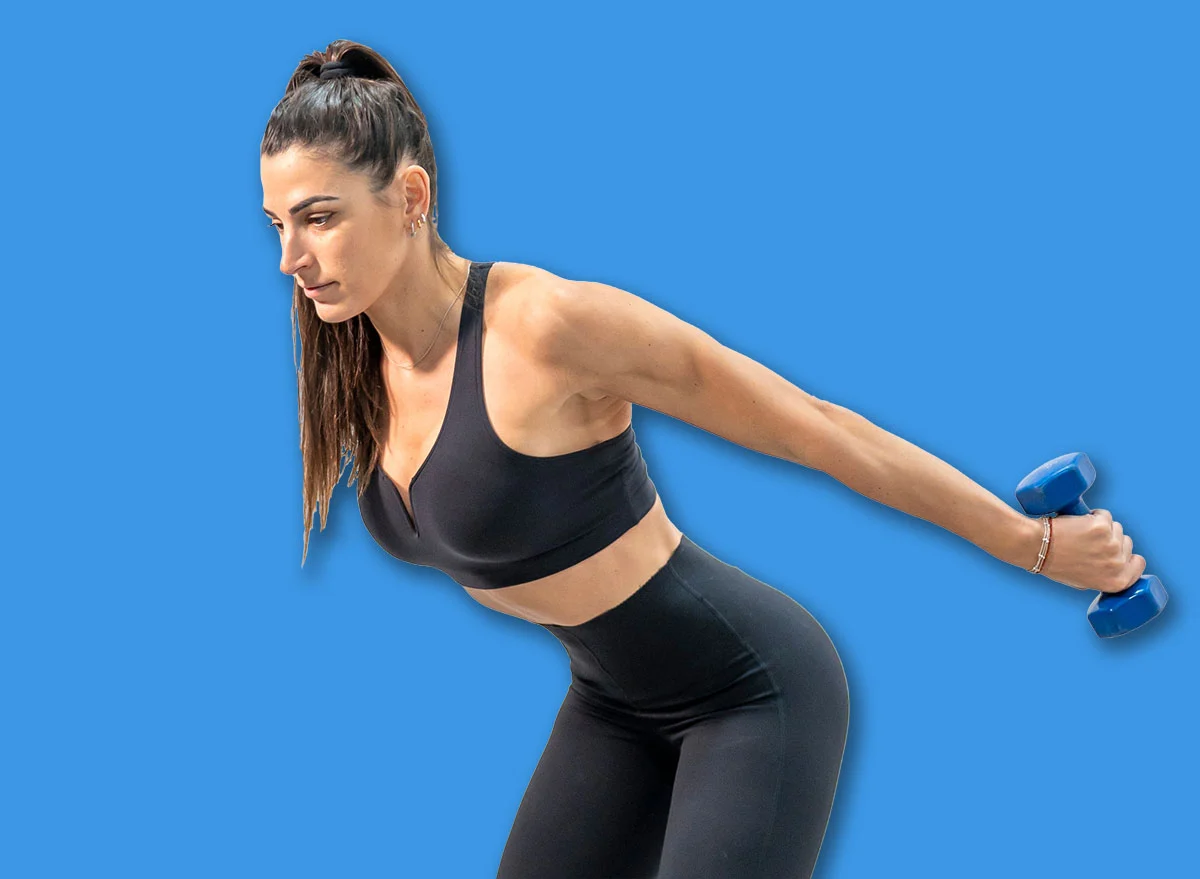
5. Standing Tricep Kickbacks
The triceps make up the majority of the upper arm’s mass. If your goal is to reduce "flab" or improve definition, the tricep kickback is your most effective tool.
- The Technique: Lean forward slightly at the hips with a flat back. Keep your elbows pinned to your ribs. Extend your arms backward, focusing on squeezing the back of your arms, then return to the starting position.
- Why It Works: This is an isolation movement that specifically targets the long head of the tricep, helping to tighten the back of the arm and improve pushing strength.
Supporting Data: Why Morning Consistency Wins
The science of habit formation suggests that morning workouts are significantly more sustainable. According to recent longitudinal studies on fitness adherence, individuals who perform their resistance training before the start of the workday are 40% more likely to maintain a consistent routine compared to those who wait until the evening, when fatigue and daily stressors can interfere.
Furthermore, a morning strength session provides a "metabolic afterburn." Engaging in resistance training spikes the metabolic rate, meaning your body continues to burn more calories throughout the day as it repairs muscle tissue. For individuals over 65, this is particularly beneficial as it helps combat age-related muscle atrophy (sarcopenia) and supports bone density.
Implications for Long-Term Health
The goal of this routine is not merely aesthetic. While the "sculpted" look is a welcome byproduct, the underlying intent is to ensure the body remains capable. As we age, the ability to perform "activities of daily living" (ADLs) is the strongest predictor of quality of life.
By focusing on these five movements, you are practicing:
- Postural Integrity: Protecting the spine by strengthening the surrounding musculature.
- Joint Longevity: Improving the range of motion in the shoulders and elbows.
- Metabolic Efficiency: Utilizing large muscle groups to maintain a healthy body composition.
Expert Conclusion
Greg Loomis emphasizes that you do not need to be an elite athlete to benefit from this regimen. "Start with a weight that feels manageable," he advises. "Focus on the quality of the movement—the ‘squeeze’ and the ‘stretch’—rather than the number on the dumbbell. Consistency is the magic ingredient."
As you integrate these moves into your morning routine, remember that you are doing more than just building muscles; you are building a foundation for a stronger, more capable version of yourself. Whether it is lifting a bag of groceries or simply reaching for a high shelf, the strength you build in the morning will serve you for the rest of the day—and for years to come.
Always consult with a healthcare professional before beginning any new exercise program, especially if you have pre-existing health conditions or mobility concerns.