










Published August 30, 2026
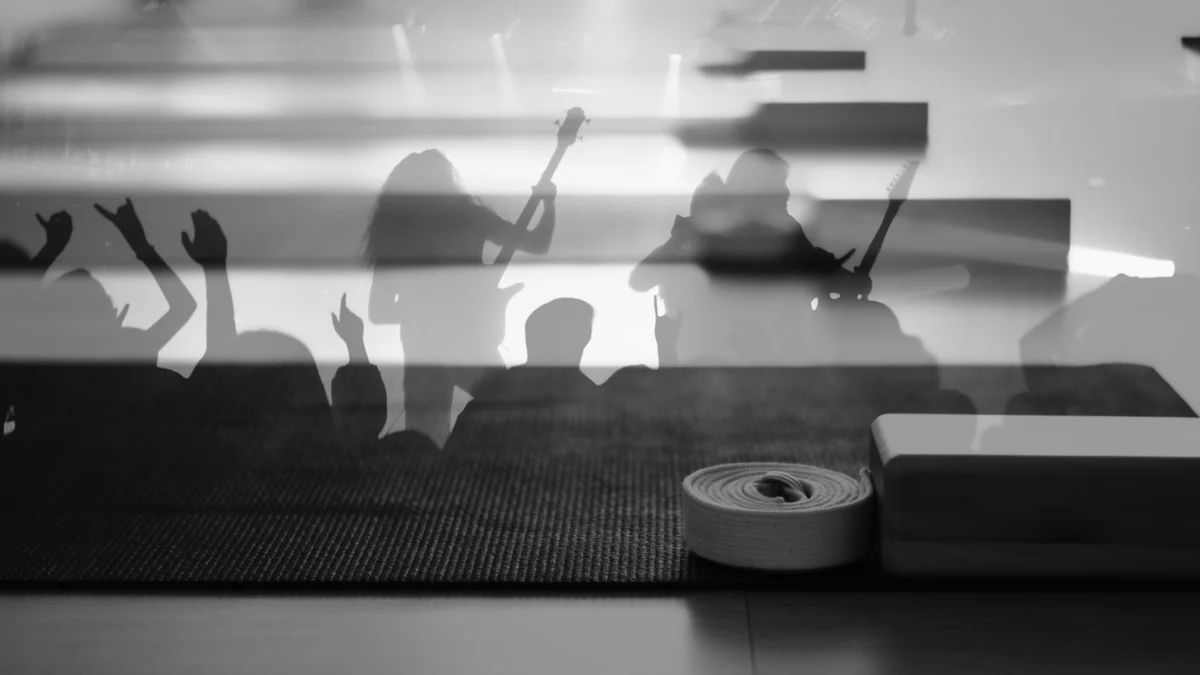
Chunky, low-tuned guitar chords thrum beneath the weight of crashing cymbals, the sound slowing into a rhythmic, quicksand-like sludge. A low, gravelly male voice growls from somewhere subterranean—vowels indistinguishable, bass frequencies vibrating the very floorboards—before the music dissolves into a cavernous wash of sustain and reverb. It is an unexpected, almost jarring soundtrack for a yoga class. Yet, inside the walls of Portland’s Elk Rock Yoga, this sonic landscape serves as the heartbeat for a practice that has quietly cultivated a devoted following for nearly a decade.
The Intersection of Sludge and Spirituality
Doom metal, a subgenre of heavy metal characterized by plodding tempos, ultra-low-tuned guitars, and oppressive distortion, might seem anathema to the serene, incense-filled tropes of traditional yoga. Pioneers like Black Sabbath, with tracks such as "Electric Funeral" and "Into the Void," established the genre’s DNA: a focus on heaviness, hypnotic repetition, and a deliberate, almost agonizingly slow progression.
At Elk Rock Yoga, instructor April Fox—easily identifiable by her signature feathered blue mohawk and a welcoming, disarming smile—has spent the last ten years proving that this "heaviness" is not a distraction, but a bridge to a deeper, more grounded state of consciousness.
"People would ask me what my hobbies were, and I’d jokingly say, ‘I practice yoga to metal,’" Fox recalls. "When I’d show them, they’d say, ‘Actually, that sounds amazing. Can I come do that with you?’"
What began as a personal experiment—Fox practicing in Detroit parks while listening to the Oregon-based doom band YOB—has evolved into a professional cornerstone of her teaching career. Today, her sessions draw a diverse crowd of locals and international students joining via live stream, all seeking a departure from the sanitized, image-conscious world of modern commercial yoga.
A Chronology of the "Metal Yoga" Movement
The evolution of Doom Metal Yoga from a niche curiosity to a cultural phenomenon in the Pacific Northwest is a testament to the shifting demographics of wellness.
- The Genesis (Circa 2016): After relocating from Detroit to Portland, Fox began integrating her love for sludge and doom metal into her personal practice. The sonic weight of the music naturally mirrored the slow-flow, strength-based sequences she favored.
- The Early Trials: Initial gatherings were informal, held in rented studio spaces. Word-of-mouth spread quickly through Portland’s interconnected metal and arts scene, transforming the sessions from sporadic meetups into monthly, and eventually weekly, rituals.
- Expansion and Digital Presence: As the classes gained traction, Fox embraced digital streaming, allowing the specific subculture of "metal yogis" to expand across continents.
- The Professionalization: By 2024, the practice had become a recognized, albeit unconventional, pillar of the local yoga community, gaining media attention for its inclusivity and departure from traditional aesthetic norms.
- The New Chapter (September 2026): In a move that cements the marriage of music and movement, Fox is relocating her classes to the Hallowed Halls Recording Studio in Southeast Portland, a site renowned for its historical contribution to the local music scene.
The Mechanics of the Practice: Why It Works
While the aesthetic of the room is undeniably "metal"—filled with band tees, elaborate tattoos, and a lack of the typical Lululemon-adjacent fashion—the yoga itself is grounded in technical rigor.
Fox’s sessions often begin with a traditional om, which she frames through a lens that bridges ancient Vedic philosophy with the absurdity of sci-fi writers like Douglas Adams. As the class moves into isometric integration—using the music’s slow, driving beat to hold foundational poses—the "theatrics" of the metal music begin to fade.
"The more melodic the music is, the easier it is to get tuned in and connected in the moment," Fox explains. "A lot of people will always say, ‘Oh man, after a while I kind of forget that the music is even happening.’"
This is the central irony of Doom Metal Yoga: the music is so immersive and consistent that it acts as a form of sensory white noise, allowing practitioners to bypass the chatter of the mind. Unlike high-energy, radio-pop-fueled classes that can feel abrasive or over-stimulating, the sustained, droning chords of doom metal provide a consistent, predictable, and oddly meditative backdrop.

Supporting Data and Demographic Shifts
Perhaps the most significant metric of this movement’s success is its demographic reach. Observers note that Elk Rock Yoga consistently attracts a higher percentage of male practitioners than the national average for yoga studios, which often struggles to bridge the gender gap in attendance.
Beyond gender, the class attracts a wide spectrum of the population: queer and non-binary individuals, long-time metalheads who would never step foot in a traditional studio, and curious beginners who feel intimidated by the "yogi" archetype.
"There was a sense that no one was particularly concerned with looking like a ‘yogi,’" one student noted after class. This "come as you are" ethos is not just a marketing slogan; it is a structural necessity for the class. Whether a student arrives in professional attire or full "corpse paint," the focus remains entirely on the internal experience rather than external performance.
Official Perspectives: The Philosophy of the "Meat Suit"
April Fox views her work as a form of radical accessibility. In a wellness industry often criticized for being exclusionary, expensive, and hyper-focused on body image, Doom Metal Yoga offers an alternative doorway.
"What a gift to help anybody feel more okay being in their own skin, because so many of us are not," Fox says.
When asked about the future of the practice and the upcoming move to Hallowed Halls, Fox remains grounded. For her, the venue change is about finding a space that matches the "vibe" of the music. "The space is pretty legendary for local musicians to record and produce in," she says. "It’s huge, it’s a great vibe match for our classes, and we’re all pretty stoked to have a new home."
Her philosophy, however, remains remarkably simple and devoid of the pretension often found in the "spirituality" industry. "I only get one run in this meat suit, and you might as well enjoy it," she quips. "I don’t know why the hell else we’re here if not to enjoy the time that we are."
The Broader Implications for the Yoga Industry
The success of Doom Metal Yoga suggests a profound shift in how consumers engage with wellness. For years, the industry leaned heavily into "peace and light"—a curated, minimalist aesthetic that, while popular, left many potential practitioners feeling alienated.
The rise of "genre-specific" yoga, whether it be metal, hip-hop, or even punk, signifies a maturation of the market. It acknowledges that the "spiritual" benefit of yoga is not tied to the genre of background music, but to the focus, breath, and physical awareness fostered by the practice.
Furthermore, by removing the intimidation factor—the "perfection" often associated with yoga—Fox and her peers are expanding the reach of the practice to those who might otherwise avoid it. The implications for the fitness and wellness industry are clear: authenticity, when paired with a genuine, non-judgmental community, is a powerful driver of engagement.
As the sun rises over Portland, casting long shadows across the industrial streets where Elk Rock Yoga resides, one thing is certain: the "doom" in Doom Metal Yoga is far from ominous. For its practitioners, it is a source of profound, heavy, and life-affirming stillness. In a world that often demands we speed up, perhaps the most radical act is to slow down—even if we have to listen to a growling, distorted, slow-motion dirge to get there.