








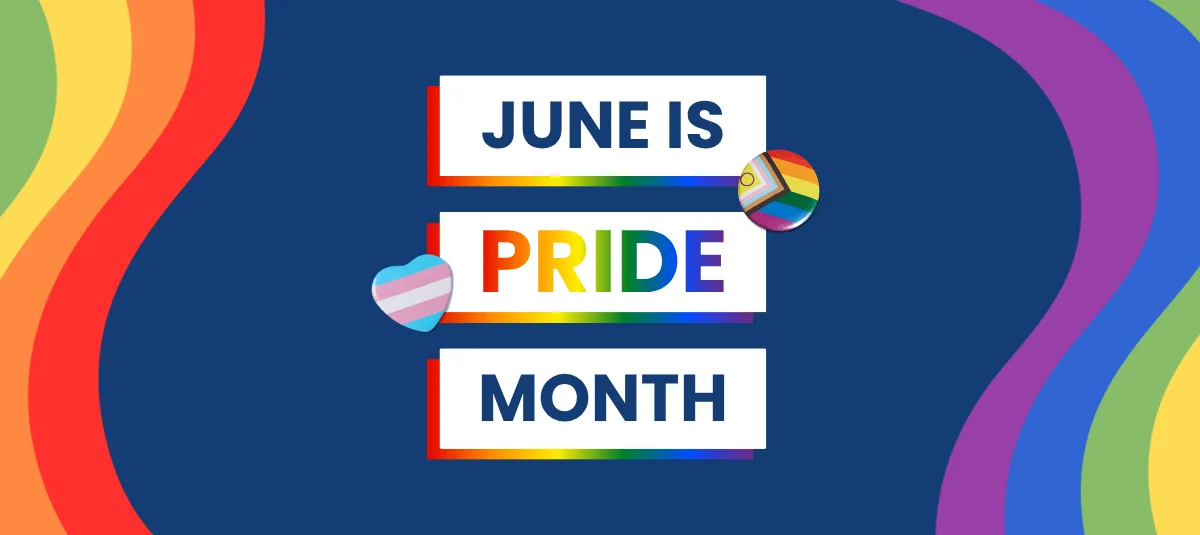
WASHINGTON, D.C. — As the world observes Pride Month in June 2026, the global conversation has shifted from mere visibility to the critical intersection of identity, policy, and mental health. While the month remains a vibrant celebration of the LGBTQ+ community, it serves as a stark reminder of the radical origins of the movement and the systemic challenges that persist. In a landmark year for advocacy, the national nonprofit Active Minds has announced a record-breaking $20 million gift to bolster youth mental health, even as federal policy shifts threaten specialized crisis support for queer youth.
Main Facts: A Dual Reality of Progress and Precarity
The state of LGBTQ+ affairs in 2026 is defined by a paradoxical "dual reality." On one hand, the movement has achieved unprecedented institutional support and philanthropic backing. Active Minds, the nation’s leading organization for youth mental health mobilization, recently received a $20 million unrestricted gift from philanthropist MacKenzie Scott. This represents the largest single donation in the organization’s 25-year history and is intended to scale national infrastructure for youth-led mental health solutions.
On the other hand, the community faces significant rollbacks in federal protections. Effective July 17, the federal government has mandated the discontinuation of the "Press 3" option on the 988 Suicide & Crisis Lifeline—a dedicated sub-line specifically designed to provide LGBTQ+-affirming crisis counseling. This specialized service, which handled over 1.5 million interactions since its 2022 inception, is being phased out in favor of a "generic" counseling model.
This policy shift has ignited a firestorm among advocacy groups. Organizations like The Trevor Project have stepped into the vacuum, reinforcing their independent 24/7 crisis services to ensure that queer youth do not lose access to counselors who understand the nuances of gender identity and sexual orientation. The tension between robust private funding and retreating public policy underscores the theme of Pride 2026: the necessity of community-led resilience.
Chronology: From the Shadows of 1969 to the Leadership of 2026
To understand the current climate, one must trace the trajectory of the LGBTQ+ civil rights movement from its clandestine beginnings to its current status as a major pillar of public health advocacy.

The Era of Criminalization (Pre-1969)
Prior to the late 1960s, being perceived as queer in the United States was not only socially stigmatized but legally dangerous. State sodomy laws, federal hiring bans, and immigration restrictions were the standard. LGBTQ+ individuals had little to no recourse against police brutality or workplace discrimination. Safe spaces were rare, and those that existed were frequently targeted by law enforcement.
The Stonewall Rebellion (June 1969)
The modern movement found its catalyst at the Stonewall Inn in New York City’s Greenwich Village. On June 28, 1969, a routine police raid by plainclothes NYPD officers met unexpected resistance. Led by transgender and gender-nonconforming patrons—including figures such as Marsha P. Johnson and Sylvia Rivera—the community refused to be detained. The ensuing six days of protests and riots transformed a local struggle into a national uprising.
The Birth of Pride (1970–2000)
In June 1970, the first Christopher Street Liberation Day March was held to commemorate the one-year anniversary of the Stonewall riots. This event, which attracted thousands, solidified the concept of "Pride" as a blend of celebration and protest. The decades that followed saw the birth of major advocacy groups, including the Gay Liberation Front (GLF), the Human Rights Campaign (HRC), and GLAAD.
The Mental Health Pivot (2001–2026)
In 2001, Alison Malmon founded Active Minds at the University of Pennsylvania following the suicide of her brother, Brian. This marked a shift in the movement toward addressing the specific mental health needs of youth. Over the next 25 years, the organization grew into a nationwide network reaching 4.5 million young people. By 2026, the movement has matured into a sophisticated advocacy machine, capable of securing multi-million dollar investments to drive systemic change in schools and communities.
Supporting Data: The Impact of Specialized Support and Philanthropy
The importance of the recent $20 million gift and the controversy over the 988 Lifeline can be quantified through the lens of public health data.
According to Active Minds, their peer-led programs have a measurable impact on mental health literacy and help-seeking behavior among students. The $20 million gift follows a previous $4 million donation from MacKenzie Scott in 2021, signaling a high level of confidence in the organization’s ability to scale. The new funding is earmarked for:
- The Mental Health Advocacy Academy: Targeted at high school students to build leadership and organizing skills.
- The Mental Health Advocacy Institute: Designed for college students to translate youth voices into legislative and systemic change.
- National Infrastructure: Expanding the reach of 4.5 million participants to ensure that mental health is prioritized in every educational tier.
Conversely, the data surrounding the 988 Lifeline’s LGBTQ+ sub-line highlights a looming crisis. Since 2022, the "Press 3" option served as a vital safety net for over 1.5 million callers. Advocacy groups argue that "generic" support is often insufficient for LGBTQ+ youth, who may face identity-based rejection at home. Without specialized counselors, there is a statistical concern that "shut down" rates—where a caller ends the interaction without receiving help—will increase among the queer population.
Official Responses: Leaders Speak on the Path Forward
The divergence between philanthropic growth and policy contraction has drawn strong statements from leadership across the sector.
Alison Malmon, Founder and Executive Director of Active Minds, emphasized the transformative nature of the $20 million gift. "This is a defining moment for Active Minds and for youth mental health in this country," Malmon stated. "This gift allows us to make bold, long-envisioned investments in youth leadership and youth-led solutions to champion a new era of mental health."
In contrast, the response to the federal changes to the 988 Lifeline has been one of urgent redirection. Jaymes Black, CEO of The Trevor Project, addressed the discontinuation of the specialized federal line with a message of reassurance to queer youth. "Generic support isn’t enough," Black noted. "When you’re struggling, you need someone who understands your experience and doesn’t make you explain or defend your identity. I want every LGBTQ+ young person to know that you are worthy, you are loved, and you belong—despite this heartbreaking news."

The Trevor Project has confirmed that its independent crisis services—reachable via text (START to 678-678) or phone (866-488-7386)—will remain available 24/7, independent of federal funding shifts, to fill the gap left by the 988 policy change.
Implications: The Radical Act of Authentic Living in 2026
The events of 2026 suggest that the future of the LGBTQ+ movement lies in "connection-based resilience." As federal protections fluctuate with the political tide, the burden of support is shifting toward community-funded and youth-led initiatives.
The Shift to Youth-Led Advocacy
The massive investment in Active Minds suggests a move away from top-down mental health interventions. By funding "youth-led solutions," the philanthropic community is acknowledging that young people are often the best-equipped to support their peers. This peer-to-peer model is becoming the national standard for "proven youth-led mental health programming."
The Necessity of Identity-Affirming Care
The closure of the federal LGBTQ+ hotline highlights a growing debate over "universal" vs. "specialized" care. The implication for 2026 and beyond is that the private sector and nonprofits will increasingly be responsible for providing the identity-affirming care that the government may no longer guarantee. This creates a reliance on organizations like The Trevor Project and Active Minds to act as a "shadow" social safety net.
Pride as a Radical Act
Finally, the historical context of Stonewall remains more relevant than ever. In an era where visibility is high but specialized protections are being dismantled, the act of "living authentically" remains, as the Active Minds blog notes, a "radical act." Pride Month in 2026 is less about the celebration of a finished battle and more about the fortification of a community that must continue to protest for the right to exist safely and healthily.

As the month concludes, the focus turns to the long-term impact of these $20 million investments. The goal is to move beyond crisis intervention and toward a society that "forever values and prioritizes mental health." For the LGBTQ+ community, this means ensuring that the unity born at Stonewall continues to fuel the connection and advocacy required to navigate a complex and often contradictory political landscape.