










Originally featured in the September-October 1979 issue of Yoga Journal, this archival deep dive explores the profound physical and psychological architecture of Virasana (Hero Pose), a posture that remains as vital to modern practice today as it was nearly five decades ago.
Main Facts: The Essence of the Hero
Virasana, or the Hero Pose, occupies a singular space in the vast lexicon of hatha yoga. While modern Western practitioners often gravitate toward expansive, flow-based movements, Virasana serves as a grounding counterpoint. It is a posture of containment, internal rotation, and absolute stillness.
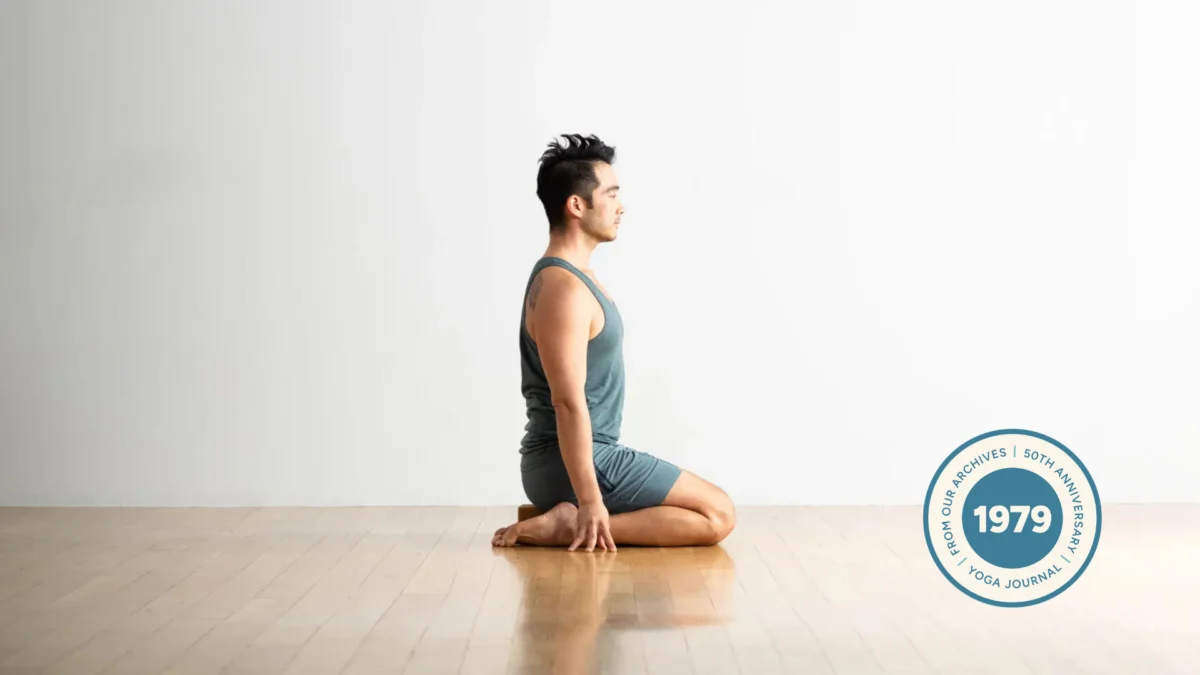
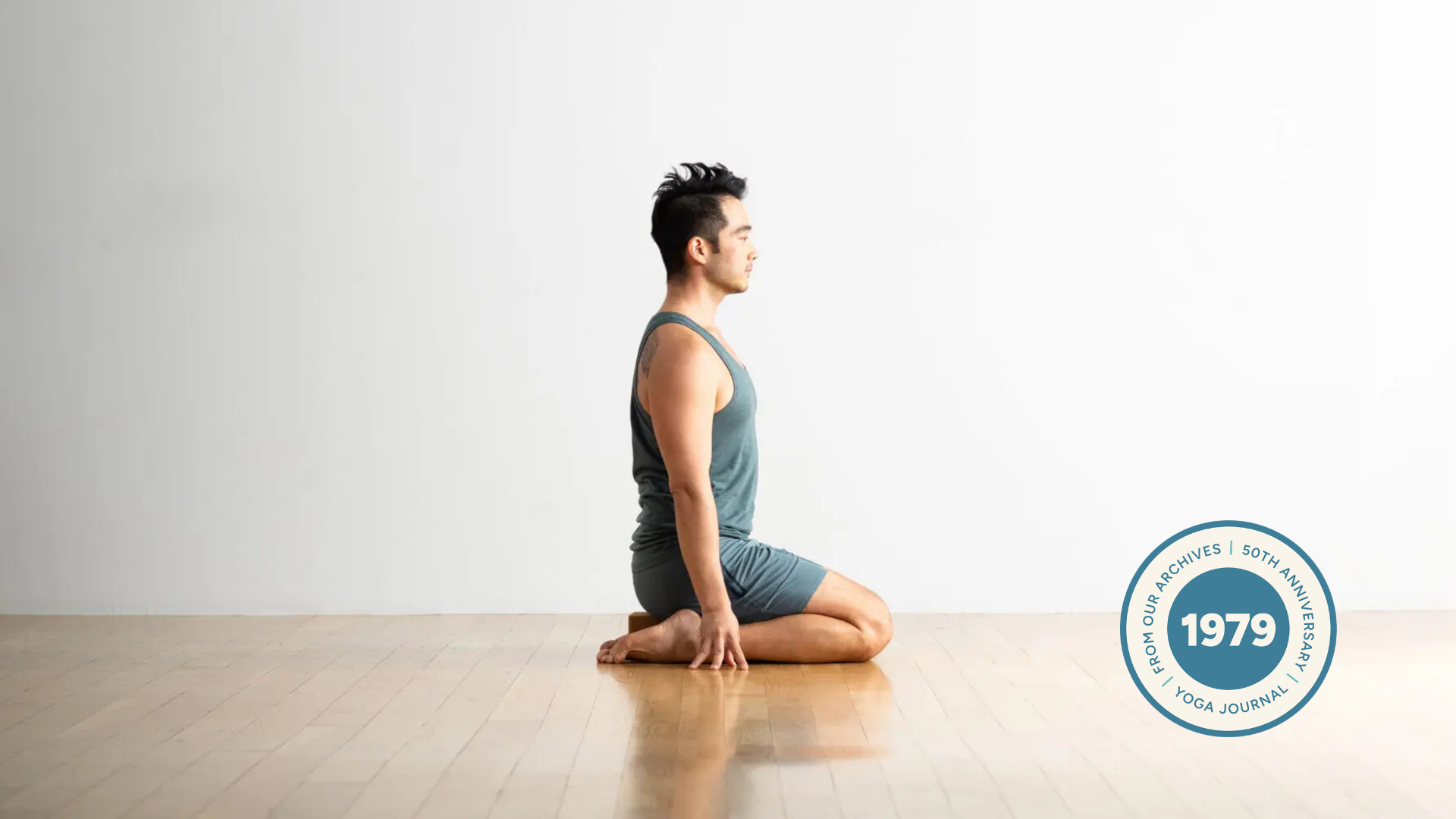
At its core, Virasana requires the practitioner to kneel, sitting back between the heels with the tops of the feet flat on the floor. While the mechanics may seem straightforward, the pose is deceptively challenging. For the average adult, whose lifestyle is often defined by sedentary sitting in chairs—a position that chronically tightens the quadriceps and ankles—Virasana can feel like an intrusion. Yet, this "difficulty" is the very catalyst for the pose’s transformative power. By bringing the hips into a neutral, slightly internally rotated position, Virasana corrects the imbalances created by the modern propensity for external hip rotation and slouching. It is not merely a physical shape; it is a laboratory for the mind.
Chronology: From Childhood Intuition to Disciplined Study
The history of Virasana is etched into the human experience long before it is named in a yoga studio. Observe children at play across almost any culture, and you will frequently find them naturally settling into a variation of the Hero Pose. For a child, it is a position of rest and organic equilibrium.
However, as we mature, the stresses of modern life—the desk-bound hours, the repetitive patterns of walking, and the gradual shortening of connective tissues—rob us of this natural capacity. The journey back to Virasana is a chronological process of "unlearning" physical tension.
- The Early Phase: The student approaches the pose with resistance. The mind, unaccustomed to stillness, rebels. This is the period of "restlessness," where the practitioner questions the utility of the discomfort.
- The Middle Phase: Through the consistent, patient application of the will, the body begins to accommodate the posture. The "waves" of the mind (the vrttis described in yogic philosophy) begin to slow.
- The Mature Phase: The physical sensation of the pose fades into the background. The practitioner achieves a state of repose, where the stillness of the body acts as a mirror for the stillness of the atman (the soul).
Supporting Data: Anatomy and the Mechanics of Will
The skepticism often directed at Virasana by some medical professionals—specifically regarding knee health—is rooted in a misunderstanding of alignment. When practiced correctly, Virasana does not strain the medial collateral ligaments; it strengthens them.
Anatomical Precision
The primary mechanical imperative in Virasana is the alignment of the feet. The feet must be kept strictly in line with the calves. When the feet turn outward, the knee joint is subjected to torque, leading to the discomfort that critics often cite. By maintaining vertical alignment, the weight is distributed evenly across the connective tissues of the knees and ankles.
The Role of Discomfort
From a psychological perspective, Virasana functions as a training ground for the "will." The author’s experience, heavily influenced by the teachings of B.K.S. Iyengar, suggests that the mind is fundamentally resistant to silence. It seeks to process, integrate, and chatter. By holding a posture that presents "mild to moderate discomfort," the practitioner creates a controlled environment to observe the mind’s rebellion. Each time the mind attempts to flee the pose, the act of staying—the act of will—strengthens the practitioner’s capacity for focus without inflating the ego.
Official Responses and Expert Methodology
The methodology surrounding Virasana has been codified by master practitioners like B.K.S. Iyengar, whose seminal work, Light on Yoga, remains the authoritative text on the subject. His approach emphasizes that if a pose is difficult, it is not to be abandoned, but supported.
Strategies for the Beginner
- Supportive Props: The use of blankets or folded mats under the hips is not a "crutch," but a necessary modification to allow the pelvis to tilt correctly.
- The Iyengar Adjustment: For those experiencing sharp sensations in the back of the knee, placing a thinly folded towel deep into the crease of the knee before bending it acts as a mechanical wedge, creating space for the joint to fold safely.
- Incremental Progress: Begin by sitting on the heels. Only when the ankles and knees demonstrate ease should the practitioner move to separating the heels and sinking the hips to the floor.
Advancing to Supta Virasana
For the intermediate student, the transition to Supta Virasana (Reclining Hero Pose) opens new physiological doors. By moving the elbows to the floor and eventually lowering the spine, the practitioner engages in a deep stretch of the quadriceps femoris and the muscles of the anterior hip. This, in turn, facilitates better lung capacity and aids digestion.
Implications: The Path to Freedom
The implications of practicing Virasana extend far beyond the joints of the knees or the flexibility of the quads. Yoga is, fundamentally, a pursuit of freedom. When we hold a pose that the body is inclined to reject, we are actively dissolving the internal barriers that keep us in a state of agitation.
The Prenatal Advantage
The application of Virasana during pregnancy offers a poignant example of the pose’s utility. Many expectant mothers find that Supta Virasana, with arms extended overhead, provides relief from the indigestion and nausea associated with pregnancy. By creating space in the abdominal cavity and lengthening the connective tissue around the ribs, the pose provides a rare moment of physical release during a period of significant systemic change.
The Philosophy of Stillness
Ultimately, the article asserts a radical premise: that body and mind must be in absolute stillness for the soul to be experienced. We live in an era of constant processing, where the "clouds" of information and thought obscure our pure self. Virasana is the act of parting those clouds.
As we look back at the 1979 archives of Yoga Journal, the message remains clear: the difficulty is the point. The "hero" in Virasana is not someone who performs a feat of strength, but someone who sits with their own restlessness until it subsides. It is in that subsiding that we find the true goal of yoga—a quiet mind, a resilient body, and the realization of the self. By embracing the discipline of the Hero, we do not just improve our posture; we reclaim our freedom.
The author wishes to acknowledge the enduring influence of B.K.S. Iyengar and his foundational text, "Light on Yoga," which continues to serve as a beacon for practitioners seeking the intersection of physical rigor and spiritual clarity.