









NEW YORK — The United States, having once declared the elimination of measles through decades of rigorous vaccination, finds itself navigating an unprecedented public health crisis. As the nation faces its most severe surge of the virus in over thirty years, the situation has transcended clinical boundaries, morphing into a volatile political battleground.
The recent announcement of two measles-related deaths in Pennsylvania has not only signaled a tragic failure in community immunity but has ignited a fierce, high-profile feud between state leadership and federal health authorities. This confrontation—pitting vaccine-promoting governors against skeptics within the highest echelons of the federal government—has left public health experts alarmed, warning that the discord is obscuring the reality of an exploding infectious threat.
The Chronology of a Mounting Crisis
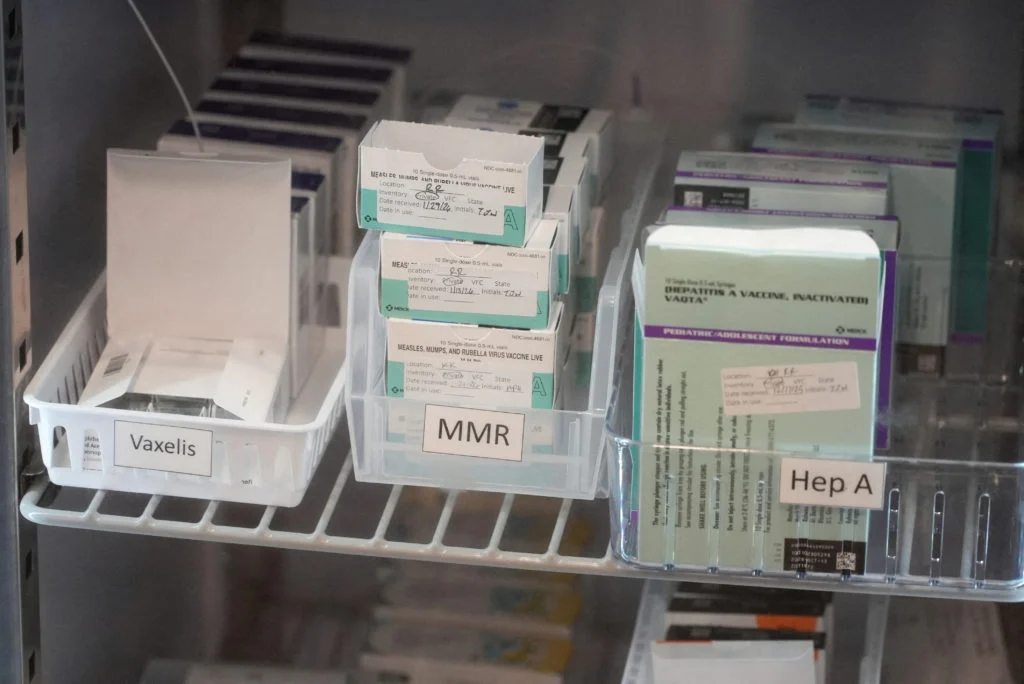
The erosion of U.S. measles immunity has been a slow-moving trend that reached a breaking point in 2025. For decades, the U.S. maintained vaccination coverage rates exceeding the 95% threshold required to ensure “herd immunity.” However, recent years have seen a steady decline, fueled by vaccine hesitancy and misinformation.
- 2000: The U.S. officially declares the domestic spread of measles eliminated.
- 2024-2025: Vaccination rates drop below the critical 95% mark in several regions, creating pockets of susceptibility.
- August 14, 2025: A newborn infant in Lancaster County, Pennsylvania—too young for the standard MMR vaccine—passes away. While initial reports linked the death to measles, local coroners later disputed the virus’s role.
- September 2025: Pennsylvania officials formally announce two measles-related deaths, sparking an immediate, polarized response from political figures.
- November 2025: International health organizations are scheduled to convene to determine if the United States and Mexico have effectively lost their “measles-free” status.
The Pennsylvania Flashpoint
The tension reached a fever pitch this week when the Pennsylvania Department of Health reported two fatalities involving unvaccinated individuals who had tested positive for measles. Pennsylvania Governor Josh Shapiro, a staunch proponent of public health initiatives, framed the deaths as avoidable tragedies, emphasizing that high vaccination rates would have prevented the infections entirely.
However, the response from the federal level was immediate and confrontational. U.S. Health Secretary Robert F. Kennedy Jr., a known critic of established vaccine protocols, publicly challenged the findings. In a statement posted to social media, Kennedy claimed that the reports of the deaths “may even have been altogether fabricated.”
This is not the first time Kennedy has intervened in such matters. During the 2024 measles cycle, when three deaths were recorded, he similarly cast doubt on the medical findings, specifically questioning whether measles was the primary cause of death in a pediatric case. This skepticism has created a dangerous disconnect between public health messaging and the data being processed by local medical examiners.
Decoding the Definition of a “Measles Death”
The current controversy highlights a systemic challenge: how does a modern, developed nation define a death related to a disease that was supposed to be eradicated?
The World Health Organization (WHO) provides a clear framework: a death is classified as measles-related if the deceased tested positive for the virus and expired within one month of the appearance of the telltale rash, provided the death cannot be attributed to another obvious cause, such as physical trauma.
In the case of the newborn in Lancaster County, Dr. Stephen Diamantoni, the county coroner, provided a nuanced perspective that contradicted the state’s blanket categorization. While the infant tested positive for measles, the coroner’s investigation revealed a tear in the spleen as the primary cause of death.
"The baby did not die as a result of measles," Dr. Diamantoni stated, noting that the physical evidence of the virus—such as the characteristic splenic swelling often associated with measles—was absent in the autopsy.
This creates a conflict between the state’s epidemiological reporting (which often relies on positive test results plus mortality) and the coroner’s forensic pathology. State health officials continue to stand by their reporting, arguing that the presence of the virus in an unvaccinated individual during an outbreak constitutes a measles-related fatality.
Expert Perspectives: The Danger of Politicization
The debate has left the medical community frustrated and fearful that the political theater is obscuring a “coming disaster.” Dr. Amesh Adalja, an infectious disease specialist and senior scholar at the Johns Hopkins Center for Health Security, argues that the discourse has fundamentally shifted from science to partisan optics.
“Now it’s turned political,” Dr. Adalja noted. “It’s no longer about getting answers and figuring this out. When you have politicians on both sides of the aisle using public health data as a cudgel, you lose the trust of the public, and you lose the ability to implement effective public health measures.”
Dr. Paul Offit, a renowned vaccine researcher at the Children’s Hospital of Philadelphia, points to a mathematical anomaly that suggests the crisis is far worse than the reported figures indicate.
“If there are 400 reported cases in that area, and we are seeing two deaths, that is a significantly higher mortality rate than the expected 1 in 1,000,” Dr. Offit explained. “This suggests that there are a massive number of unreported, silent infections circulating in the community.”
Implications for Public Health and Education
As the school year progresses, the risk of transmission increases exponentially. Schools serve as primary nodes for the spread of highly transmissible pathogens like measles, which can remain airborne for hours in an enclosed space.
The Regulatory Struggle
The delay in the Centers for Disease Control and Prevention (CDC) national update—which was postponed without a specific explanation—has only added to the confusion. When federal agencies fail to provide clear, timely, and transparent data, it leaves a void that is quickly filled by speculation and political maneuvering.
The Need for Standardized Reporting
The Council of State and Territorial Epidemiologists (CSTE), led by executive director Janet Hamilton, has called for a more robust approach to tracking the long-term consequences of the current surge. The complications of measles extend far beyond death; they include severe hospitalizations, secondary bacterial infections, and long-term neurological damage. As infections rise, the country must prepare for a surge in these "avoidable complications" that have not been seen in the U.S. for generations.
Conclusion: A Call for Depoliticization
The path forward, according to experts, requires a return to evidence-based, non-partisan communication. Dr. Adalja suggests that all future communications regarding the measles outbreak should be handled exclusively by career health officials and medical experts, rather than elected political figures.
“They should learn to keep the politicians out of it,” Adalja urged. “The focus must return to what is scientifically known, what remains under investigation, and how to protect the most vulnerable—including infants too young to be vaccinated and those who are immunocompromised.”
As the U.S. faces the possibility of losing its measles-free status this November, the nation stands at a crossroads. The choice is between continuing a destructive, partisan debate that undermines the integrity of public health data or adopting a unified, scientifically rigorous strategy to curb a disease that should, by all modern medical standards, be a relic of the past. The safety of the next generation of American children hangs in the balance.