











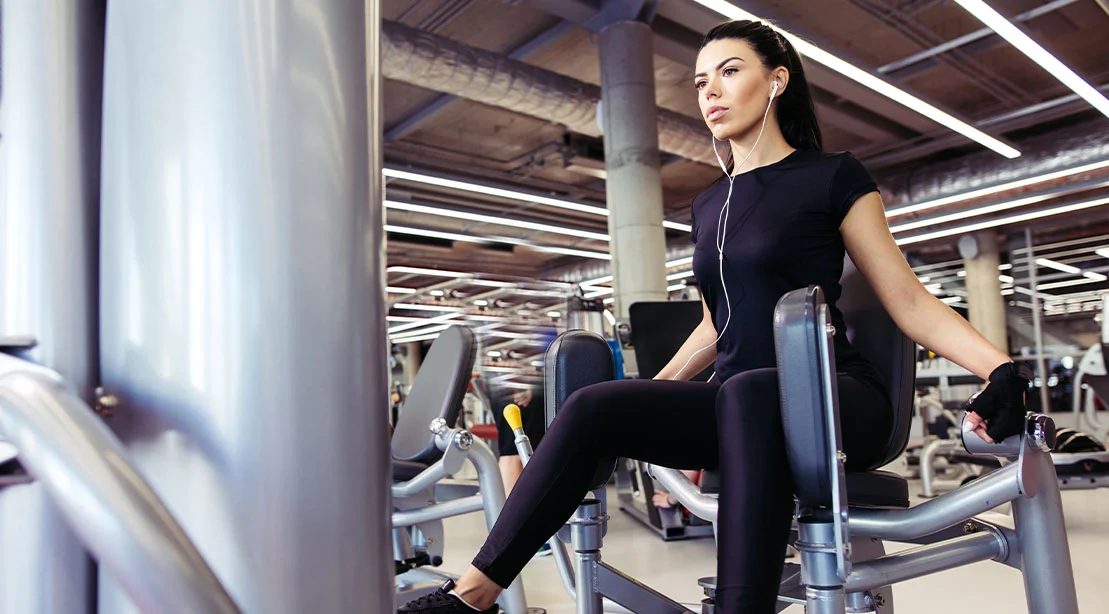
It is the quintessential "gym wallflower." You’ve seen it: a user sits upright, knees pressed against foam pads, rhythmically pushing their legs outward while maintaining an intensely focused gaze at the opposite wall to avoid eye contact. The hip abductor machine—often relegated to the darker, quieter corners of the weight room—has long been the subject of ridicule among the "hardcore" lifting crowd.
To the purists who worship at the altar of heavy barbells, the machine is dismissed as "fluff." It lacks the dramatic plate-clanging, the spine-tingling tension of a heavy deadlift, and the athletic posturing of a deep squat. However, as modern exercise science matures, the fitness community is beginning to realize that muscles do not care about "cool points" or "functional optics." They care about mechanical tension, metabolic stress, and targeted overload.
This article examines why the hip abductor machine, despite its maligned reputation, is a potent tool for glute development and pelvic health, backed by insights from physical therapists Bo Babenko and Dan Swinscoe.
The Main Facts: Defining the Machine’s Purpose
At its core, the hip abductor machine is an isolation tool designed to strengthen the muscles responsible for moving the femur away from the midline of the body. These muscles—primarily the gluteus medius, gluteus minimus, and the upper fibers of the gluteus maximus—are critical stabilizers.
While the machine is frequently mocked for its seated, "unnatural" posture, its function is precise. By locking the pelvis in a stable position, the machine eliminates the need for balance, allowing the user to focus exclusively on the abduction movement. This isolation is precisely what makes it a point of contention: critics argue that because you are seated, you aren’t training the body for the real-world, ground-based demands of sports or daily life. Yet, as we will explore, that "limitation" is exactly what makes it a high-value accessory for hypertrophy.
A Chronology of the "Functional" Debate
The divide over the hip abductor machine is symptomatic of a larger shift in the fitness industry.
- The Early Era (The Isolation Age): During the bodybuilding boom of the 70s and 80s, isolation machines were the gold standard. The focus was on "pumping" the muscle, and the hip abductor was a staple for shaping the outer sweep of the glutes.
- The Functional Movement Era (The Early 2000s): With the rise of "functional fitness" (CrossFit, kettlebell training, etc.), the philosophy shifted. If you weren’t standing, moving, or using your core to stabilize a load, the exercise was deemed "junk." The hip abductor machine was cast aside as a remnant of a bygone era.
- The Modern Synthesis (Present Day): Today, sports scientists and physical therapists are taking a more nuanced approach. The consensus is shifting toward a hybrid model: prioritize heavy compound movements for overall strength, but utilize isolation machines to address specific muscular weaknesses or to accumulate volume without systemic fatigue.
Supporting Data: What the Science Says
The skepticism surrounding the machine rarely accounts for electromyography (EMG) studies. Research has consistently demonstrated that the seated hip abduction machine is a powerhouse for muscle recruitment.
A pivotal review in the Journal of Physical Therapy Science noted that the machine consistently produces high levels of gluteus medius activation, with some participants achieving 80% of their maximal voluntary isometric contraction (MVIC). For those seeking aesthetic development, this is a significant finding; it suggests that the machine is not merely "busy work," but a legitimate stimulus for hypertrophy.
Furthermore, a 2022 study highlighted a distinct advantage: the machine minimizes the involvement of the tensor fasciae latae (TFL). In many hip-abduction exercises, the TFL—a smaller muscle—tends to "take over" the movement, leading to hip tightness or pain. By isolating the abduction movement in a seated position, the machine forces the gluteus medius to do the heavy lifting, providing a more targeted stimulus for the desired muscles.
Official Responses: Insights from the Experts
We spoke with physical therapists Bo Babenko and Dan Swinscoe to gain clinical perspectives on the machine’s utility.
The Critical View
Bo Babenko acknowledges the machine’s shortcomings: "My main problem with this machine is that it is a completely unnatural way to use these muscles in a seated position. It’s incredibly low on my list of ways to recruit hip muscles because it removes the foot-to-ground connection that is vital for real-world stability."
The Pragmatic View
Dan Swinscoe, while agreeing on the importance of functional training, offers a counterpoint: "It trains the leg with the foot off the ground. In daily activities, the foot is on the ground, and pressure through the foot is a key trigger for coordinated muscle activation. However, for an athlete or a general lifter looking for hypertrophy, it’s a useful tool. Compound lifts like squats and lunges don’t always load every region of the glute equally. This machine allows you to fill those gaps."
Implications for Your Training
So, where does this leave the average gym-goer? The implications for your program design are clear: stop viewing the hip abductor machine as a replacement for squats and deadlifts, and start viewing it as a high-efficiency accessory.
When to Use It
- Hypertrophy Focus: If your goal is a more defined glute shelf, this machine provides the isolation required to exhaust the glute medius without taxing your lower back.
- Recovery-Friendly Volume: If you are already doing heavy squats, you may not want to add more high-CNS (Central Nervous System) movements. The abductor machine is low-fatigue, allowing you to add volume without hindering your recovery.
- Pelvic Stability: For those rehabilitating from minor injuries or correcting gluteal amnesia, the machine provides a safe, controlled environment to "wake up" the muscles.
When to Avoid It
- As a Primary Movement: Never prioritize this over your compound lifts. It is an accessory, not a cornerstone.
- When You Have Poor Form: If you are "bouncing" the weights or using momentum, you are effectively turning a high-reward exercise into "junk volume."
Programming for Results: A Practical Guide
If you want to integrate the machine effectively, treat it as the "finisher" of your lower body session.
- Placement: Perform this after your heavy compound lifts (squats, RDLs, lunges).
- Volume: Aim for 2 to 4 sets of 12 to 20 reps. The higher rep range is ideal for metabolic stress, which is a key driver of glute growth.
- Rest Periods: Keep rest intervals short (45–90 seconds) to maximize the "burn" and keep the intensity localized to the target muscles.
- Progression: Progressive overload is still the rule. Add reps, and once you hit the top of the range, increase the weight by the smallest possible increment.
The Verdict
The "functional" crowd often falls into the trap of believing that if an exercise isn’t "sport-specific," it is worthless. This is a narrow view that ignores the reality of exercise physiology. The hip abductor machine is neither a magic pill for hip health nor a waste of time. It is a tool.
When you strip away the social stigma of sitting down to work out, you are left with a simple, effective, and scientifically supported method for isolating the glutes. It is a low-risk, high-reward accessory that can help you round out your glute development and support the stability of your pelvis.
The next time you see that machine tucked away in the corner, don’t walk past it with a scoff. Instead, consider whether your training plan might be missing the very thing that machine is designed to provide: focused, targeted gluteal intensity. Stop treating "simple" like it means "worthless," and let your results speak louder than the gym floor gossip.