








Published: September 4, 2026
Subject: The Yoga Journal Archives (Originally published March-April 2002)
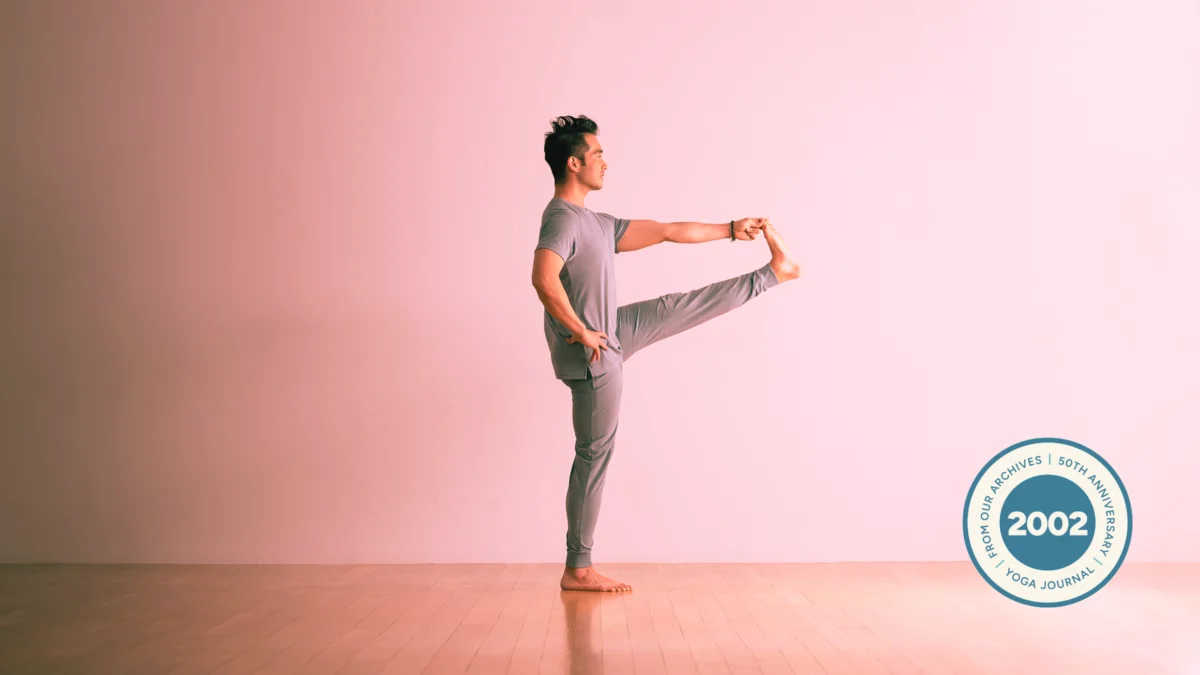
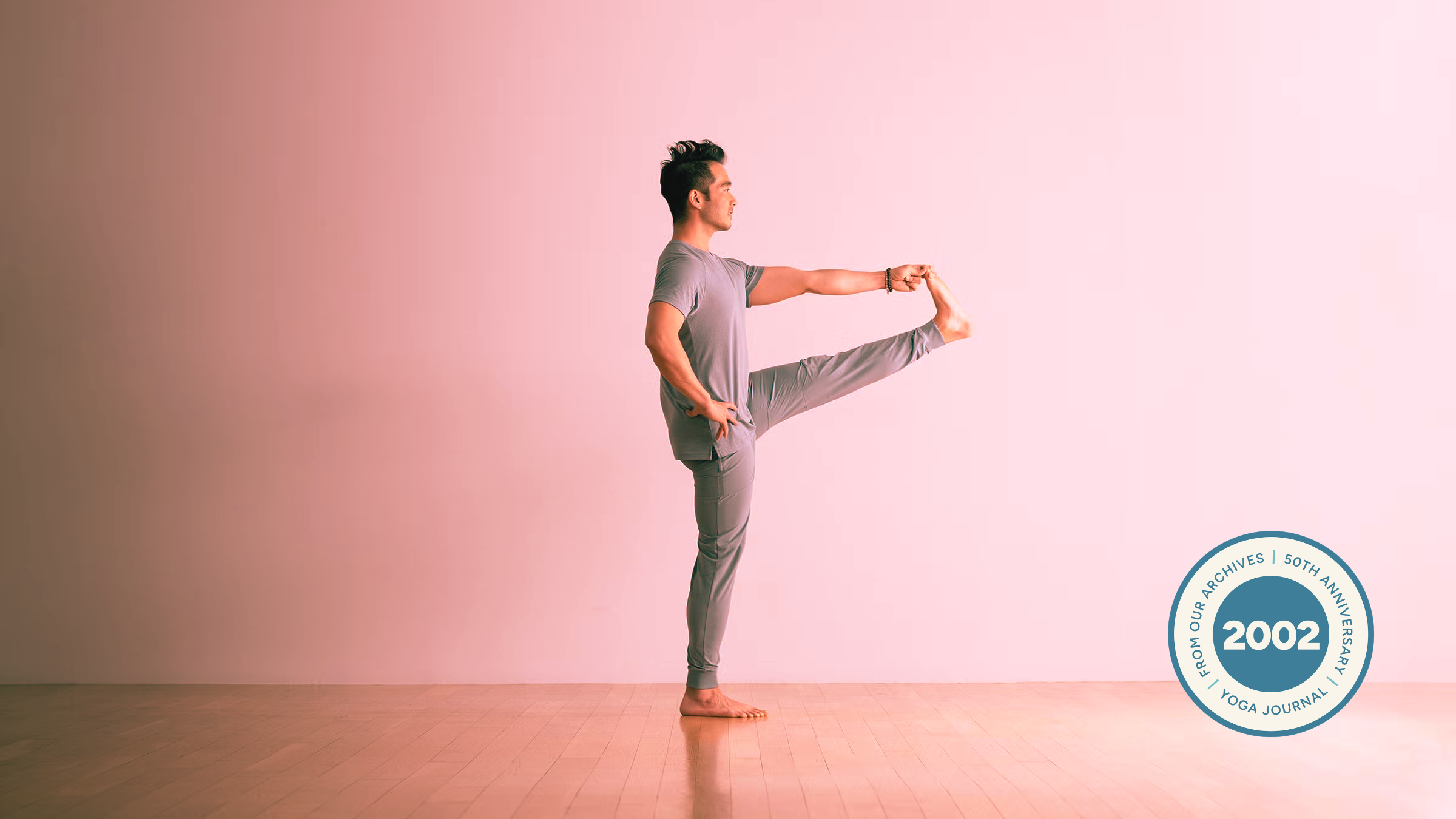
In the modern yoga studio, the quest for the "perfect" pose often obscures the underlying philosophy that gives the practice its transformative power. As we revisit the Yoga Journal archives—a collection spanning over half a century of yogic scholarship—we turn our attention to the March-April 2002 analysis of Utthita Hasta Padangusthasana (Hand-to-Big-Toe Pose). Far from being a mere feat of physical flexibility, this balancing posture serves as a microcosm of the Yoga Sutras of Patanjali, offering practitioners a diagnostic tool to observe, refine, and harmonize the mind.
The Philosophical Foundation: Stability and Comfort
The Yoga Sutras of Patanjali (Chapter II, verse 46) define asana with two indispensable qualities: sthira (stability) and sukha (comfort). According to traditional interpretation, a posture is not merely a static shape; it is a synthesis of mental clarity and emotional equanimity. When these qualities are equally present, the physical practice transcends the mat, serving as a conduit for a more joyful and integrated experience of life.
The primary objective of the asanas is to provide a "laboratory" for the mind. In balancing poses like Utthita Hasta Padangusthasana, the practitioner is forced to confront the instability of the mind. Success in the pose is impossible without dharana (concentration)—the practice of fixing the attention on a singular point. This concentration serves as a precursor to dhyana (meditation), where the attention becomes unwavering and the distinction between the practitioner and the pose begins to dissolve.
Chronology of Practice: From Foundation to Mastery
To understand the complexity of Utthita Hasta Padangusthasana, one must first master Samasthiti (Equal Standing), often referred to as Tadasana or Mountain Pose. In the Ashtanga tradition, Samasthiti is not merely a starting position; it is a command to attention that acts as the core of every other posture.
The Three Platforms of Alignment
The body is organized into three distinct "platforms," each designed to protect vulnerable structures like the knees and the spine:
- The Feet (The Foundation): The feet must be active, with weight distributed across the four corners—the ball of the big toe, the ball of the little toe, and both sides of the heels. By lifting the arches, the practitioner initiates an energetic lift that travels through the core.
- The Pelvis (The Anchor): The pelvis must remain neutral to maintain the natural lumbar curve. This is achieved through "dual action": moving the front of the legs toward the hamstrings while simultaneously drawing the sacrum inward.
- The Shoulder Girdle (The Crown): By spreading across the collarbones and lifting the sternum from the core, the practitioner creates space in the neck. This prevents the compression often caused by superficial, muscle-driven effort.
Supporting Data: Actions Versus Movements
A critical distinction in advanced practice is the difference between movement and action. Movements are gross motor shifts—chaotic and often unconscious. Actions, conversely, are refined, intentional activities that cultivate quiet attention.
- Movements: Involve large muscle groups; often lack internal sensitivity.
- Actions: Specific, focused efforts that require sensitivity; lead to an "effortless" quality even during strenuous work.
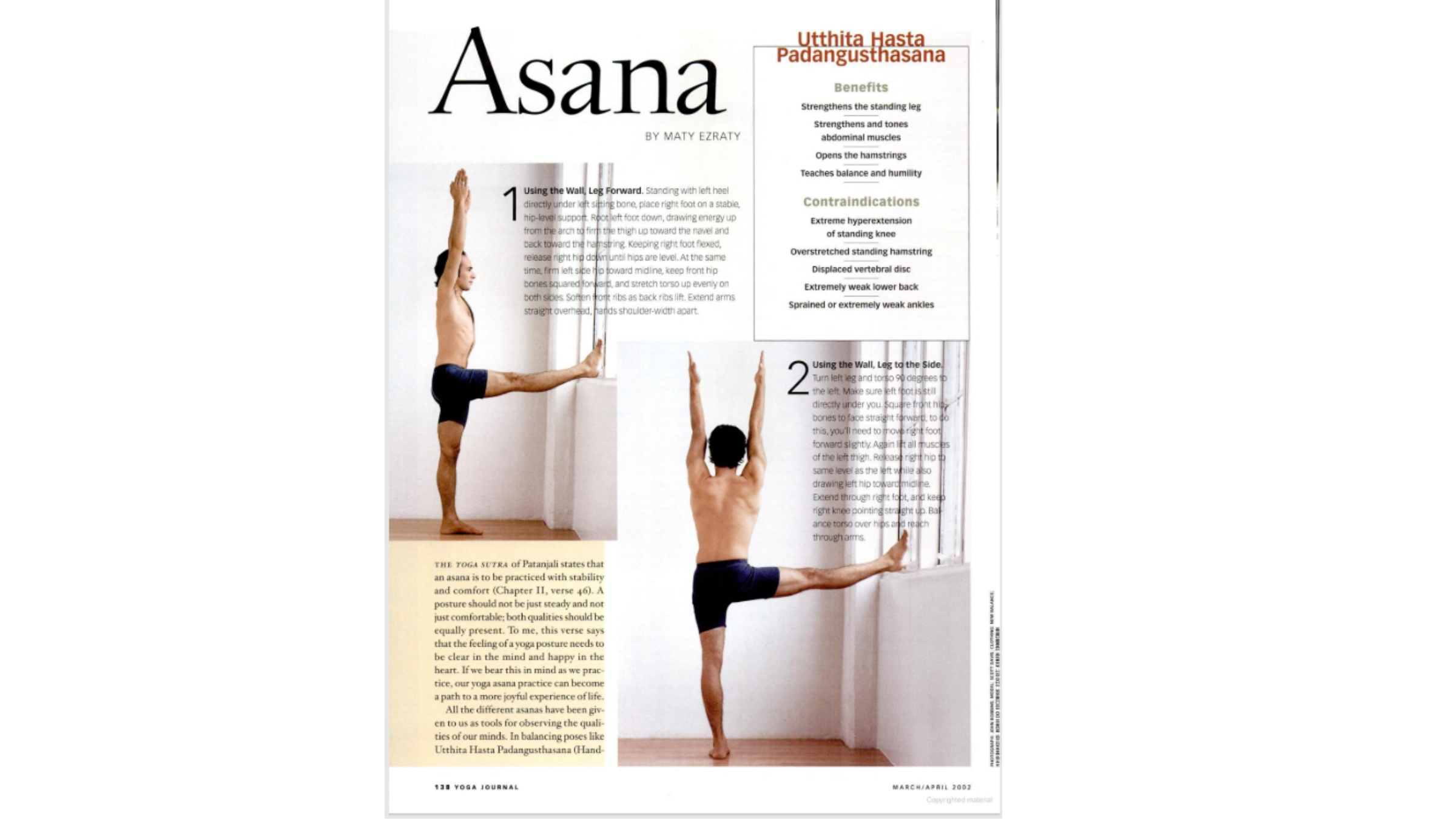
For students struggling with the inherent instability of Utthita Hasta Padangusthasana, the use of a wall as a prop is not a regression, but a tactical necessity. By removing the immediate challenge of balance, the student can focus on the "actions" of the legs and hips. The transition away from the wall should only occur when the lower back remains stable, the hips are square, and the standing leg can remain firm and steady without compensation.
The Mechanics of the Pose: A Step-by-Step Methodology
When the practitioner moves to the center of the room, the complexity of the pose increases. The following sequence reflects the traditional progression of Utthita Hasta Padangusthasana:
1. The Forward Extension
The practitioner stands in Samasthiti, balancing weight evenly. After grasping the big toe, the goal is to extend the leg forward while keeping the standing leg grounded and straight. If the hamstring is tight, the torso must remain upright rather than folding forward to meet the leg. Integrity of the spine is prioritized over the range of motion of the leg.
2. The Lateral Variation
Once the forward pose is established, the leg moves to the side. The greatest challenge here is maintaining the levelness of the hips. The practitioner must resist the urge to lean toward the raised leg, instead extending both sides of the waist evenly. This requires significant abdominal engagement and a commitment to the "dual action" of grounding the standing foot while lifting through the crown of the head.
3. The Release and Hold
In the final phase, the hand is released, and the leg is held in space. This tests the core strength and the ability to remain balanced without physical support. It is here that the practitioner often finds the most profound "mirrors" for their mental state: any frustration or lack of focus immediately results in a loss of balance.
Implications for the Modern Practitioner
The overarching implication of this practice is that asanas are merely vehicles for a higher state of awareness. The goal is the "union of opposites"—the alignment of the body, mind, and soul into one undisturbed line of energy.
Overcoming the Ego
A common pitfall is the attempt to "force" the body into the external form of the pose. For instance, many students sacrifice the alignment of the standing leg just to get their chin to their shin. Teachers emphasize that if the fundamental alignment is compromised, the pose loses its meditative utility. The "success" of the pose is not measured by the height of the leg, but by the steadiness of the breath and the presence of the mind.
The Role of Persistence
As noted in the 2002 archives, the path to understanding is one of repetitive, patient study. It is often said in traditional circles that one must practice a sequence a thousand times to begin to understand its depth. This repetition is not mindless; it is an iterative process of refining actions until they become second nature.
Conclusion: The Mirror of the Mat
Utthita Hasta Padangusthasana serves as a rigorous, unforgiving mirror. By balancing on a single leg, we are forced to confront our internal fluctuations. When we align our bodies with precision and perform our movements with the focused intent of "actions," we stop struggling against the physical form. Instead, we begin to use the pose to cleanse the body and quiet the mind.
True yoga, according to the teachings reflected in these archives, is found in the space where we stop forcing and start observing. By maintaining the integrity of our foundations and the calmness of our breath, we transform the mat into a sanctuary for the spirit. The ultimate goal remains the same today as it was in 2002: to become a vessel for the union of opposites, where the practitioner is no longer "doing" the pose, but is fully, and effortlessly, in a state of yoga.