










EDITOR’S NOTE: This story includes discussion of suicide. If you or someone you know needs help, the national suicide and crisis lifeline in the U.S. is available by calling or texting 988.
PLYMOUTH, Mass. — The high-stakes murder trial of Lindsay Clancy, the Massachusetts mother accused of strangling her three young children in early 2023, has reached a precarious legal juncture. After seven grueling days of deliberation and three separate notifications from the jury that they remain at an impasse, the presiding judge, William Sullivan, has moved toward declaring a mistrial. In a dramatic turn of events, however, the defense has been granted a narrow one-hour window to file an emergency appeal to the Massachusetts Supreme Judicial Court, attempting to stave off a result that would force the prosecution to restart the entire case.
The trial has captivated the nation, serving as a harrowing focal point for discussions regarding postpartum mental health, the limitations of the criminal justice system in cases of severe psychosis, and the delicate nature of jury deliberations.
The Core Conflict: Criminal Responsibility vs. Mental Health
Lindsay Clancy, a 36-year-old former labor and delivery nurse, does not dispute the physical act of killing her three children in the basement of their Duxbury home. The defense, led by attorney Kevin Reddington, has anchored its case in the argument of insanity, specifically blaming severe postpartum psychosis. Reddington maintains that Clancy was in the throes of a mental health emergency—a recognized, albeit rare, medical crisis—that rendered her incapable of understanding the wrongfulness of her actions.
In contrast, prosecutors have painted a picture of a woman who was acutely aware of her actions. They argue that the evidence points to a calculated decision, maintaining that Clancy knew exactly what she was doing when she ended the lives of her children. This fundamental disagreement on "criminal responsibility" remains the central pillar of the jury’s deadlock.
Chronology of a Crumbling Deliberation
The path to this impasse has been marked by mounting tension within the courtroom and increasing frustration from the bench.
Thursday: The "Holdout" Revelation
The gravity of the jury’s internal struggle became public on Thursday, when the foreperson delivered a note to Judge Sullivan. The contents were explosive: the foreperson informed the court that a single juror was refusing to apply the law regarding reasonable doubt to the evidence presented, despite acknowledging that doubts existed.
Judge Sullivan responded by conducting a rare and tense series of individual inquiries, questioning each juror behind closed doors. Following these discussions, he reread his instructions on reasonable doubt, urging the jury to return to their deliberations with a focus on the legal standard rather than personal opinion.
Friday: The Breaking Point
The seventh day of deliberations began with an atmosphere of stifling anticipation. The courtroom was filled to capacity, with overflow crowds left in the hallway.
- 10:12 a.m. EDT: Legal experts, including defense attorney Joseph Krowski Jr., noted that the judge was walking a tightrope. Krowski suggested that if the jury remained deadlocked, a mistrial was not just a possibility, but a legal inevitability.
- 11:22 a.m. EDT: The court clerk presented an undisclosed item to the attorneys, signaling a shift in the day’s proceedings. The judge ultimately returned to the bench to address the impasse.
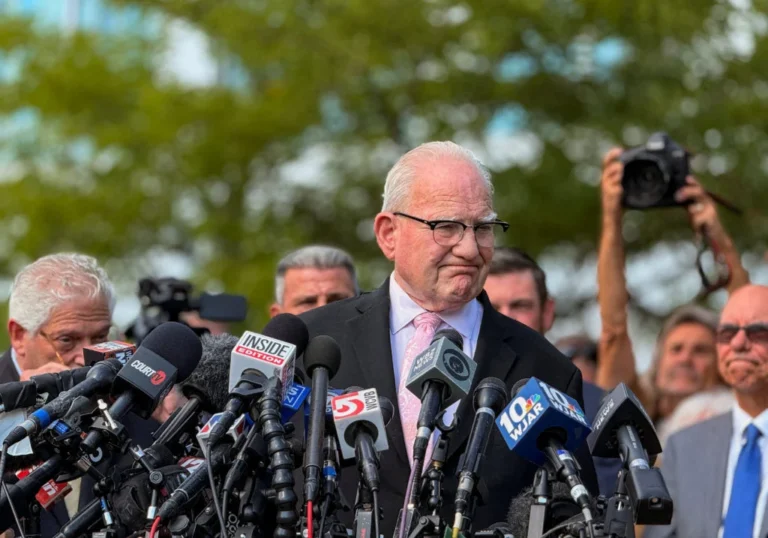
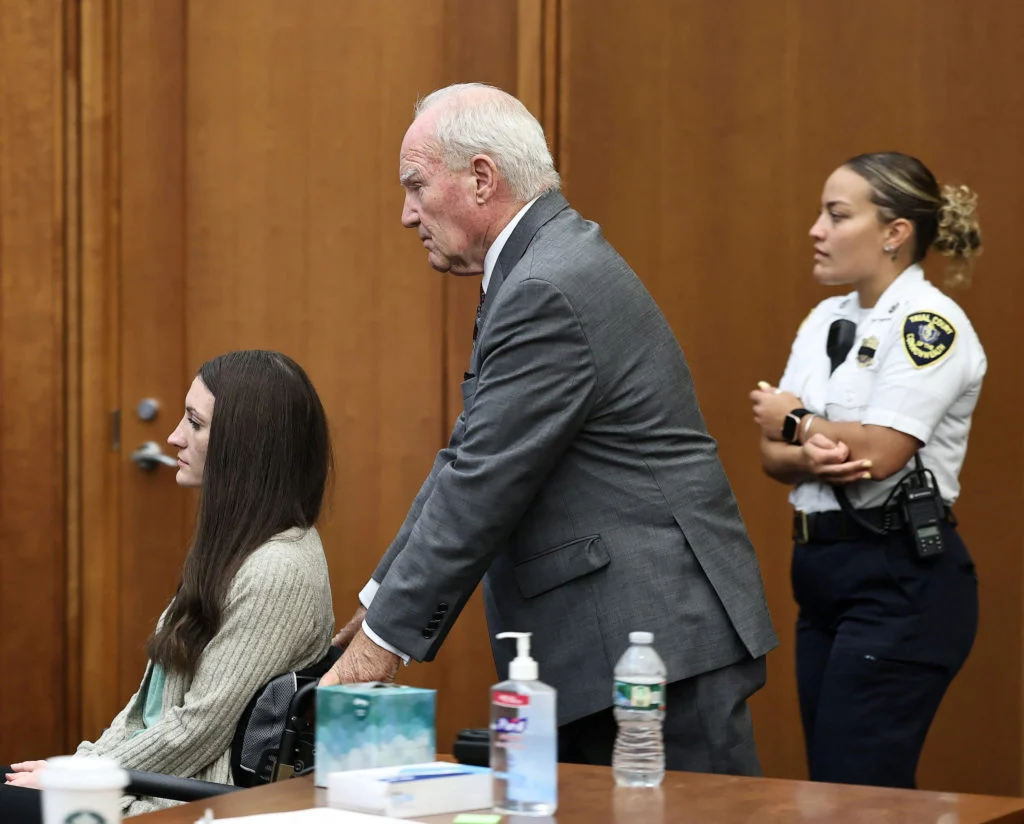
- 12:05 p.m. EDT: The courtroom atmosphere shattered when Judge Sullivan announced his intent to declare a mistrial. An audible gasp rippled through the gallery. Defense attorney Kevin Reddington immediately moved to challenge the decision, requesting time to file a single-justice appeal.
- 12:38 p.m. EDT: The final standoff occurred. Prosecutor Jennifer Sprague argued that a mistrial was the only remaining option, citing the judge’s prior use of a "dynamite charge"—an instruction designed to break a deadlocked jury. Reddington, however, insisted that a mistrial at this stage without further inquiry into the "structural defect" of the holdout juror’s refusal to deliberate properly would violate his client’s rights. The judge begrudgingly granted the defense one hour to seek an emergency stay.
Supporting Data: The Reality of Postpartum Psychosis
The trial has brought the medical reality of postpartum psychosis into the public square. According to the Cleveland Clinic, the condition is a rare but severe mental health emergency that occurs in approximately 1 to 2 per 1,000 women following childbirth.
While the vast majority of women suffering from the condition do not harm their children, medical experts emphasize that in severe cases, the sufferer’s sense of reality can be completely severed. This clinical reality forms the basis of the defense’s argument: that the legal system is ill-equipped to judge a mind that has effectively lost its connection to reality. Critics of the prosecution’s approach argue that treating this as a standard murder case ignores the medical consensus that psychosis is a biological and psychological breakdown, not a moral failing.
Official Responses and Legal Maneuvering
The courtroom has become a theater of legal procedural battles. Reddington’s request for "no further sidebars" reflected a desire for complete transparency, arguing that the public and the defense deserve to hear the arguments being made to the judge.
"I have never seen a situation like this," Reddington remarked to the court, referring to the foreperson’s admission that a juror was refusing to follow the law. "The juror looked you in the eye and lied."
Prosecutor Jennifer Sprague has remained steadfast in her position, objecting to the defense’s attempts to delve deeper into the jury’s internal dynamics. She argued that once the jury has reached a state of irreconcilable impasse, the court is obligated to declare a mistrial, regardless of the cause.
The Broader Implications of a Mistrial
Should the one-hour appeal fail and a mistrial be declared, the implications are profound.
- Double Jeopardy Concerns: Reddington has already signaled that he would fight any attempt to retry the case on specific charges, citing double jeopardy protections. If the jury had reached a consensus on lesser charges—such as manslaughter—but was stuck on first-degree murder, the defense argues that a retrial on the higher charge could be constitutionally prohibited.
- Systemic Stress: The case has highlighted the immense burden placed on juries when dealing with cases involving mental health. The "structural defect" mentioned by observers—the presence of a juror who refuses to follow the law—suggests a breakdown in the jury selection process or the trial’s ability to ensure impartial deliberation.
- The Public Toll: For the families involved, the delay is agonizing. The presence of Clancy’s parents, Paula and Mike Musgrove, and her sister, Allison Ozga, throughout the trial has underscored the human tragedy that remains unresolved.
As the one-hour clock ticks down, the legal community is watching closely. The Massachusetts Supreme Judicial Court’s decision on whether to intervene will likely set a precedent for how trial courts handle instances where a single juror is alleged to have sabotaged the deliberative process.
For now, the trial of Lindsay Clancy remains suspended in a state of legal limbo. The question of whether justice for the victims and the defendant will be found in a courtroom or through the difficult, often flawed process of a retrial remains unanswered. The tragedy that began in a Duxbury basement continues to haunt the Massachusetts judicial system, leaving a community—and a nation—waiting for a resolution that remains elusive.