









The Paradigm Shift in Sleep Medicine
For decades, the gold standard for diagnosing sleep disorders—polysomnography (PSG)—has been defined by a cumbersome and intimidating experience. Patients arriving at sleep clinics are typically tethered to a laboratory bed, adorned with over 24 wired sensors that monitor physiological signals throughout the night. This "spaghetti of wires" often causes patient anxiety and discomfort, which can ironically compromise the quality of the very sleep data clinicians are trying to capture.
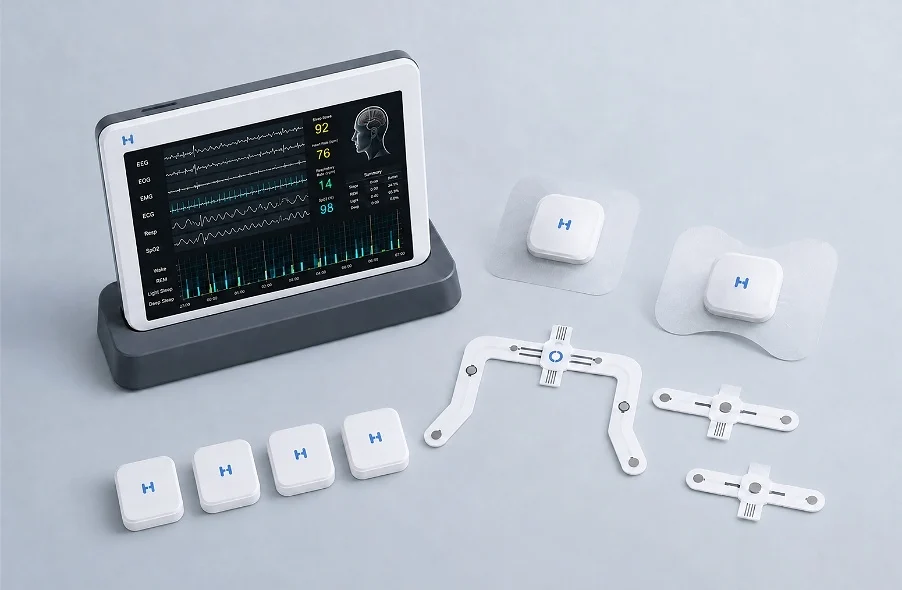
HoneyNaps, a leader in sleep-sensing technology, has officially unveiled a solution that threatens to render this traditional setup obsolete. Their new Wireless PSG system condenses the complex array of wired diagnostics into a streamlined, patient-friendly format: four discreet skin patches. By merging advanced hardware with the company’s FDA-cleared artificial intelligence (AI) software, SOMNUM, HoneyNaps is positioning itself to disrupt the global diagnostics market and pave the way for the future of home-based sleep medicine.
Chronology: From Contactless Pads to Wireless Patches
The development of the Wireless PSG system did not happen in a vacuum; it is the culmination of years of iterative research and development.
- Initial Innovation: HoneyNaps first gained industry attention by pioneering a contactless sleep-sensing pad (Honeycube), which proved that sleep architecture could be monitored without invasive equipment. This established the company’s proficiency in signal acquisition.
- The AI Breakthrough: Recognizing that data collection was only half the battle, the company focused on analytical software. Their proprietary SOMNUM platform—which utilizes deep learning to classify sleep apnea and other disturbances—received FDA clearance, marking a critical milestone in their credibility among medical professionals.
- System Integration: The current launch represents the final synthesis: taking the high-fidelity sensing capability and the diagnostic intelligence of the AI, and housing them within a miniaturized, wearable hardware form factor.
- The Present Day: With the official unveiling of the four-patch Wireless PSG system, HoneyNaps is moving from the research phase to clinical application, aiming to bridge the gap between hospital-grade diagnostic accuracy and the convenience of consumer wearables.
Supporting Data: Engineering Precision in a Small Package
The technical prowess behind the HoneyNaps Wireless PSG system lies in its ability to maintain clinical-grade signal integrity while drastically reducing the physical footprint. The platform relies on a sophisticated six-layer flexible printed circuit board (PCB) design, which allows the sensors to contour to the patient’s body while remaining durable and lightweight.
Comprehensive Physiological Monitoring
Despite the reduction in the number of sensors, the system captures a full suite of vital physiological data, including:
- Neurological: Electroencephalography (EEG) and electrooculography (EOG) to monitor brain activity and eye movement.
- Cardiac: Electrocardiography (ECG) to track heart rhythm.
- Muscular: Electromyography (EMG) for muscle activity.
- Respiratory: Real-time respiratory airflow and blood oxygen saturation (SpO2).
- Biometric: Body position tracking and comprehensive physical activity logs.
Technical Architecture
The integration of an analog-to-digital converter directly into the sensor architecture allows for the immediate processing of signals at the source. This is bolstered by advanced wireless noise-reduction technology, which ensures that the signals transmitted from the patches remain clean despite the absence of physical cables. Furthermore, the inclusion of electrostatic discharge protection ensures the device is robust enough for clinical environments, while the low-power design maximizes battery life, facilitating long-term monitoring without frequent recharging.
AI Integration: The SOMNUM Engine
The true "brain" of the operation is SOMNUM, the AI-powered sleep analysis software that processes the data collected by the four patches. Because sleep studies generate massive volumes of raw data, manual scoring by sleep technologists is time-consuming and prone to inter-observer variability.
SOMNUM automates the identification of complex sleep indicators:
- Sleep Staging: Distinguishing between REM and non-REM cycles with high precision.
- Pathology Detection: Identifying sleep apnea events, respiratory effort-related arousals, and periodic limb movements (PLM).
- Real-Time Processing: Through edge-computing technology, the system processes physiological data in real time, allowing for immediate insights rather than waiting for post-study manual review.
- Institutional Synergy: The platform is designed to integrate seamlessly into a healthcare institution’s existing centralized management systems, ensuring that sleep diagnostic data becomes a fluid part of the patient’s electronic health record.
Official Responses and Strategic Vision
"By bringing patch-based wireless skin sensors and AI-powered analysis together in a single platform, our Wireless PSG system improves both patient convenience and diagnostic efficiency for medical professionals," says Sean Ha (Taekyoung Ha), president of HoneyNaps USA. "This lays the foundation for HoneyNaps to expand its presence in the global sleep diagnostics market."
The company’s strategic vision is clear: move the diagnostic process out of the clinic and into the home. By making the equipment less intrusive, HoneyNaps is tackling the "first-night effect," a phenomenon where patients sleep poorly in a new environment, which often skews results. If a patient can be monitored with four patches in the comfort of their own bed, the data collected is more likely to represent their true sleep baseline.
Implications: The Future of Sleep Medicine
The implications of the HoneyNaps Wireless PSG system are far-reaching, touching on healthcare economics, patient compliance, and the future of remote monitoring.
1. Democratizing Access to Diagnostics
Traditional in-lab PSG is expensive and limited by the number of beds available in a given facility. The high cost and long waitlists often discourage patients from seeking treatment. A low-cost, disposable or reusable patch-based system could allow primary care physicians to order high-quality sleep studies, democratizing access to care.
2. The Rise of Remote Monitoring
Because the HoneyNaps system is lightweight and wireless, it is an ideal candidate for long-term remote monitoring. Chronic conditions such as heart failure or obstructive sleep apnea require consistent, longitudinal data. With this system, clinicians could potentially monitor a patient’s sleep health over several weeks rather than a single night, allowing for better titration of therapies like CPAP (Continuous Positive Airway Pressure).
3. Precision Medicine and Digital Health
The integration of edge-computing and AI suggests a move toward "Precision Sleep Medicine." By processing large datasets in real time, algorithms can detect subtle shifts in sleep architecture that might predict the onset of other systemic health issues, including hypertension, cognitive decline, or metabolic disorders.
4. Patient-Centric Care
Perhaps the most significant implication is the shift in the patient experience. The removal of wired sensors reduces the "medicalized" feeling of sleep testing. When patients feel more comfortable, they are more likely to complete their studies, and the data obtained is more reflective of their natural circadian rhythm.
Conclusion
HoneyNaps has successfully navigated the challenge of miniaturization without compromising diagnostic integrity. By bridging the gap between hardware and software, they have created a platform that addresses the primary pain points of traditional polysomnography. As healthcare continues to move toward decentralized, data-driven models, the HoneyNaps Wireless PSG system stands as a clear signal that the future of sleep medicine is not just in the laboratory—it is in the patch, the algorithm, and the patient’s own home.