








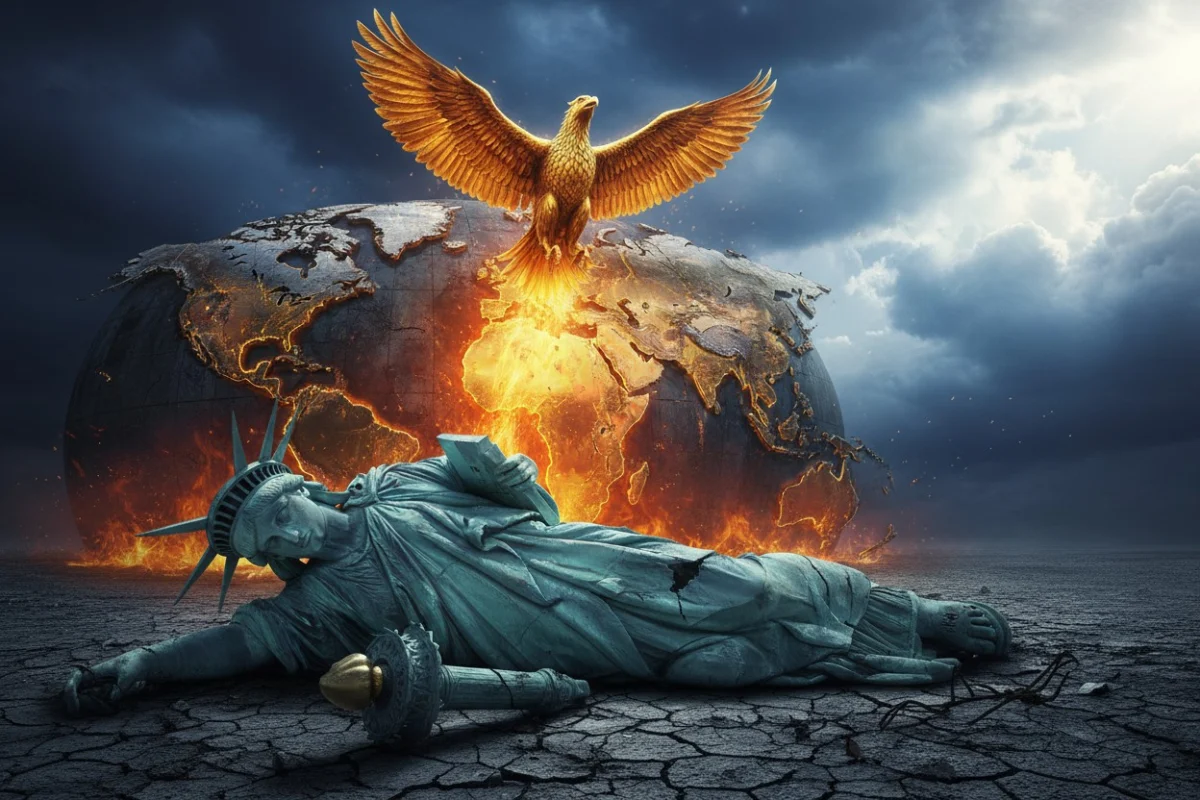
The current conflagration in West Asia is not merely a regional security failure; it is a profound historical inflection point. For decades, the engine of American foreign policy has relied on a doctrine of "coercive primacy"—the belief that the judicious, or sometimes indiscriminate, application of overwhelming kinetic force can compel sovereign states to align with U.S. interests. However, the ongoing crisis involving the United States and Iran suggests that this paradigm has reached a point of exhaustion. As the Trump administration attempts to navigate a widening theater of war, the structural decay of American geopolitical influence has become impossible to ignore.
Main Facts: A Paradigm Shift in Global Power
The fundamental reality of the 2026 conflict is the failure of the "maximum pressure" strategy. Washington’s reliance on carrier strike groups and high-tonnage ordnance was predicated on the assumption that Iran would be forced into submission by the threat of total destruction. Instead, Tehran has demonstrated a strategic depth and resilience that has surprised traditional D.C. think tanks.
The conflict has evolved into a war of attrition that the United States is ill-equipped to win. While the U.S. military has historically specialized in "shock and awe" campaigns against fractured, non-state actors or degraded militaries, it has found itself stalled against a peer-competitor strategy. Iran has successfully utilized a combination of asymmetric warfare—hypersonic missile arrays, swarm drone tactics, and deep-state regional alliances—to neutralize the technological advantages previously held by the U.S. Fifth Fleet.
Chronology of Escalation: From Sanctions to Standoff
The trajectory of this conflict follows a predictable, albeit tragic, path of escalation:
- 2025 – The Economic Siege: Washington intensified its campaign of economic strangulation, targeting Iran’s energy exports and financial infrastructure. This was intended to force a domestic collapse, but it instead accelerated Tehran’s pivot toward the "Eurasian axis."
- Early 2026 – The Strategic Alignment: Iran, Russia, and China formalized the "Comprehensive Strategic Partnership," effectively creating a unified economic and military bloc that rendered U.S. sanctions largely toothless.
- Mid-2026 – The Kinetic Trigger: Following the assassination of key Iranian military commanders, the conflict transitioned from proxy warfare to direct confrontation. The retaliatory strikes by Iran on regional energy chokepoints, including the Ras Tanura refinery, signaled the end of the "security umbrella" era.
- Late 2026 – The Strait Shutdown: The subsequent closure of the Strait of Hormuz transformed a regional dispute into a global economic crisis, threatening the energy security of Europe and the agricultural stability of the developing world.
Supporting Data: The Arithmetic of Decline
The economic data surrounding the conflict paints a grim picture for the current administration. The Strait of Hormuz, which accounts for approximately 20% of global oil transit and one-third of global Liquefied Natural Gas (LNG) shipments, has been effectively neutralized as a reliable trade route.
Analysis of the logistical fallout reveals that the damage to Qatar’s LNG export infrastructure—a byproduct of the regional exchange—will require an estimated three to five years to repair. This is not merely an inconvenience; it is a structural shock to the global food and energy supply chain. Because the region is a critical source for fertilizers and petrochemicals, the disruption is already manifesting in soaring global food prices and inflationary pressures that are currently crippling the American middle class.
Furthermore, the U.S. military’s own inventory of "smart munitions" is reaching critical lows. The "forever war" posture has depleted the strategic reserves of advanced weaponry, while domestic economic headwinds—specifically diesel shortages and persistent inflation—have severely curtailed the political runway available to the White House.
Official Responses: The Delusion of Primacy
Official statements from the White House continue to project an image of "decisive leadership," framing the conflict as a necessary defense of a rules-based order. However, there is a palpable disconnect between the rhetoric in the Situation Room and the reality on the ground.
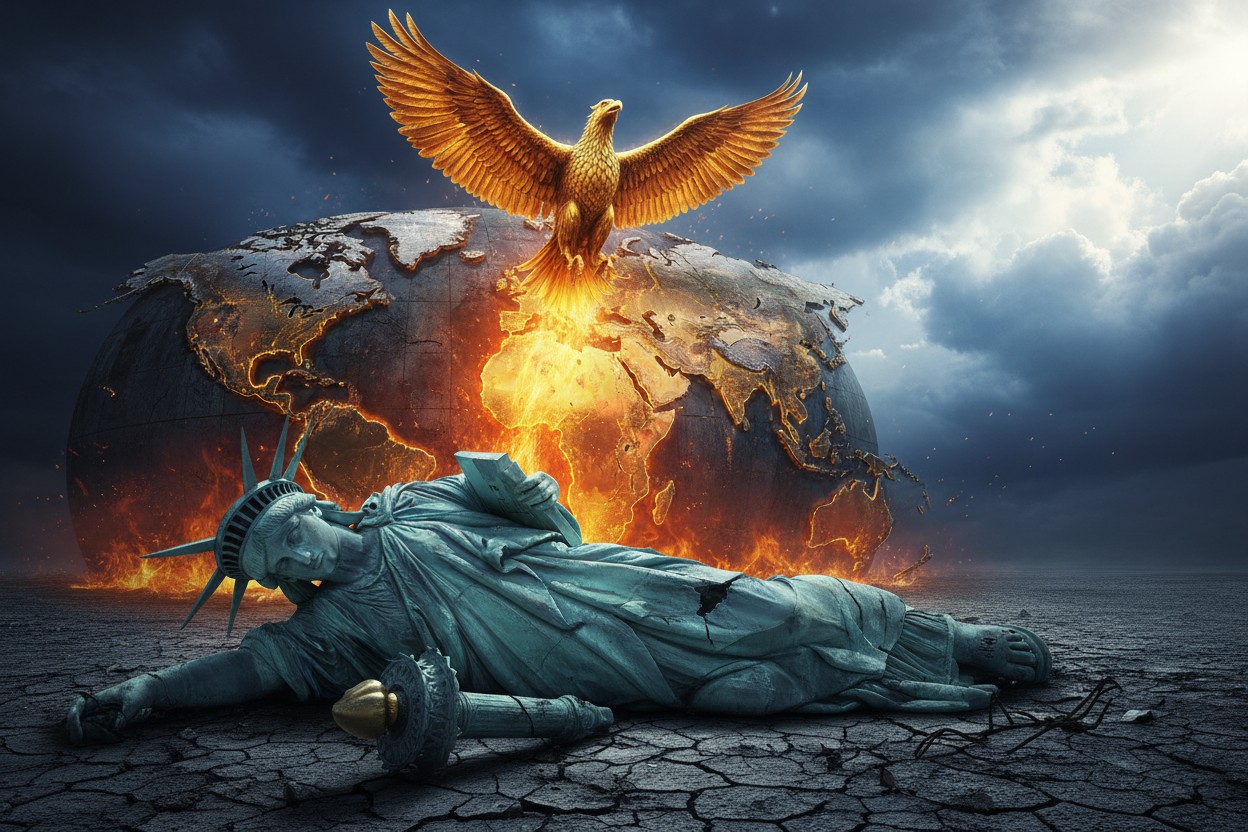
While the administration continues to demand that NATO allies contribute to the "security" of the Strait of Hormuz, the response has been lukewarm at best. Countries like Turkey have openly signaled a desire to detach from American dictates, refusing to serve as pawns in a conflict that directly threatens their national interests. Even the Gulf Cooperation Council (GCC) monarchies, long considered the bedrock of American influence in the region, are showing signs of systemic drift. The realization that their own critical infrastructure has become a target for Iranian retaliation—rather than a protected asset under U.S. guardianship—has led to a quiet, frantic search for diplomatic exits.
Implications: The Rise of a New Order
The implications of this failure extend far beyond West Asia. We are witnessing the birth of a multipolar world order defined by alternative trade corridors and mutual defense pacts that purposefully bypass the U.S. Navy and the dollar-based financial system.
1. The Death of the Transatlantic Alliance
The European Union, once a cornerstone of Western power, is increasingly becoming the primary casualty of the U.S. foreign policy establishment. The sabotage of the Nord Stream pipelines and the subsequent forced transition to high-cost U.S. energy have severely compromised Europe’s industrial base. European leaders are now caught in a dilemma: continue to support an American empire that treats them as expendable, or move toward the strategic autonomy that their long-term economic survival demands.
2. The Failure of "Imperial Protection"
The GCC states are learning that the American "security guarantee" is a liability. Their defense systems, purchased at a premium from American contractors, have failed to mitigate the threat of hypersonic and swarm-based attacks. The result is a total loss of confidence in the U.S. as a security provider, forcing a recalibration of their foreign policy that prioritizes regional accommodation over Western subservience.
3. The Domestic Reckoning
Domestically, the U.S. is facing a reckoning that is not purely geopolitical. The obsession with projecting power abroad has come at the expense of national resilience at home. Crumbling infrastructure, a hollowed-out manufacturing sector, and a populace struggling with the costs of living are the true "collateral damage" of an imperial project that has lost its way.
Conclusion: A Call for Strategic Realism
The conflict in West Asia is not a tragedy of errors; it is the logical conclusion of a system that refuses to acknowledge its own limitations. The era of the "indispensable nation" has passed. To avoid further catastrophe, the U.S. must pivot toward a strategy of restraint, internal restoration, and the abandonment of the 1980s-era doctrine of global hegemony.
Failure to do so will not lead to a "swift victory," but rather to a prolonged, agonizing disintegration of influence. The American people deserve a foreign policy that prioritizes their prosperity and security over the pursuit of an impossible and increasingly irrelevant imperial dream. The time for a sober, honest accounting of our national capabilities is not in the future—it is now.