







In an era defined by sedentary office environments and prolonged screen time, the human hip joint—the body’s central powerhouse—is often neglected, leading to a cascade of physical ailments ranging from chronic lower back pain to compromised balance. On September 1, 2026, The Epoch Times released a compelling report authored by Kevin Shelley, titled “The Science of Classic Exercises.” The article introduces a specialized regimen of five "hinge" movements designed to restore hip function, fortify the posterior chain, and cultivate robust postural control.
By working in tandem with physical therapists to rehabilitate patients suffering from restricted hip mobility, Shelley has distilled clinical insights into a series of highly controllable, low-impact movements. This report examines the mechanics, benefits, and implementation strategies of these exercises, offering a roadmap for those seeking to mitigate pain and optimize their physical longevity.
The Mechanics of the "Hinge": Redefining Movement Patterns
A common misconception among fitness enthusiasts is that "hinge" exercises involve the hinge joints of the body, such as the elbows or knees. Shelley clarifies that the term refers specifically to a movement pattern centered on the hip—a complex ball-and-socket joint capable of multi-planar movement.
Understanding Joint Dynamics
To appreciate the necessity of these exercises, one must distinguish between joint types. The human body comprises three primary categories: immovable, slightly movable, and freely movable (synovial) joints. The hip, a synovial joint, is engineered to withstand significant force. Unlike the knee, which primarily operates on a single plane (flexion and extension), the hip is designed for dynamic stability.
Shelley emphasizes that "hinge" training prioritizes the movement pattern over the isolation of individual muscles. By teaching the body to fold correctly at the hips—much like a door swinging on its hinges—individuals can protect the lumbar spine from unnecessary strain. This approach aligns with modern kinesiology, which argues that functional strength is best achieved through integrated movement patterns that engage the glutes, hamstrings, and the lower back collectively, forming what is known as the "posterior chain."
Chronology of the Regimen: A Five-Step Protocol
The proposed routine is designed for accessibility, requiring minimal equipment and focusing on controlled execution. Shelley recommends a frequency of three to five times per week to ensure sustained physiological adaptation.
1. The Broomstick Good Morning
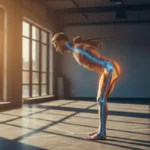
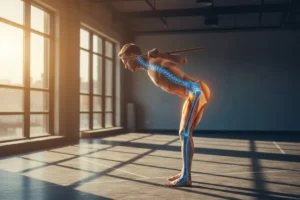
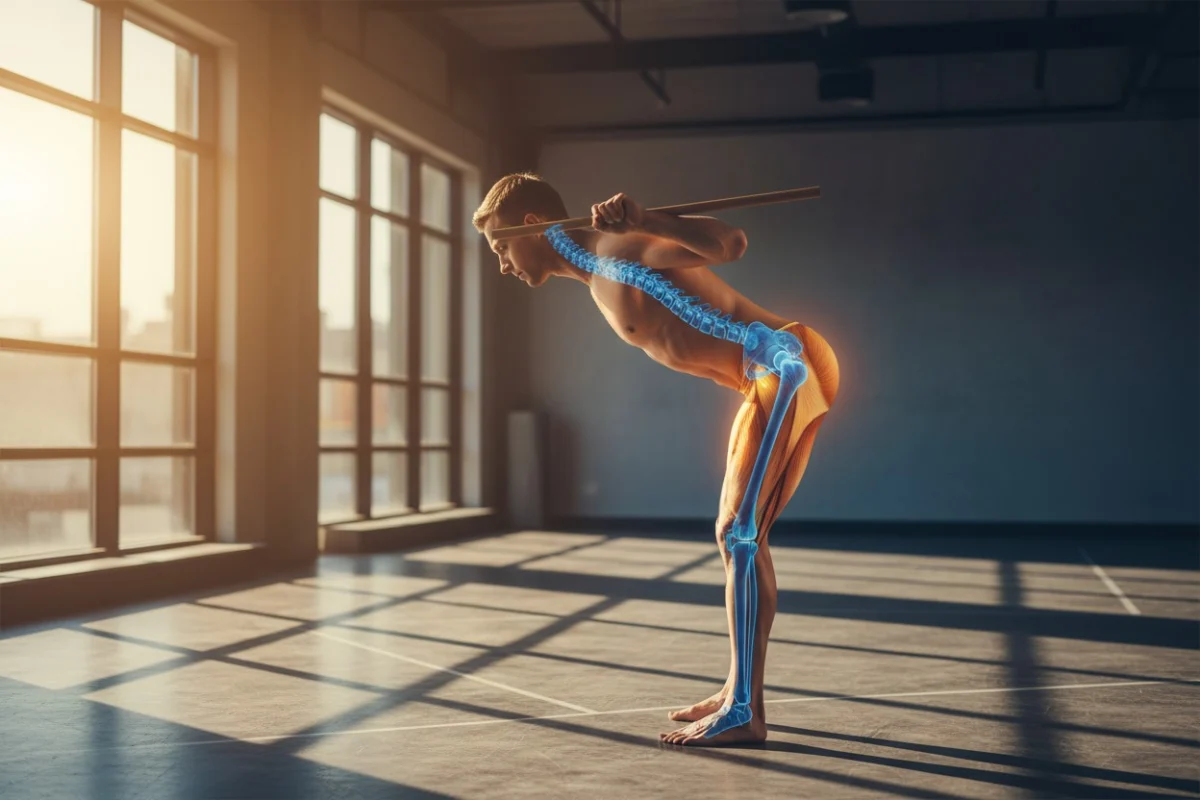
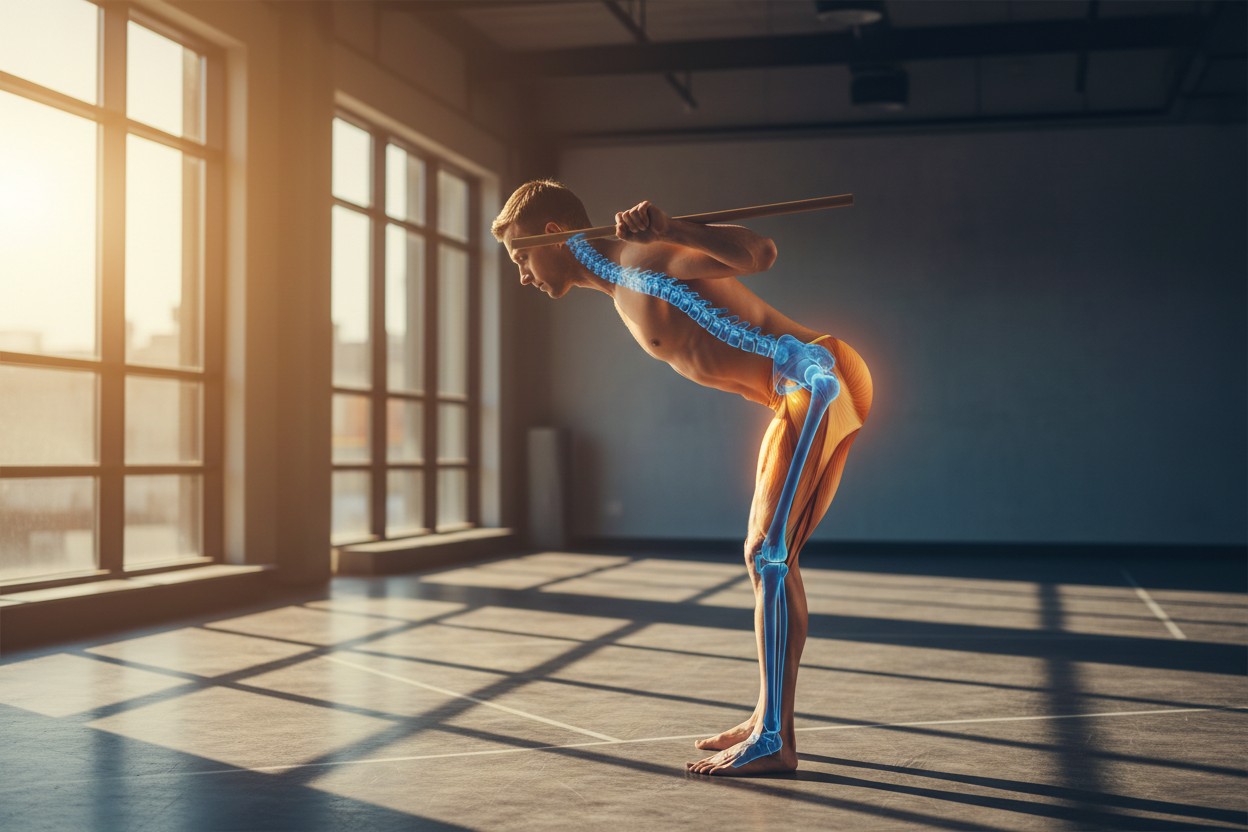
The foundational movement in this series, the broomstick good morning, targets the muscles of the lower back and hamstrings. By placing a dowel or broomstick across the shoulders, the practitioner creates a tactile cue for spinal alignment.
- Execution: With feet hip-width apart, the individual hinges forward at the hips while maintaining a perfectly straight back. The movement should be deliberate, using the core to return to an upright position.
- Therapeutic Value: This exercise gently addresses tension in the lower back and reinforces the habit of bending at the hips rather than rounding the spine. The recommended volume is three sets of 12 repetitions.
2. Seated Leg Lifts
Often overlooked, the hip flexors—specifically the rectus femoris—are critical for gait efficiency.
- Execution: Performed at the edge of a sturdy chair, the user draws their knees toward the chest before extending the legs fully.
- Functional Impact: Strong hip flexors are the primary defense against the "toe-catch," a leading cause of trips and falls in aging populations. Furthermore, these lifts impart a sense of "lightness" to the legs, improving overall mobility.
3. V-Ups: Engaging the Anterior Chain
Moving to the floor, the V-up is a more advanced movement that integrates the entire core.
- Execution: Lying supine with arms overhead, the practitioner lifts both arms and legs simultaneously, hinging at the hips to reach toward the feet.
- Modification: Beginners are encouraged to lift only as high as comfort allows. Even partial repetitions significantly engage the rectus abdominis and core musculature.
4. The Seated Hip Hinge
This movement isolates the lower back in a controlled, seated environment.
- Execution: Seated at the front of a chair with a dowel held behind the shoulders, the user hinges forward to a 90-degree angle.
- Significance: By utilizing the chair for stability, individuals with pre-existing back weakness can train the lumbar region safely, building strength without the fear of excessive load-bearing.
5. Seated Hip Thrust
The final movement in the sequence targets the erector spinae and gluteal muscles.
- Execution: With the back against a bench or chair, the user pushes through their heels to elevate the hips until the trunk forms a straight line from shoulder to knee.
- Goal: This exercise combats the "gluteal amnesia" often caused by prolonged sitting, effectively resetting the posterior chain.
Supporting Data and Clinical Implementation
The efficacy of these exercises is predicated on the principle of progressive overload and consistent practice. Shelley notes that users will likely experience initial fatigue and a lack of coordination; however, this is a natural phase of neuromuscular development.
The Role of Professional Oversight
While these exercises are deemed "low-impact," Shelley urges readers to consult with a medical professional or physical therapist before starting. This is particularly vital for individuals with a history of disc herniations, sciatica, or chronic joint inflammation. Modifications are the cornerstone of this protocol:
- Tactile Cues: If a broomstick behind the neck causes shoulder discomfort, it may be held in front of the chest.
- Support: During seated leg lifts, the back of the chair can be used for added stabilization.
- Range of Motion: Users are cautioned to stay within their personal "pain-free zone," as the goal is to build long-term capacity rather than achieving immediate, high-intensity results.
Official Responses and Perspectives
The publication of this series has sparked renewed interest in the "science of movement" within the broader fitness community. By integrating these exercises into a series that has already covered fundamental movements like planks, squats, and lunges, Shelley provides a holistic view of human biomechanics.
Experts in the field of orthopedics have long noted that the spine is essentially the "mast" of the body, and the hips are its "foundation." When the foundation is weak, the mast compensates, leading to structural fatigue. The consensus among movement specialists remains consistent: the combination of strong glutes and a stable core is the most effective intervention for spinal health.
Disclaimer: The views and methodologies presented in this report belong to the author and are intended for informational purposes. They do not constitute medical advice and should not replace professional clinical diagnosis or treatment.
Implications for Long-Term Health
The broader implication of Shelley’s report is a shift away from "vanity training" toward "functional longevity." By focusing on the hip hinge, the author addresses the mechanical root of many musculoskeletal complaints.
The Cumulative Benefit
- Postural Control: Consistent engagement of the posterior chain leads to an unconscious, "autopilot" improvement in posture.
- Pain Mitigation: By offloading the lower back and shifting the demand to the glutes and hips, many users report a significant reduction in chronic discomfort.
- Independence: For older adults, the focus on hip flexor strength and fall prevention provides a vital boost to quality of life and independent mobility.
In conclusion, the regimen outlined by Kevin Shelley offers a balanced, science-backed approach to the human machine. While the exercises are simple in design, their impact on the body’s structural integrity is profound. By dedicating 15 to 20 minutes a few times a week, individuals can transform their physical foundation, proving that the most effective path to wellness is often a return to the fundamentals of human movement.