



Ayurveda, the ancient Indian system of holistic healing, has long recognized the profound capacity of touch to restore equilibrium to the human experience. Far from being a mere luxury, massage in the Ayurvedic tradition—often referred to as Abhyanga or broader therapeutic bodywork—serves as a sophisticated medical intervention. It is utilized both as a palliative measure (Shamana) to soothe symptoms and as a purificatory therapy (Shodhana) to facilitate deep detoxification. By applying intentional touch rooted in the fundamental principles of the five elements, practitioners aim to guide the body and mind back to a state of radiant health.
The Foundations: Five Elements and Three Doshas
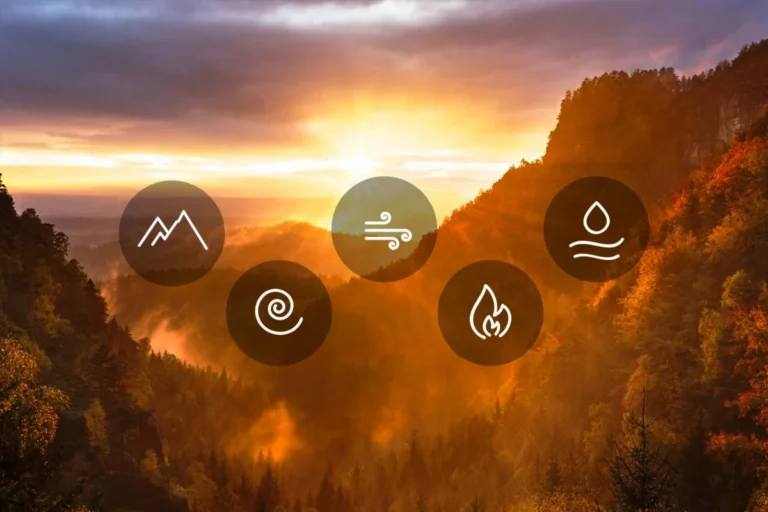
To understand Ayurvedic massage, one must first grasp the Ayurvedic view of the universe. All matter is considered a manifestation of the Pancha Mahabhuta, or five great elements: space, air, fire, water, and earth. These elements do not act in isolation; rather, they combine to form the Tridosha—the three biological humors that govern all physiological and psychological processes.
- Vata (Space and Air): Governs movement, communication, and the nervous system.
- Pitta (Fire and Water): Governs metabolism, digestion, and transformation.
- Kapha (Water and Earth): Governs structure, lubrication, and stability.
Ayurvedic treatment is governed by the philosophy of "like increases like" and "opposites balance." Therefore, if an individual presents with a Vata imbalance characterized by dryness or anxiety, a practitioner will employ treatments that are warm, oily, and grounding. If a Kapha imbalance—often marked by sluggishness or congestion—is present, the therapy will lean toward heat, stimulation, and dryness.
Historical Chronology and Textual Authority
The methodology of Ayurvedic massage is not a modern invention but a practice documented for millennia. The wisdom of these techniques is codified in the Brhat Trayi, or the "Great Three" foundational texts of Ayurveda: the Charaka Samhita, the Sushruta Samhita, and the Astanga Hridayam (by Vagbhata). Later treatises, including the Bhavaprakasha and Yogaratnakara, further refined these protocols.
Historically, these techniques were not limited to the elite. They were utilized for a diverse array of applications:
- Athletic and Martial Support: To increase stamina, protect joints, and speed recovery for warriors and athletes.
- Reproductive Health: Techniques for virilization and supporting the female body during the taxing postpartum period.
- Preventative Medicine: Daily self-massage was prescribed as a Dinacharya (daily routine) practice to maintain longevity and immunity.
Individualized Care: The Clinical Approach
The hallmark of Ayurvedic massage is its radical personalization. No two sessions are identical because no two individuals possess the same constitution (Prakruti) or current state of imbalance (Vikruti).
Assessing the Patient
Before a single drop of oil touches the skin, a practitioner must evaluate the patient’s Agni (digestive fire) and the presence of Ama (metabolic toxins). If Ama is high, traditional oil massage is often contraindicated, as the heavy, unctuous nature of oil can trap toxins within the tissues. In such cases, the practitioner may pivot to Udvartana, a dry, vigorous massage using herbal powders to "scour" the channels of the body.
The Alchemy of Oils and Herbs
The choice of carrier oil and infused herbs is a deliberate pharmacological decision.
- For Vata: Heavy, warming oils like sesame are preferred to combat dryness and coldness.
- For Pitta: Cooling, soothing oils like coconut or sunflower are utilized to mitigate inflammation and heat.
- For Kapha: Lighter, heating oils such as mustard or dry-herb treatments are used to encourage circulation and reduce stagnation.
The volume of oil used is also diagnostic: Vata requires generous amounts for deep saturation, whereas Kapha requires minimal oil to prevent excessive heaviness.
Special Considerations: The Mind-Body Connection
According to the Samkhya philosophy, the air element—the primary component of Vata—is inextricably linked to the sense of touch (Sparshendriya). Because the mind is also associated with the subtle qualities of air and space, massage serves as a powerful bridge between physical health and mental stability.
Furthermore, the skin (Tvak) acts as an organ of absorption. Bhrajaka Pitta, a sub-dosha of fire located in the skin, is responsible for the complexion and luster of the body. By applying herbalized oils, we essentially "feed" the skin, allowing medicinal properties to penetrate through the skin barrier to reach the deeper tissues, including nerves, muscles, and organs.
Categories of Massage and Specialized Techniques
While the term "Ayurvedic massage" is often used broadly, the tradition encompasses several distinct categories:
Abhyanga: The Practice of Oleation
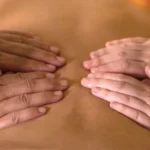
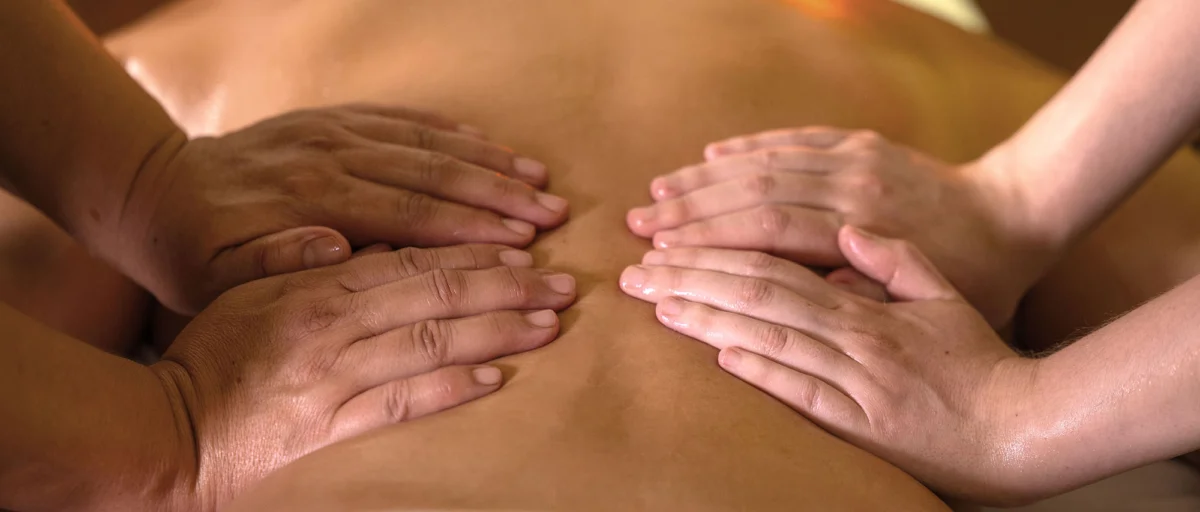
Abhyanga is the most widely recognized form of Ayurvedic bodywork. The Sanskrit word Snehan means both "oil" and "love." Thus, the practice is considered an act of unconditional care for the body’s cells. Whether performed as a self-massage or by one or two practitioners in a synchronized four-handed session, the goal is to loosen toxins and harmonize the nervous system. Specialized formulations, such as Mahanarayan Tailam for joint pain or Dhanvantaram Tailam for Vata disorders, represent the intersection of herbal medicine and manual therapy.
Udvartana, Udsadana, and Udgarshana
These techniques shift the focus from lubrication to stimulation:
- Udvartana: Massage with hot, dry herbal powders, highly effective for Kapha-related weight management and lymphatic flow.
- Udsadana: Focuses on cosmetic beautification and skin health.
- Udgarshana: Involves herbal pastes designed to treat specific skin imbalances.
Strokes and Directionality
The direction of movement is critical. Anuloma (away from the heart) is generally used for calming the mind and grounding Vata. Pratiloma (towards the heart) is often employed to stimulate lymphatic drainage and improve venous return in cases of varicosity. Key strokes include Peedana (kneading), Udvesthana (wringing), and Sandhi Calana (joint mobilization).
Marma Therapy: The Energetic Gateway
Perhaps the most distinct aspect of Ayurvedic bodywork is Marma Therapy. Marmani are vital energy points where the physical, mental, and spiritual layers of the body intersect. Unlike the needles used in acupuncture, Marma therapy utilizes specific, manual pressure to influence the flow of Prana (life force). These points are often larger than traditional acupoints and serve as "switches" for the body’s internal pharmacy, capable of regulating organs, glands, and emotional states.
Implications for Modern Wellness
The implications of integrating Ayurvedic massage into modern healthcare are significant. As chronic stress, autoimmune issues, and mental health struggles become increasingly prevalent, the "gentle but deep" approach of Ayurveda offers a sustainable, non-invasive alternative to purely pharmaceutical solutions.
By treating the skin as an organ of digestion and the nervous system as a landscape of energy, Ayurvedic massage provides a framework for preventative medicine. It encourages individuals to take agency over their health, moving away from symptom management and toward the cultivation of Ojas—the body’s essential vitality and immunity.
Expert Perspective: The Lineage of Healing
Beatrice Voss, a Certified Ayurvedic Practitioner (CAP) and alumna of The Ayurvedic Institute, emphasizes that the power of these therapies lies in their heart-centered lineage. "Ayurveda is not just a set of instructions," Voss notes. "It is a profound understanding of how to harmonize our cells with the vibration of love and intelligence found in nature."
For those seeking to deepen their understanding, the practice of Marma Therapy remains one of the most accessible yet potent ways to bridge the gap between ancient wisdom and contemporary clinical needs. As practitioners continue to document the outcomes of these therapies, it is clear that the "healing touch" remains as relevant today as it was in the time of the Charaka Samhita.
Summary of Key Ayurvedic Modalities
| Technique | Primary Purpose | Best For |
|---|---|---|
| Abhyanga | Deep nourishment & detoxification | Vata imbalances, anxiety, dryness |
| Udvartana | Stimulation & metabolic support | Kapha imbalances, congestion, obesity |
| Marma Therapy | Energy flow & organ regulation | Chronic pain, emotional blockages |
| Kesha Mardana | Scalp & head health | Stress, insomnia, hair health |
Through the diligent application of these ancient techniques, individuals can foster a deeper connection with their own biology, ensuring that the physical, mental, and emotional aspects of the self are nurtured in tandem. In an increasingly fragmented world, the Ayurvedic massage stands as a testament to the enduring power of holistic, intentional, and rhythmic care.