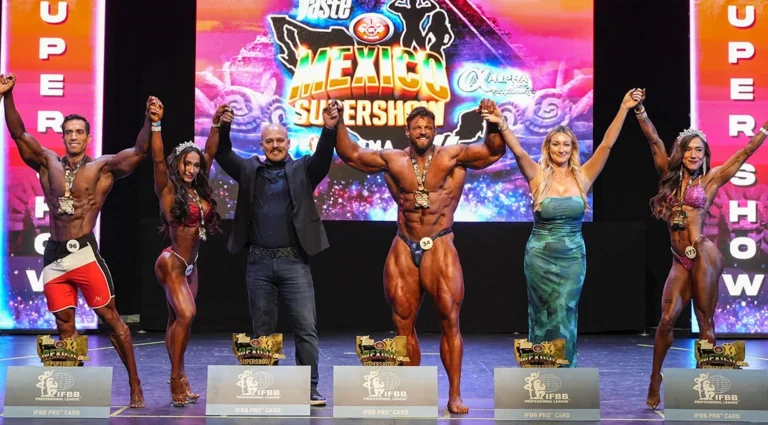








When the emcee at the Mr. Olympia stage calls out a competitor’s name, the introduction always begins with their home nation. While this may appear to be a standard procedural formality, it serves as a profound reminder of the event’s true scope. The Olympia is not merely a stage for physical perfection; it is a global summit where athletes from disparate cultures, political backgrounds, and histories stand shoulder-to-shoulder, united by the singular pursuit of human excellence.
As we look toward the 2026 Olympia in Las Vegas, the Men’s Open division alone features competitors representing 11 different nations. When one accounts for the 11 professional divisions and the Amateur Olympia, the sheer diversity of the roster becomes a testament to the sport’s international reach. In an era often defined by geopolitical friction, the Olympia stands as a rare, enduring example of diplomacy, community, and peace—a model that other industries would be wise to emulate.
The Architecture of Unity: Historical Foundations
The perception of bodybuilding as a "niche" sport often obscures its long-standing role as a tool for international bridge-building. To understand this, one must look back to the 1975 Mr. Olympia in Pretoria, South Africa. Often remembered through the lens of the iconic documentary Pumping Iron, the event’s true historical significance lies in the strategic, behind-the-scenes maneuvering of IFBB President Ben Weider.
A Legacy Born of Resistance
The roots of the International Federation of Bodybuilding and Fitness (IFBB) were, in many ways, an act of defiance against systemic exclusion. Ben and Joe Weider, facing discrimination in their early lives due to their Jewish heritage, were deeply sensitive to the exclusionary practices of established athletic organizations like the AAU. They envisioned an organization that transcended religious, political, and cultural borders. As M&F Senior Military Editor Rob Wilkins notes, "They felt like they weren’t getting a fair share and opportunities due to their religion. So, they decided to create something where all people could be brought together. The IFBB was a unifier."
The 1975 Pretoria Turning Point
The decision to hold the 1975 competition in South Africa during the height of the apartheid era drew significant criticism. The Weider brothers were accused of prioritizing profit over human rights. However, historical records reveal a different narrative: Ben Weider leveraged the event to force the South African government to abandon its segregationist policies, at least for the duration of the contest.
Weider negotiated a mandate that allowed athletes of color to compete openly. When local officials attempted to enforce segregation—such as requiring separate transport for athletes—Ben Weider and reigning champion Arnold Schwarzenegger stood firm. They demanded that all competitors be treated with absolute equality. Their refusal to compromise paved the way for legends like Albert Beckles, Robby Robinson, and Serge Nubret to make history, proving that the iron, once lifted, weighs the same regardless of the hand that grips it.
The Ripple Effect: Beyond the Podium
The impact of the 1975 Olympia was not confined to a single weekend. It served as a catalyst for broader societal change in South Africa, demonstrating how sport can exert pressure on domestic policy. By successfully integrating the competition, the IFBB provided a blueprint for other organizations, contributing to a cultural shift that eventually saw athletes like Sydney Maree emerge as national icons, becoming the country’s first Black "Athlete of the Year."
Global Outreach and the Olympic Dream
Ben Weider’s diplomatic ambitions were vast. Throughout the late 20th century, he traveled behind the Iron Curtain and into China, using bodybuilding as a soft-power tool to build relationships in regions where traditional diplomatic channels were often clogged. His ultimate goal was the recognition of bodybuilding as a legitimate athletic discipline by the International Olympic Committee (IOC).
This persistent advocacy bore fruit during the 1998 Winter Olympics in Nagano, Japan, when the IFBB was granted official provisional recognition by the IOC. This was not just a bureaucratic milestone; it was a validation of the "physical culture" philosophy. As Wilkins explains, "Ben showed that bodybuilding has contributed so much to the world, and it continues today, as evidenced by the Olympia and the IFBB Pro League."
The "Decade of Sport" and the Role of the Olympia
As the world enters what experts are calling the "Decade of Sport"—characterized by the recent 2026 Winter Olympics, the World Cup on American soil, and the upcoming 2028 Summer Games in Los Angeles—the conversation surrounding the diplomatic power of athletics has reached a fever pitch.
Data and Infrastructure
The 2027 Military Games, which will host athletes from 142 nations, underscores the necessity of these international gatherings. The Olympia, however, maintains a unique position. Unlike team sports, which are often heavily influenced by nationalistic fervor, bodybuilding celebrates the individual’s triumph over their own biological limitations.
The infrastructure of the Olympia is uniquely equipped to handle this:
- Diverse Representation: With over 11 nations represented in the Open division, the event creates a melting pot of training methodologies and cultural perspectives.
- Unified Standards: The judging criteria remain constant regardless of the athlete’s origin, ensuring a meritocracy that rewards the same virtues—discipline, recovery, and peak performance—globally.
- Cultural Exchange: During the Olympia World Fitness Expo, fans and athletes engage in a cross-pollination of fitness philosophies, nutrition, and training techniques that transcend borders.
Official Perspectives: The Philosophy of the Iron
The leadership of the bodybuilding community remains steadfast in the belief that the sport is more than just an exhibition of muscle. It is a philosophy of self-improvement that inherently promotes respect for one’s opponent.
"When you get down to the foundation of why they are there, it boils down to personal standards of excellence," notes a league representative. "When an athlete from a nation experiencing political unrest stands on stage next to an athlete from a stable, peaceful nation, the audience doesn’t see politics. They see two people who have endured the same grueling preparation. That creates a bridge that is difficult to build in any other forum."
Implications for the Future
What does this mean for the future of international relations? While bodybuilding alone cannot solve the complex political crises of the modern world, it provides a crucial template for engagement.
A Template for Diplomacy
The lessons learned from the Weider era suggest that when leaders use international events to prioritize shared human potential over division, they create space for dialogue. The "unifying power of the iron" is not a poetic abstraction; it is a functional reality. It is a shared language. Whether it is a trainer in Tokyo sharing a protocol with a trainee in London, or an American athlete exchanging training tips with a competitor from the Middle East, the bodybuilding community fosters a level of trust that is inherently apolitical.
Sustaining the Momentum
As we look forward to the 2026 Olympia and beyond, the implications are clear: the sport must continue to advocate for global access. By facilitating the movement of athletes across borders and ensuring that the stage remains a sanctuary from the prejudices of the outside world, the Olympia secures its place as an essential pillar of global culture.
The takeaway for the spectator is simple: every ticket purchased and every stream watched is an endorsement of a community that values the individual’s commitment to excellence over their nationality.
Conclusion: The Unifying Power of the Iron
In a world that seems increasingly fractured, the Olympia serves as a defiant, muscular beacon of what humanity can achieve when it focuses on its commonalities. The strength required to sculpt the human form is universal; the pain of training is shared; and the joy of reaching one’s potential is a language understood in every corner of the globe.
As the athletes prepare for the 2026 Olympia in Las Vegas, the world would do well to observe the stage. Beyond the medals, the trophies, and the cheers of the crowd, there is a profound, silent negotiation occurring. It is a dialogue of mutual respect, a demonstration of peaceful competition, and a reminder that when we strip away the banners and the borders, we are all, at our core, striving for the same thing: to become the best version of ourselves.
The key to a better world may not lie in the boardrooms of the powerful, but in the gymnasiums and on the stages where individuals gather to prove that, through iron and discipline, we can rise above the limitations that others seek to impose upon us.
Experience the pinnacle of human achievement. Secure your tickets to the 2026 Olympia and World Fitness Expo by visiting mrolympia.com.