










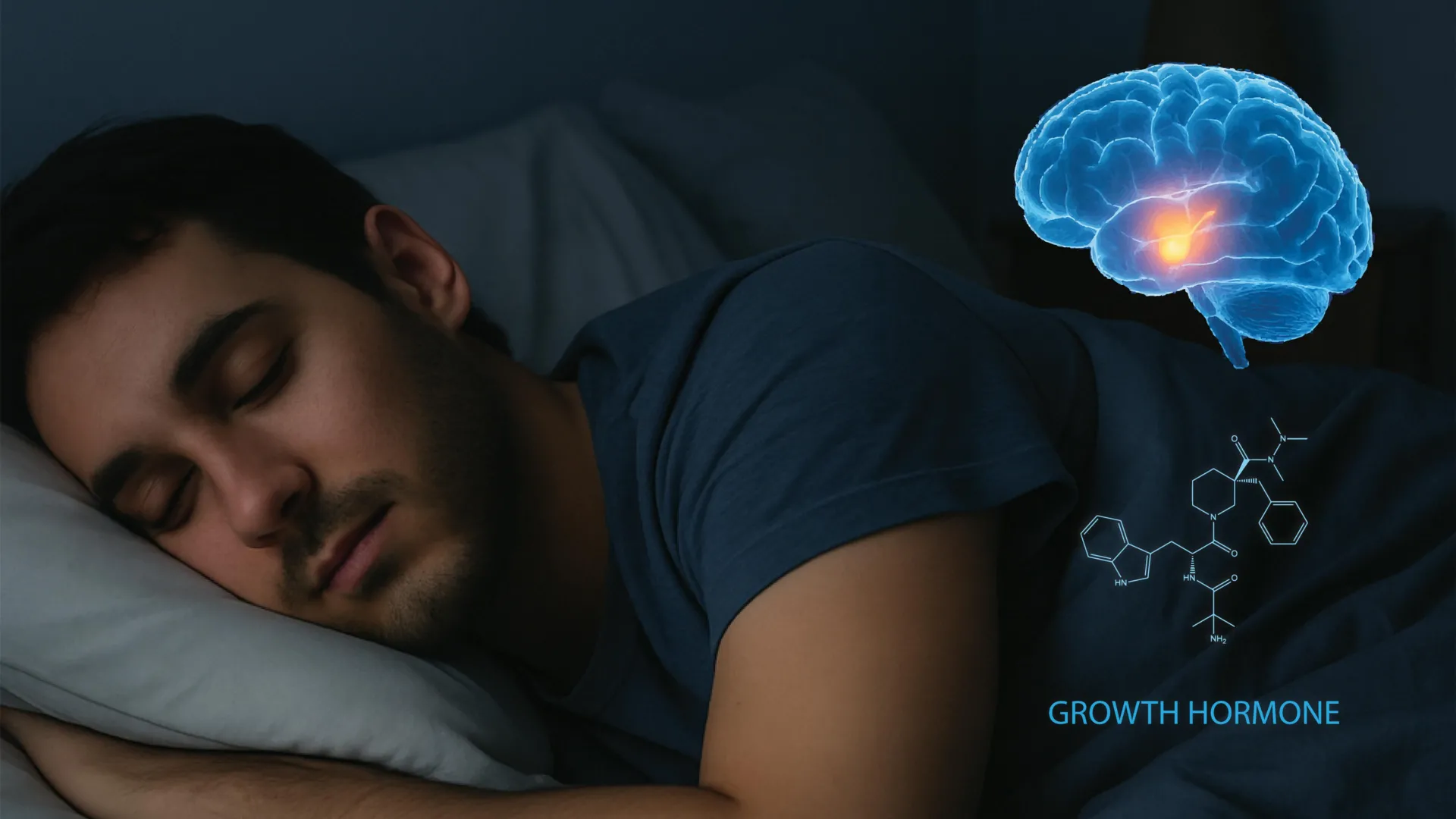
For decades, the medical community has operated under a foundational assumption: sleep is the body’s primary engine for maintenance, repair, and growth. We have long understood that during deep, restorative sleep, the body undergoes a biological "reset," releasing growth hormone—a potent chemical messenger vital for building muscle, fortifying bone density, and regulating the body’s metabolic furnace. For adolescents, this process is the literal architecture of their future, dictating their final height and physical development.
However, the "how" behind this process has remained one of neuroscience’s most elusive mysteries. While researchers knew that sleep deprivation disrupted hormone production, they could not map the precise neural circuitry that bridges the gap between brain activity and hormonal release. A groundbreaking new study from the University of California, Berkeley, published in the journal Cell, has finally unmasked this mechanism, revealing a sophisticated, bidirectional feedback loop that does more than just regulate growth—it dictates when we wake up.
Main Facts: Decoding the Hypothalamic Circuitry
At the heart of this discovery is the hypothalamus, a small, evolutionarily ancient region deep within the brain that acts as the body’s primary command center. It regulates everything from hunger and body temperature to the rhythmic cycle of sleeping and waking.
The Berkeley research team, led by neuroscientist Yang Dan, focused their investigation on two opposing chemical messengers produced in the hypothalamus: Growth Hormone-Releasing Hormone (GHRH) and somatostatin. These two peptides operate like a biological gas pedal and brake. GHRH encourages the pituitary gland to secrete growth hormone, while somatostatin acts as a suppressant.
The team’s primary discovery is that these two signals do not work in isolation; they coordinate their activity based on the stage of sleep. During REM sleep—the phase associated with vivid dreaming—both GHRH and somatostatin activity increase. While their opposing roles might seem contradictory, their combined activity in this phase effectively triggers a surge in growth hormone. Conversely, during non-REM sleep—the deep, restorative stage—somatostatin activity drops, effectively removing the "brake" and allowing GHRH to drive growth hormone production forward.
Chronology: The Journey to the Discovery
The path to mapping this circuit was paved by a combination of high-precision technology and a novel approach to animal models. The researchers utilized mice, which are uniquely suited for sleep studies due to their polyphasic sleep patterns. Unlike humans, who typically experience one long, consolidated block of sleep, mice drift in and out of slumber in short, frequent episodes.
- Implantation and Monitoring: The team implanted electrodes into the brains of the mice, allowing for real-time, high-fidelity recordings of neural activity.
- Optogenetic Stimulation: Using light to stimulate specific neurons, the team was able to observe how individual clusters of cells responded to environmental and internal stimuli.
- Tracing the Connections: Using advanced neuro-mapping techniques, the scientists traced the specific pathways between the hypothalamus and the pituitary gland.
- Identifying the Feedback Loop: Through constant observation, the researchers noticed that the relationship was not a one-way street. As growth hormone levels rose in the blood, the hormone itself began sending signals back to the brain—specifically to the locus coeruleus, a brainstem region critical for alertness and cognitive arousal.
Supporting Data: The Biological Feedback Loop
The most profound revelation of the study is the existence of a feedback loop that governs our sleep-wake cycle. It was previously thought that the brain told the body when to wake up, independent of the hormones released during sleep. This research suggests the opposite: the biological consequences of sleep, specifically the accumulation of growth hormone, help trigger the transition into wakefulness.
As growth hormone levels accumulate during sleep, the hormone signals the locus coeruleus, increasing its activity. This, in turn, promotes the brain’s transition toward an alert state. However, the study also identified a "Goldilocks" effect regarding this mechanism. While moderate stimulation of the locus coeruleus promotes alertness, the researchers—building on earlier work by co-author Daniel Silverman—found that excessive stimulation can have a paradoxical effect, causing the brain to feel sleepier.
This discovery highlights the body’s drive toward homeostasis—the internal state of equilibrium. The system is self-regulating: if sleep is insufficient, growth hormone release drops, which in turn impacts the body’s ability to maintain healthy metabolism, glucose regulation, and fat processing. If growth hormone levels become dysregulated, the brain’s ability to transition smoothly between sleep and wakefulness is compromised.
Official Responses and Expert Perspective
The study’s authors emphasize that this research provides a "basic circuit" that could be a roadmap for future medical interventions.
"People know that growth hormone release is tightly related to sleep, but only through drawing blood and checking growth hormone levels during sleep," said Xinlu Ding, a postdoctoral fellow and the study’s first author. "We’re actually directly recording neural activity in mice to see what’s going on. We are providing a basic circuit to work on in the future to develop different treatments."
Daniel Silverman, a co-author of the study, noted the potential for targeted therapies. "There are some experimental gene therapies where you target a specific cell type," Silverman explained. "This circuit could be a novel handle to try to dial back the excitability of the locus coeruleus, which hasn’t been talked about before."
The research, which was supported by the Howard Hughes Medical Institute and the Pivotal Life Sciences Chancellor’s Chair fund, represents a shift in how neuroscientists view the relationship between endocrine function and cognitive states.
Implications: The Future of Medicine and Sleep Health
The implications of this study are vast, touching upon everything from metabolic health to the management of neurodegenerative diseases.
Addressing Metabolic Disorders
Because growth hormone is essential for regulating glucose and fat metabolism, chronic sleep disruption is a known contributor to the rise of obesity, diabetes, and cardiovascular disease. By identifying the specific neurons that control this hormone, researchers may eventually be able to develop pharmacological or gene-based therapies that "mimic" the benefits of deep sleep in patients who cannot achieve it naturally due to health conditions.
Neurological and Cognitive Health
The locus coeruleus is not only involved in wakefulness but is also a critical component in attention, cognitive focus, and even the brain’s response to stress. Disruptions in this region have been implicated in conditions ranging from ADHD to Parkinson’s and Alzheimer’s disease. If growth hormone plays a fundamental role in regulating the activity of the locus coeruleus, then the hormone itself—or the circuits that trigger it—could become a focal point for treating these neurological disorders.
The Myth of the "Switch-Off"
Perhaps the most important takeaway for the general public is the debunking of the idea that sleep is a "passive" state. The brain does not simply "switch off" when we close our eyes. It engages in a high-stakes, highly coordinated chemical conversation. Every stage of sleep, from REM to non-REM, is a carefully orchestrated segment of a broader process designed to sustain life, repair the body, and prepare the mind for the challenges of the next day.
While the current findings are based on mice, the fundamental architecture of the hypothalamus is highly conserved across mammalian evolution, suggesting that these mechanisms are likely present in humans. The next phase of research will involve determining how these circuits function in the human brain and whether they can be safely manipulated.
For now, the study serves as a potent reminder of the biological necessity of rest. Sleep is not a luxury or a downtime; it is the most active, complex, and vital maintenance program the human body performs. When we sacrifice sleep, we are not just feeling "tired"—we are actively disrupting the neural and hormonal symphony that keeps our metabolism, our bones, our muscles, and our cognitive functions in balance. As we look toward the future, the ability to "tune" this circuit may offer one of the most promising avenues yet for treating the most persistent illnesses of the modern age.