










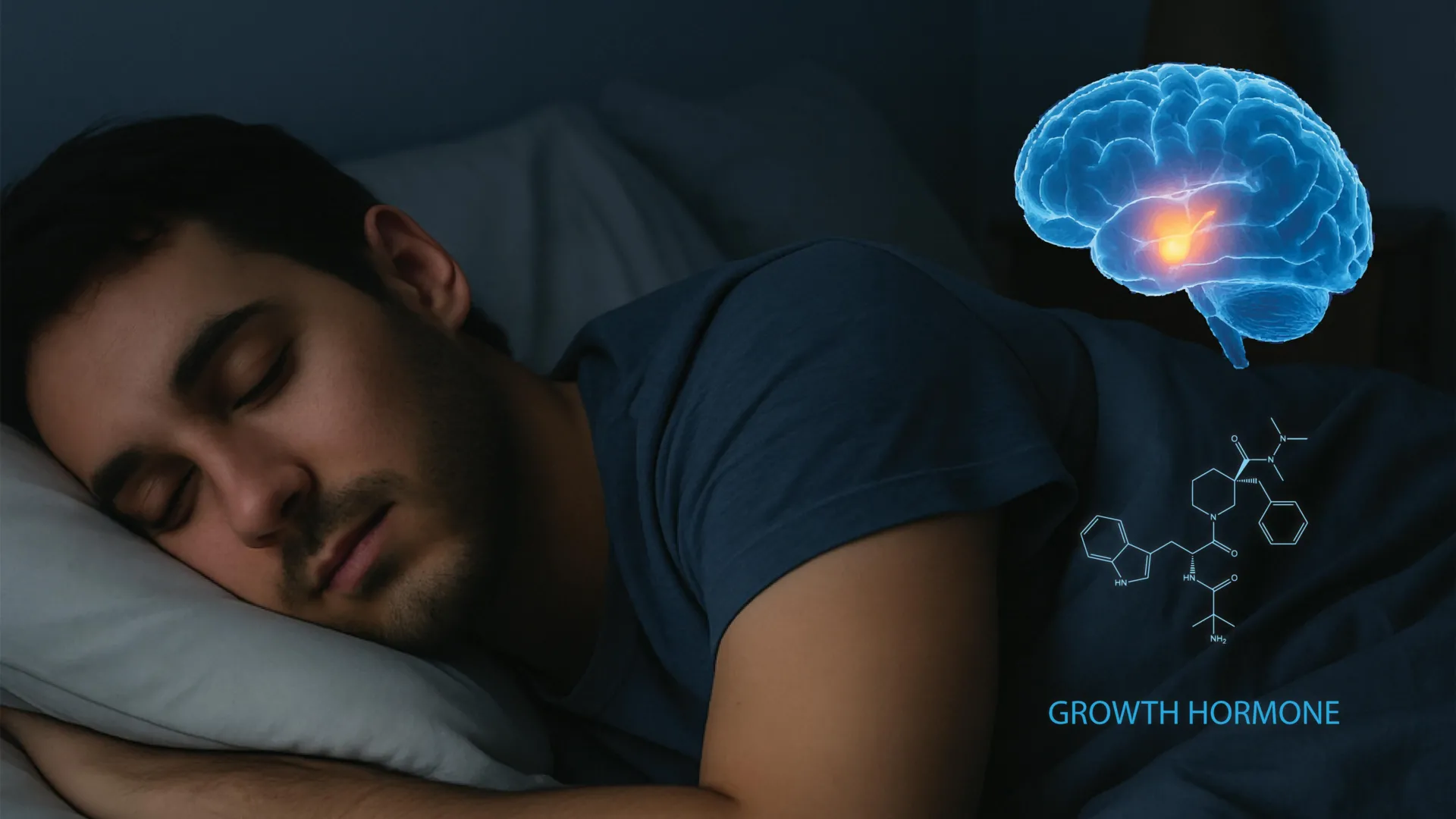
For decades, the adage that "sleep helps you grow" has been treated as common wisdom—a foundational truth for parents and athletes alike. It is well-documented that the human body experiences a significant surge in growth hormone (GH) during slumber, particularly during deep, non-REM stages. This surge is not merely a biological curiosity; it is the engine of cellular repair, muscle synthesis, bone density maintenance, and metabolic regulation. Yet, despite the ubiquity of this phenomenon, the specific "wiring" inside the brain that orchestrates this surge has remained one of neuroscience’s most elusive puzzles.
New research from the University of California, Berkeley, has finally pulled back the curtain on this complex biological process. By mapping the precise neural circuits that govern growth hormone secretion, researchers have not only clarified how our brains "talk" to our endocrine systems but have also identified a sophisticated feedback loop that links the quality of our sleep to the state of our metabolic and cognitive health.
Main Facts: Deciphering the Brain’s Internal Clockwork
The study, published in the prestigious journal Cell, represents a landmark shift in our understanding of neuroendocrinology. For the first time, scientists have identified the specific nerve cells located within the hypothalamus—the brain’s ancient regulatory center—that coordinate the release of growth hormone.
The researchers identified two primary drivers of this process: growth hormone-releasing hormone (GHRH) neurons and two distinct types of somatostatin neurons. These cells act as the brain’s internal thermostat for growth, with GHRH serving as the "accelerator" and somatostatin functioning as the "brake."
Crucially, the team discovered that these neurons do not fire in a vacuum. Their activity is tethered to the architecture of sleep itself. The study reveals that the interplay between these two hormones changes dynamically depending on the sleep stage, creating a nuanced hormonal environment that shifts as we cycle through light, deep, and REM sleep. This discovery confirms that the brain does not treat sleep as a uniform block of time, but rather as a highly orchestrated sequence of physiological states, each with its own metabolic demands and hormonal outputs.
Chronology: The Journey to Discovery
The path to this discovery was paved by years of technological innovation and a departure from traditional, invasive blood-sampling methods.
- Observational Foundations: Historically, researchers were limited to measuring growth hormone levels by drawing blood from sleeping subjects—a method that provided a "bird’s-eye view" of hormone fluctuations but offered zero insight into the underlying neural firing patterns.
- Technological Shift: The team, working in the laboratory of UC Berkeley neuroscientist Yang Dan, moved away from external measurements. Instead, they utilized advanced optogenetics and electrode recording in mice. By stimulating hypothalamic neurons with light while simultaneously recording real-time neural activity, the team could "watch" the brain as it generated hormone signals.
- The Mouse Model Advantage: Mice exhibit a unique sleep architecture, characterized by short, frequent bursts of sleep throughout the day and night. This provided the researchers with a high-frequency laboratory environment, allowing them to observe hundreds of sleep-wake transitions in a compressed timeframe.
- Circuit Mapping: Over months of intensive observation, the team utilized circuit-tracing techniques to map the pathways from the hypothalamus to the brainstem. They successfully tracked how these hypothalamic signals traveled to the locus coeruleus—a critical region of the brain involved in alertness and cognition.
- Validation: The final stage of the research involved identifying the feedback loop, where the growth hormone itself signals back to the locus coeruleus, effectively closing the loop and modulating the brain’s state of arousal.
Supporting Data: The Dynamics of Hormonal Release
The data provided by the UC Berkeley team paints a vivid picture of how hormone regulation fluctuates throughout the night. The team observed that during REM sleep, both GHRH and somatostatin levels increase, leading to a robust, coordinated release of growth hormone.
Conversely, during non-REM sleep—the stage often associated with physical restoration—the system shifts. Somatostatin levels drop, while GHRH levels rise only moderately. This suggests that the "brake" (somatostatin) is being removed to allow for a steady, controlled release of growth hormone, tailored to the specific needs of the body during deep rest.
Perhaps the most startling piece of data is the discovery of a "feedback mechanism" that involves the locus coeruleus. The researchers found that as growth hormone accumulates in the system, it exerts an effect on the locus coeruleus, which governs wakefulness. This creates a self-regulating system:
- The Build-up: Sleep facilitates growth hormone release.
- The Signaling: Growth hormone stimulates the locus coeruleus to eventually nudge the brain toward wakefulness.
- The Safety Valve: If the locus coeruleus becomes over-stimulated, it paradoxically triggers a signal for sleepiness, preventing the brain from becoming "stuck" in a state of high arousal.
Official Responses and Researcher Insights
The implications of this study are being met with significant interest from the scientific community, as it bridges the gap between basic neuroscience and clinical medicine.
"People know that growth hormone release is tightly related to sleep, but only through drawing blood," noted lead author Xinlu Ding, a postdoctoral fellow in the Department of Neuroscience at UC Berkeley. "We’re actually directly recording neural activity in mice to see what’s going on. We are providing a basic circuit to work on in the future to develop different treatments."
The co-author of the study, Daniel Silverman, emphasized the potential for therapeutic intervention. "Understanding the neural circuit for growth hormone release could eventually point toward new hormonal therapies to improve sleep quality or restore normal growth hormone balance," Silverman explained. "There are some experimental gene therapies where you target a specific cell type. This circuit could be a novel handle to try to dial back the excitability of the locus coeruleus, which hasn’t been talked about before."
These insights highlight a shift in how medicine might approach sleep disorders. Rather than simply using sedatives to force sleep, future treatments might focus on "tuning" the hypothalamic-locus coeruleus circuit to ensure that the hormonal benefits of sleep are being properly harvested by the body.
Implications: From Metabolic Health to Neurodegeneration
The ramifications of this discovery extend far beyond the gym or the pediatric clinic. Because growth hormone is a master regulator of glucose and fat metabolism, the discovery explains why chronic sleep deprivation is so closely linked to the modern epidemic of metabolic diseases, including type 2 diabetes and cardiovascular disease.
Metabolic Health
When the sleep-growth hormone circuit is disrupted, the body’s ability to process glucose and burn fat is compromised. By identifying the exact neural circuitry at fault, scientists now have a potential target for treating metabolic syndromes that are resistant to diet and exercise alone.
Neurodegenerative Conditions
Perhaps most intriguing is the link to the locus coeruleus. This region is not only involved in wakefulness but is also one of the first areas affected in many neurodegenerative diseases, including Parkinson’s and Alzheimer’s. If researchers can use the growth hormone circuit to modulate the excitability of the locus coeruleus, it could open entirely new avenues for neuroprotection.
Cognitive Performance
The research also suggests that growth hormone serves a cognitive role. By influencing the locus coeruleus, growth hormone may help maintain the "arousal level" required for alertness, focus, and memory consolidation after waking. This suggests that the benefits of a "good night’s sleep" are not just in the repair of muscle tissue, but in the priming of the brain for the cognitive demands of the day ahead.
As the scientific community continues to digest these findings, the work of the Dan lab at UC Berkeley stands as a testament to the power of fundamental research. By tracing the wiring of the brain, we are moving closer to a future where sleep is not just a passive period of inactivity, but a highly understood, medically supported, and biologically optimized pillar of human health.