











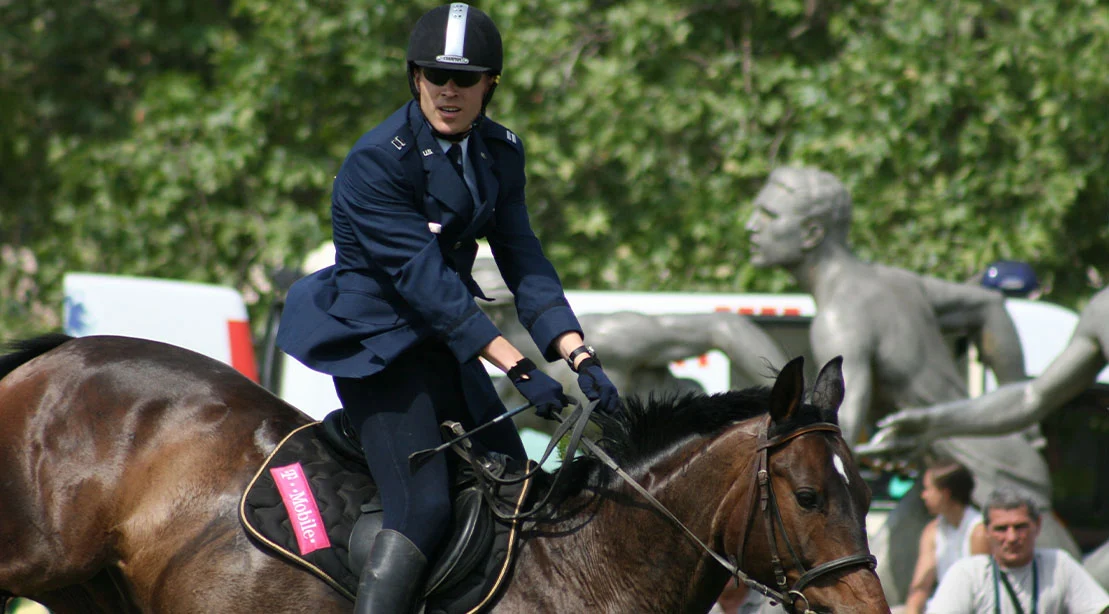
For many young Americans, the horizon of adulthood is viewed through a binary lens: the disciplined, structured life of military service or the high-stakes, singular pursuit of athletic excellence. We are conditioned to choose a lane. Major Eli Bremer, an officer in the Air Force Reserve Command and a 2008 Olympian, represents a rare paradigm shift. To Bremer, the question was never "either-or"—it was always "and."
The Genesis of a Unified Vision
Growing up in the shadow of the Air Force Academy in Colorado Springs, Colorado, Bremer did not merely observe military life; he was immersed in it. The Academy was his backyard, and the cadets were his earliest mentors. These formative years instilled in him a foundational belief that service and personal ambition were not mutually exclusive but were, in fact, symbiotic.
"All my childhood mentors were cadets at the Academy," Bremer recalls. Even as a teenager, he possessed an uncanny clarity regarding his trajectory. He didn’t just want to be an officer; he wanted to be an Olympian. While many would have seen these as competing interests, Bremer viewed the Air Force’s World Class Athlete Program (WCAP) as the bridge between his two worlds. During his freshman year, he famously wrote a letter to his future self, explicitly stating his intent to join WCAP and compete on the world’s biggest stage. It was a declaration of intent that he would later manifest into reality.
Chronology: From the Academy to Beijing
Bremer’s journey toward the 2008 Beijing Summer Olympics was paved with rigorous military training and the demanding, multi-disciplinary requirements of the modern pentathlon—an event that tests proficiency in fencing, freestyle swimming, equestrian show jumping, laser pistol shooting, and cross-country running.
- 2000: Bremer marks his international footprint at the Military Championships in Switzerland. It was here he formed a connection with Brazilian lieutenant Nilton Rolim, a friendship that would span decades and eventually reshape the landscape of international military sports.
- 2008: The realization of a dream. Representing the United States in the modern pentathlon, Bremer competed in Beijing. While his 22nd-place finish was the public culmination of his athletic career, it was the start of his tenure as an advocate for the military-athlete ecosystem.
- Post-2008: Bremer transitioned deeper into the Air Force Reserve Command, eventually ascending to the role of Chair of the Advisory Board for the Air Force’s WCAP.
- 2017-Present: Following the fallout of the Larry Nassar sexual abuse scandal, Bremer emerged as a pivotal voice in governance reform within the U.S. Olympic and Paralympic Committee (USOPC).
- 2027: The culmination of years of diplomatic efforts, the Military World Games are set to take place in Charlotte, North Carolina, a project co-chaired by Bremer.
The Architecture of Success: The WCAP Model
Bremer is a staunch advocate for the Air Force’s WCAP, viewing it not just as a training ground for medals, but as a career incubator. The program allows elite athletes to maintain their military careers while pursuing world-class competition.
"The military and the individual both get a great outcome from it," Bremer explains. "The athletes we bring into the Air Force really like it because they understand the three years of job training they get in a skill outside of their sport. That’s a huge benefit." By providing a safety net of professional development, the program mitigates the "athlete’s identity crisis" that often occurs when a sports career ends. For Bremer, the military provided the stability that allowed him to focus on the marginal gains required to reach the Olympics, while his athletic pursuits provided the mental fortitude to excel in the Air Force.
Governance Reform: The "Nostradamus" of Athlete Advocacy
Perhaps the most significant legacy of Major Bremer’s career lies not in the pool or on the shooting range, but in the halls of legislative reform. When the Larry Nassar scandal broke, it exposed a systemic rot within the governing bodies of U.S. Olympic sports. While many were shocked, Bremer was not.
"I had been a vocal critic of the governance model because it predisposed ways to cover up issues like abuse," he says. Bremer had identified the structural flaws years prior, advocating for a transparent, athlete-centric model of oversight. When the scandal reached its zenith, his past warnings were validated.
"The leadership at the time tried to get rid of me but couldn’t. Then Nassar happened, people thought I was Nostradamus, but I wasn’t; I just know governance."
Bremer didn’t stop at criticism. He helped lead an athlete coalition that worked alongside bipartisan lawmakers to push for the most significant restructuring of the USOPC in decades. This legislation was designed to strip power away from insular committees and place more agency into the hands of the athletes themselves. As he notes, the work is ongoing: "It hasn’t solved all the problems, but it was a step in the right direction."
Bringing the World to America: The 2027 Military World Games
The connection Bremer made in Switzerland in 2000—sharing a beer with a young Brazilian lieutenant named Nilton Rolim—came full circle 24 years later. Rolim, now a Colonel and President of the International Military Sports Council (CISM), reached out to Bremer to discuss the potential for the United States to host the Military World Games.
Bremer, serving as co-chair of the bid committee, helped secure the 2027 Games for Charlotte, North Carolina. The event, scheduled for June 25th through July 4th, represents a massive logistical and diplomatic victory for the U.S. military. It is a testament to the power of personal relationships and the endurance of military camaraderie. "I’m super proud of what we’ve done there," Bremer says, highlighting the effort required to coordinate such a high-profile international event.
Implications: A New Definition of Longevity
Today, as the CEO of Mytikas Industries and owner of the boutique consulting firm Pure Performance, Bremer has moved into a new phase of life. The high-impact, high-intensity training of the pentathlon has been replaced by swimming, cycling, and golf.
For veterans and aging athletes, Bremer offers a message of adaptation. "My thinking now is not on how fast I can run but if I can keep up with my son and be there for my 83-year-old father." He emphasizes that the "goalposts" of fitness must shift as one ages, but the necessity of movement remains constant. "You don’t want to wake up 10 years from now and realize you sold yourself short."
Final Reflections: The Transformative Power of Service
Major Eli Bremer’s story is a blueprint for the modern professional. He has effectively navigated the transition from elite athlete to military leader to business executive, proving that the skills honed in uniform—discipline, strategic thinking, and the courage to challenge broken systems—are universally applicable.
As he continues to advocate for the WCAP and military service, his message remains clear: the military does not just utilize talent; it transforms individuals. "It makes you a better person. Your time in service will fundamentally transform you."
For the next generation of kids dreaming of gold medals or military commissions, Bremer’s life stands as a reminder that the most rewarding path is often the one where you refuse to choose, and instead, decide to do both. By integrating service into the pursuit of excellence, Bremer has ensured that his impact will be felt long after the medals are tucked away and the uniform is hung up—a legacy of integrity, reform, and service that continues to shape the future of both the military and the American Olympic movement.