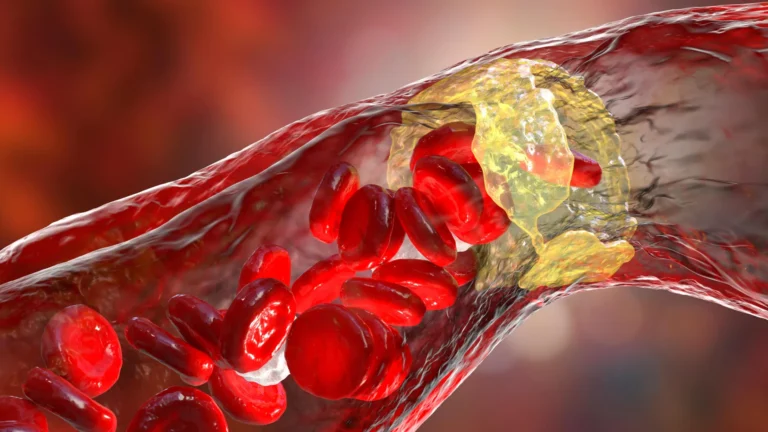












In the ongoing quest to curb the global burden of cardiovascular disease—the leading cause of mortality in the United States—clinicians have increasingly turned to diagnostic technology to refine risk assessment. Among the most popular of these tools is the coronary artery calcium (CAC) scan. This rapid, non-invasive CT test provides a visual snapshot of plaque buildup within the arteries, offering a quantitative "calcium score" that has long been marketed as a window into a patient’s future heart health.
However, a landmark study published August 26 in the journal JAMA suggests that the clinical utility of these scans is far more nuanced than previously assumed. By comparing the predictive power of calcium scans against the American Heart Association’s (AHA) newly updated PREVENT risk calculator, researchers from Northwestern Medicine have identified that the scan’s greatest value is not universal, but rather restricted to a specific subset of the population.
The Evolution of Cardiovascular Risk Assessment
To understand the significance of this study, one must first understand the two primary methods now being weighed against one another: clinical risk calculators and imaging.
The PREVENT (Predicting Risk of cardiovascular disease EVENT) calculator represents the gold standard in modern clinical assessment. It synthesizes readily available physiological data—such as blood pressure, cholesterol levels, age, and sex—to estimate a patient’s probability of suffering a heart attack or stroke over the next 10 or 30 years. It is an algorithmic approach that looks at the "inputs" of human health to forecast the "outputs" of disease.
Conversely, the coronary artery calcium scan functions as an "objective truth" test. Rather than predicting risk based on systemic factors, it looks for the physical manifestation of atherosclerosis: calcified plaque. A higher score typically indicates a more advanced stage of disease, theoretically providing a "tie-breaker" for clinicians uncertain about how aggressively to treat a patient.
The Scope of the Study
The Northwestern team, led by Dr. Nilay Shah, an assistant professor of medicine in the division of cardiology at the Northwestern University Feinberg School of Medicine, sought to determine if the addition of a calcium score to the PREVENT equation actually yields better long-term outcomes.
The researchers analyzed a cohort of more than 6,000 adults, aged 45 to 79, who participated in the Multi-Ethnic Study of Atherosclerosis (MESA). The study was comprehensive, tracking these individuals for an entire decade. At the outset, every participant was given a PREVENT risk score and a coronary artery calcium score. The researchers then observed the participants over the next ten years to see how many experienced a cardiovascular event, such as a heart attack or stroke.
Data Analysis: Where the Numbers Diverge
The findings provide a sobering look at the limitations of routine testing. Over the course of the ten-year follow-up, 6% of the participants experienced a cardiovascular event. When the research team compared the predictive accuracy of the PREVENT calculator alone against a model that integrated the calcium score, the improvement was, in a word, modest.
The statistical metric for "discrimination"—the ability to correctly identify who will experience an event and who will not—rose only from 0.73 to 0.75 when the calcium scores were added. In the world of clinical biostatistics, an increase of 0.02 is statistically significant but clinically minor when viewed across an entire population.
The "Sweet Spot": The Intermediate-Risk Patient
The narrative of the study shifted, however, when researchers segmented the data by risk level. While the scan offered little additional insight for those at very low risk or those already deemed to be at high risk, it proved to be a valuable tool for the "intermediate" group.
Participants whose initial PREVENT scores placed them in the 3% to 9% risk category—often described as "borderline" or "intermediate"—saw the most meaningful benefit. For these patients, the calcium scan acted as a vital clinical filter, helping doctors determine whether their risk was actually higher or lower than the initial algorithmic estimate. This refinement is critical; it allows for personalized treatment plans that avoid both the under-treatment of high-risk patients and the over-treatment of those whose risk is lower than the calculator suggests.
Official Perspectives: Balancing Utility and Over-Testing
The implications of this research are substantial for clinical practice, particularly regarding the cost-effectiveness and safety of medical testing.
"Coronary artery calcium scans are becoming more widely available and less expensive," Dr. Shah noted. "Our findings suggest that not everyone necessarily needs or would benefit from a coronary artery calcium scan for the purpose of predicting risk of heart attack and stroke."
Dr. Shah’s assessment highlights a growing concern among cardiologists regarding the "medicalization" of low-risk individuals. When a patient is already classified as high-risk, a calcium scan is often redundant. If a patient’s cholesterol and blood pressure metrics already qualify them for statin therapy—the standard of care for lowering cardiovascular risk—the scan is unlikely to change the clinical course of action. Performing the test in these instances only exposes the patient to unnecessary radiation, increases healthcare costs, and adds potential anxiety without a corresponding change in treatment.
"Routinely using a calcium scan in people who are at low risk may result in unnecessary radiation exposure, testing and costs with unclear clinical benefits," Dr. Shah added. "Using calcium scans in people who are at high risk is likely to result in unnecessary testing because these individuals are recommended to start a statin regardless of what the calcium scan shows."
Clinical Implications: A Roadmap for Precision Medicine
The study, supported by the American Heart Association and the National Heart, Lung, and Blood Institute, reinforces a shift toward "precision cardiology." Instead of a one-size-fits-all diagnostic approach, the researchers suggest that the PREVENT calculator should remain the primary tool for initial screening.
For the vast majority of the population, the data provided by the PREVENT equation is sufficient to guide preventative therapy. The calcium scan should be viewed as a specialized tool, reserved for the patient whose risk profile remains ambiguous after a standard clinical evaluation.
Addressing the Gaps in Current Knowledge
Despite the clarity provided by this study, the research team is careful to note the limitations that remain. The cohort, while diverse, did not fully capture the nuance of every demographic. Dr. Shah pointed out that additional research is required to determine how calcium scores interact with PREVENT estimates in specific, high-risk groups, such as South Asian and Filipino populations, who may have different physiological presentations of cardiovascular disease.
Furthermore, because the study focused on adults aged 45 to 79, the data does not provide a definitive answer for younger adults. As cardiovascular disease begins to manifest in younger cohorts, understanding whether early calcium screening provides a meaningful predictive edge remains an open, vital question.
Conclusion: The Path Forward
The JAMA study serves as a critical checkpoint for the medical community. It validates the efficacy of the PREVENT calculator while simultaneously tempering the enthusiasm for the indiscriminate use of coronary artery calcium scans.
In an era where diagnostic technology is increasingly accessible, the temptation to "see everything" is strong. However, this research demonstrates that more information is not always better information. The most effective path to preventing heart disease lies in using the right tool at the right time—prioritizing clinical calculators for baseline assessment and reserving imaging for those instances where it will truly alter the course of a patient’s life.
As the authors conclude, the findings help clinicians "understand how best to use the available tools to estimate someone’s risk of a heart attack or stroke," providing the kind of precision that ultimately saves lives while sparing patients from the burdens of unnecessary medical intervention. The research team, including co-authors Xiaoning Huang, Lucia Petito, Norrina Allen, Dr. Philip Greenland, and Dr. Sadiya Khan, continues to advocate for a data-driven, conservative approach to testing that emphasizes patient outcomes over routine, blanket screening.