











Reviewed by Brian St. Pierre, MS, RD
When semaglutide (Ozempic) first permeated the public consciousness in 2017, the fitness industry was largely caught off guard. For many health and fitness coaches, the rapid rise of GLP-1 (glucagon-like peptide-1) receptor agonists felt like an existential threat. If a once-weekly injection could curb appetite and melt away body fat, what role remained for the trainer or the nutritionist?
However, as we enter 2026, the landscape has shifted. With over 1 in 10 U.S. adults now utilizing these medications, the initial fear has been replaced by a pragmatic realization: the medication is a tool, not a replacement for human guidance. Coaches are no longer just "fitness instructors"; they are becoming essential pillars in the GLP-1 support system.
The Evolution of the "GLP-1 Threat"
The history of GLP-1s in the wellness space is a study in rapid cultural adaptation. In the early days, prescriptions were a niche occurrence; they were a theoretical, distant concept for the average gym-goer. By 2026, the medication has become ubiquitous.
This widespread adoption has forced a change in the coaching paradigm. Rather than viewing the drug as an antagonist to their business model, successful coaches now treat GLP-1s as an "additive complement." The goal is not to compete with the pharmacy, but to ensure that the physical transformation prompted by the drug is supported by foundational health habits that endure long after the medication is discontinued.
As Kate Solovieva, Super Coach and Director of Community at Precision Nutrition, succinctly puts it: "As a coach, you’re not in the GLP-1 world; you’re in the GLP-1 support world." The target market has shifted from "everyone" to "people on GLP-1s who want support."
The Seven Archetypes of the GLP-1 Client
Coaching is rarely one-size-fits-all, but the GLP-1 landscape has produced distinct archetypes. Understanding these types is vital for any professional looking to provide effective, ethical, and safe guidance.
1. The Honeymooner (Readiness: Very Low)
The Honeymooner is the client who feels they have found the "magic bullet." They are losing weight effortlessly, experiencing few side effects, and generally feel no need for outside intervention.
- The Challenge: Coaches often fall into the "righting reflex," where they feel an urgent need to warn the client about potential muscle loss or nutritional deficiencies.
- The Strategy: Avoid being a "downer." Celebrate their success and plant the seed for future support. Let them know your door is open for when the honeymoon phase inevitably encounters its first plateau or health hurdle.
2. The Ambivalent Candidate (Readiness: Low-to-Moderate)
These individuals are on the fence, terrified of side effects, societal stigma, or the fear that medication implies "weakness."
- The Challenge: They are paralyzed by indecision.
- The Strategy: Focus on the "4 Crazy Questions" exercise. Help them articulate the risks of staying the same versus the risks of starting the medication. Remember: the decision to medicate is a medical one, not a coaching one. Your job is to help them find clarity, regardless of the outcome.
3. The Ready-to-Quitter (Readiness: Moderate)
This client is experiencing significant side effects—nausea, vomiting, and extreme fatigue—and is ready to abandon the treatment entirely.

- The Challenge: They often feel "broken" because their friend, the "Honeymooner," is doing fine.
- The Strategy: Depersonalize the experience. Provide education on the high prevalence of side effects. Work with them to optimize nutrition—such as smaller, more frequent meals—and encourage them to consult their doctor about potential dosage adjustments.
4. The Muscle-Loss Risk (Readiness: Moderate)
Weight loss is not always synonymous with "health." If this client is losing weight rapidly but remains sedentary, they are likely shedding muscle mass.
- The Challenge: They are often blinded by the scale.
- The Strategy: Utilize objective data. A DEXA scan can provide the necessary wake-up call. If that isn’t available, focus on functional strength markers—stair climbing, ease of daily movement, and basic lifting capacity. Prioritize protein intake (25-40g per meal) and incremental resistance training.
5. The Under-Fueler (Readiness: Moderate-to-High)
This client’s appetite has been suppressed to the point of danger. They are eating so little that their energy levels and basic bodily functions are compromised.
- The Challenge: This is a high-risk scenario that can veer into disordered eating.
- The Strategy: If an eating disorder is suspected, refer out immediately. If the under-fueling is simply a lack of awareness, implement a strict eating schedule. Use a "show me" approach: have them track food for a short period to demonstrate that their intake is critically low.
6. The Graduate (Readiness: High)
These clients are weaning off the medication and are terrified of "regain."
- The Challenge: They view "coming off" as the end of the journey, rather than the start of a new endurance phase.
- The Strategy: Temper expectations. Remind them that the medication was the training wheels; the habits they build now are the bike. Those who maintain consistent, healthy habits while on the medication are four times more likely to keep the weight off after stopping.
7. The Priced-Out (Readiness: High)
For these clients, the decision to quit is external—insurance dropped coverage, or costs became prohibitive.
- The Challenge: Dealing with the anger and shame of a system that treats health as a luxury.
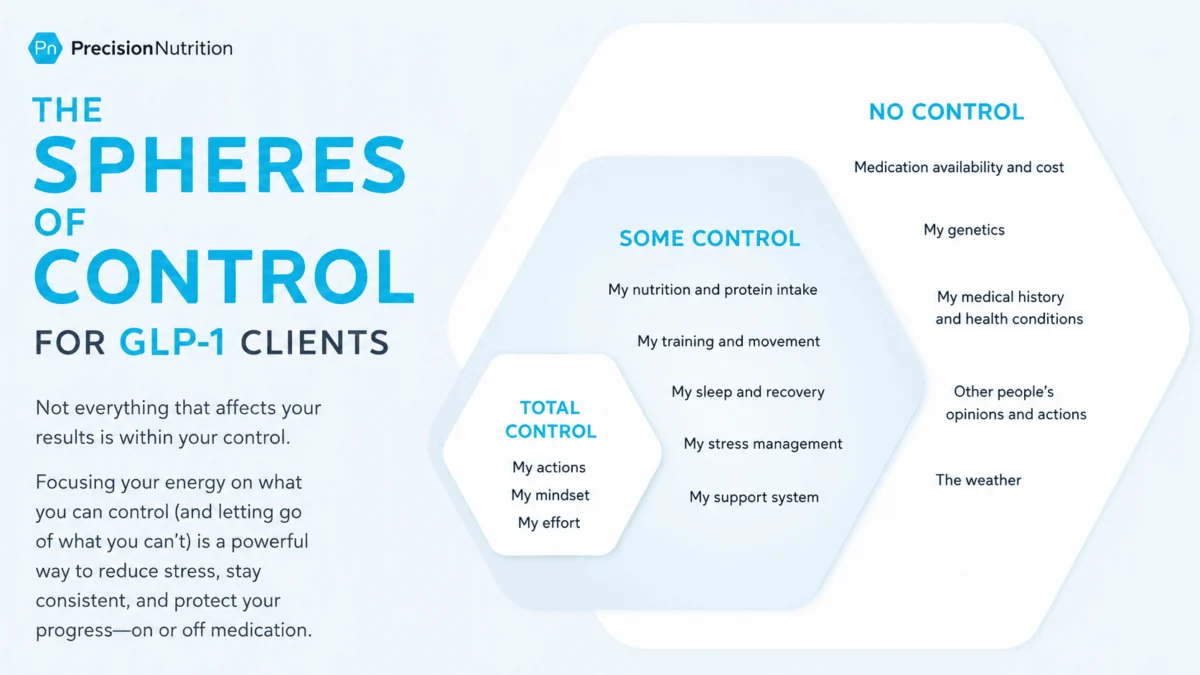
- The Strategy: Focus on the "Spheres of Control." Acknowledge that the system is broken, then pivot to what they can control: sleep, protein intake, stress management, and movement. Help them transition from feeling like a victim of circumstance to an agent of their own health.
Supporting Data and Medical Realities
The clinical data supports the necessity of a multifaceted approach. Research indicates that up to 40 percent of weight lost via GLP-1s can come from lean mass, underscoring the critical need for resistance training. Furthermore, approximately 50 percent of users discontinue the medication within the first year. This high "drop-off" rate creates a massive market for coaches who can help clients transition into a post-medication lifestyle without falling back into old patterns.
Implications for the Industry
The rise of GLP-1s has forced the fitness industry to mature. We are moving away from the era of "just eat less and move more" into an era of sophisticated, behavior-focused coaching.
The "promise" a coach makes today is different than it was a decade ago. A coach cannot promise a specific weight on the scale or a permanent lack of regain. Instead, the promise is: "While the medication is doing the heavy lifting, we will cut the ruts of your habits so deep that they will remain even after the medication is gone."
Red Flags: When to Refer
It is essential to recognize the limits of your scope. Always encourage clients to communicate with their medical providers, especially if they experience:
- Persistent, severe vomiting.
- Signs of gallstones or gallbladder issues.
- Severe abdominal pain.
- Symptoms of hypoglycemia.
- Psychological distress or signs of disordered eating.
Conclusion: Building the "New Person"
Ultimately, the most successful clients are those who use their time on GLP-1s to adopt a new identity. They stop viewing themselves as someone "trying to lose weight" and start viewing themselves as someone who "is the person who does resistance training," "is the person who prioritizes protein," and "is the person who respects their body’s need for movement."
For the coach, this is the ultimate goal. By acting as a guide, an educator, and a support system, you aren’t just helping someone take a pill—you are helping them build a life that can sustain their results long after the pharmacy is no longer involved. The GLP-1 era hasn’t made coaches obsolete; it has made them more necessary than ever.