For decades, the pulse oximeter has been a cornerstone of modern medicine. From the emergency room to the intensive care unit, these devices serve as the gatekeepers of respiratory health, providing a non-invasive glimpse into how well oxygen is being delivered to the body’s tissues. Yet, a persistent, systemic flaw has long undermined their reliability: the devices frequently provide inaccurate readings for patients with darker skin tones.
A breakthrough development from researchers at Tufts University promises to finally address this healthcare equity crisis. The new device, dubbed "ChromaSense," is a wearable system designed to automatically calibrate to an individual’s unique skin tone, ensuring accurate measurements of blood oxygen, pulse, and respiration regardless of melanin levels.
The Core Problem: Why Traditional Oximetry Fails
To understand the significance of ChromaSense, one must first understand the fundamental limitation of traditional pulse oximetry. Standard clinical oximeters work by passing red and infrared light through a patient’s finger or earlobe. Sensors on the opposite side of the tissue measure how much light is absorbed by oxygenated versus deoxygenated hemoglobin.
The efficacy of this process relies on the assumption that the light path is relatively uniform. However, human biology is far from uniform. Melanin, the pigment responsible for skin color, absorbs and scatters light, effectively "competing" with the hemoglobin for the light signals. In individuals with darker skin, higher concentrations of melanin can weaken the signal or distort the ratio used to calculate oxygen saturation (SpO2).
This phenomenon is not merely a technical glitch; it is a clinical hazard. During the COVID-19 pandemic, evidence emerged that patients with darker skin were more likely to have their hypoxia—a dangerous deficiency of oxygen in the blood—underestimated by pulse oximeters. This delay in detection often meant that patients of color received life-saving interventions like supplemental oxygen or mechanical ventilation much later than their lighter-skinned counterparts, leading to significant health disparities.
The Innovation: How ChromaSense Works
Developed by a team at Tufts University led by Valencia Koomson, an associate professor of electrical and computer engineering, ChromaSense moves away from the "transmission" method used by standard pulse oximeters.
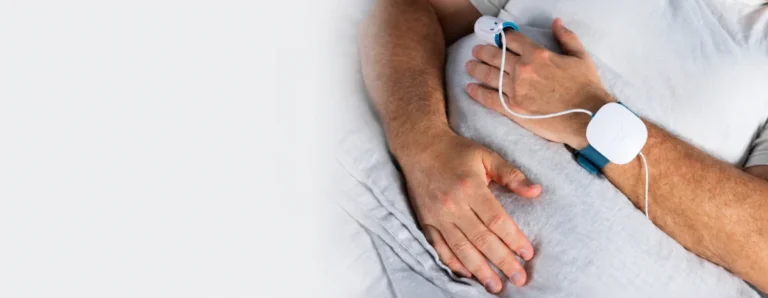
Instead of passing light through a finger, ChromaSense is a watch-sized device that sits comfortably on the wrist. It utilizes a "reflectance" methodology, measuring light that bounces back from the skin and underlying tissue. The true genius of the device lies in its proactive calibration: before it attempts to measure vital signs, the system scans the wearer to determine their specific skin reflectance profile.
Once the device has established this baseline, it dynamically adjusts two critical variables: the intensity of the emitted light and the parameters of its internal signal-processing algorithms. By "tuning" itself to the user, ChromaSense neutralizes the interference caused by skin pigmentation, blood flow variations, and even age-related skin changes. This ensures that the data reaching the clinician is a clean representation of the patient’s physiology, not an artifact of their biology.
Chronology of Development and Validation
The journey to the ChromaSense prototype has been marked by rigorous academic and clinical scrutiny.
- Initial Conceptualization: The Tufts research team began by identifying the specific mathematical thresholds where standard signal-processing models faltered. They concluded that the "one-size-fits-all" approach to photoplethysmography (PPG)—the technology that tracks blood volume changes—was the primary failure point.
- The UCSF Partnership: To validate the device, researchers collaborated with the Hypoxia Research Laboratory at the University of California, San Francisco. This laboratory is uniquely equipped to perform controlled hypoxia studies, where oxygen levels are systematically and safely lowered in volunteers to observe how monitoring devices respond.
- Clinical Testing: The study featured a diverse cohort of healthy adult volunteers, representing Black, Asian, Hispanic, White, and multiethnic populations. Throughout the testing, oxygen levels were modulated across a range of 70% to 100% saturation.
- The Performance Milestone: The results were promising. ChromaSense achieved an oxygen-saturation measurement accuracy within 2.87% of a standard reference oximeter (which typically measures oxygen directly from the blood via arterial lines). Crucially, this level of accuracy met FDA performance requirements without any observable bias related to the skin tone of the participants.
Supporting Data: Moving Beyond Oxygen Saturation
The versatility of the technology developed at Tufts extends beyond pulse oximetry. The research team is currently exploring the integration of blood pressure monitoring, which would represent a massive leap in wearable technology.
By applying machine-learning models to analyze photoplethysmography waveforms, the team has successfully estimated systolic and diastolic blood pressure with up to 90% accuracy in large-scale healthcare datasets. These models were tested against data from 2,315 adult patients in intensive care units, proving that the algorithm could parse subgroups effectively based on age, race, and gender.
"The blood-pressure work is not yet built into ChromaSense," Dr. Koomson noted in a recent press release. "But the goal is in the future to embed that machine learning model into the device, transforming it into a comprehensive, equitable diagnostic tool."
Official Perspectives: The Ethics of Algorithmic Design
The development of ChromaSense is a pointed critique of how artificial intelligence and medical sensors have historically been developed. Dr. Koomson has been a vocal advocate for "inclusive engineering," emphasizing that the data used to train medical AI must mirror the diversity of the human population.
"If you train a model that converts light signals to blood oxygen, pulse, or pressure and you don’t ensure that the dataset that you’re training with is diverse enough in terms of age, race, and gender, it can affect the performance or accuracy of the model," says Koomson. "An apparently high-performing model can look far less impressive once broken down into specific groups."
This perspective highlights a burgeoning field in biomedical engineering: the ethics of algorithmic accuracy. When a device is trained on a limited dataset, it effectively "learns" to be biased, codifying human health disparities into digital systems. By explicitly designing for diversity, the Tufts team is setting a new standard for how medical hardware should be conceived and validated.
Implications for the Future of Healthcare
The implications of the ChromaSense project are far-reaching.
1. Reducing Clinical Disparities
The most immediate impact will be in clinical settings. By removing the "pigmentation bias," hospitals can ensure that every patient, regardless of their background, receives accurate data. This allows clinicians to make informed decisions without having to "mentally adjust" for the limitations of their equipment.
2. Empowering Telemedicine and Remote Monitoring
As healthcare shifts from the hospital to the home, the need for reliable wearables is skyrocketing. Many current consumer-grade wearables—such as smartwatches—suffer from the same skin-tone biases as clinical oximeters. The technology pioneered by the Tufts team could be licensed or adapted for commercial wearables, democratizing access to accurate health data for millions of users worldwide.
3. Setting a New Regulatory Standard
The success of the Tufts study provides a blueprint for the FDA and other global regulatory bodies. It demonstrates that it is entirely possible to develop, test, and manufacture medical devices that are color-blind in their performance. Future regulatory approvals may soon require manufacturers to prove that their devices perform with equal efficacy across all skin tones, effectively ending the era of biased medical hardware.
4. A Template for Machine Learning
The team’s success with blood pressure estimation using PPG waveforms shows that machine learning, when applied with a lens of equity, can solve problems that traditional hardware could not. By moving from a static sensor approach to an adaptive, software-defined approach, the medical community can continue to improve device performance through simple over-the-air updates, rather than requiring total hardware redesigns.
Conclusion: A Step Toward True Health Equity
The ChromaSense device is more than just a piece of hardware; it is a symbol of a shift in the biomedical industry. For too long, the medical community has accepted the limitations of its tools as an unavoidable side effect of physics. The Tufts University research team has proven that these limitations are not inevitable—they are engineering oversights that can be corrected through careful design and inclusive data practices.
While there is still work to be done to integrate blood pressure monitoring and bring the device to mass production, the path is clear. By prioritizing equity at the design stage, we are not just building better devices; we are building a more just healthcare system—one where a patient’s skin tone never dictates the quality of the care they receive. As Dr. Koomson and her team continue to refine their work, the "ChromaSense" project stands as a beacon for what is possible when science, ethics, and innovation converge to solve one of the most persistent problems in modern medicine.