








By Risa Kerslake, RN, BSN
For decades, the clinical distinction between Narcolepsy Type 1 (NT1) and Narcolepsy Type 2 (NT2) has relied on a mix of symptomatic presentation—most notably the presence of cataplexy—and physiological data gathered through overnight polysomnography (PSG) and the next-day Maintenance of Wakefulness Test (MWT). While clinicians have long suspected that these tests offer varying degrees of accuracy, a groundbreaking study published in the journal SLEEP has finally provided a rigorous evaluation of which metrics are truly reproducible and which are merely clinical noise.
The study, which analyzed placebo-arm data from two major clinical trials, offers a roadmap for clinicians to refine their diagnostic approach, suggesting that while some complex neurological measures are stable, they are not necessarily the most useful for differentiating between these two often-confused conditions.
The Core Challenge: Distinguishing NT1 from NT2
Narcolepsy is a chronic neurological disorder characterized by the brain’s inability to regulate sleep-wake cycles. NT1 is defined primarily by the loss of orexin-producing neurons and the presence of cataplexy—a sudden, temporary loss of muscle tone triggered by strong emotions. NT2, conversely, presents with excessive daytime sleepiness but lacks both the orexin deficiency and the characteristic cataplectic attacks.
Because symptoms of NT2 are frequently milder and more variable, diagnosing the condition is notoriously difficult. Clinicians often rely on a battery of sleep tests to confirm the diagnosis, but the inherent "test-retest" variability of these assessments has created a clinical gray area. If a patient’s results fluctuate significantly between two separate clinic visits, is the patient changing, or is the test itself unreliable? This study aimed to answer that question by scrutinizing 440 distinct sleep and wakefulness measurements across three separate visits for 37 participants.
A Chronology of the Investigation
To gain a clearer understanding of physiological stability, researchers tracked 17 participants with NT1 and 19 with NT2 over a period of three visits, with each session spaced four weeks apart.
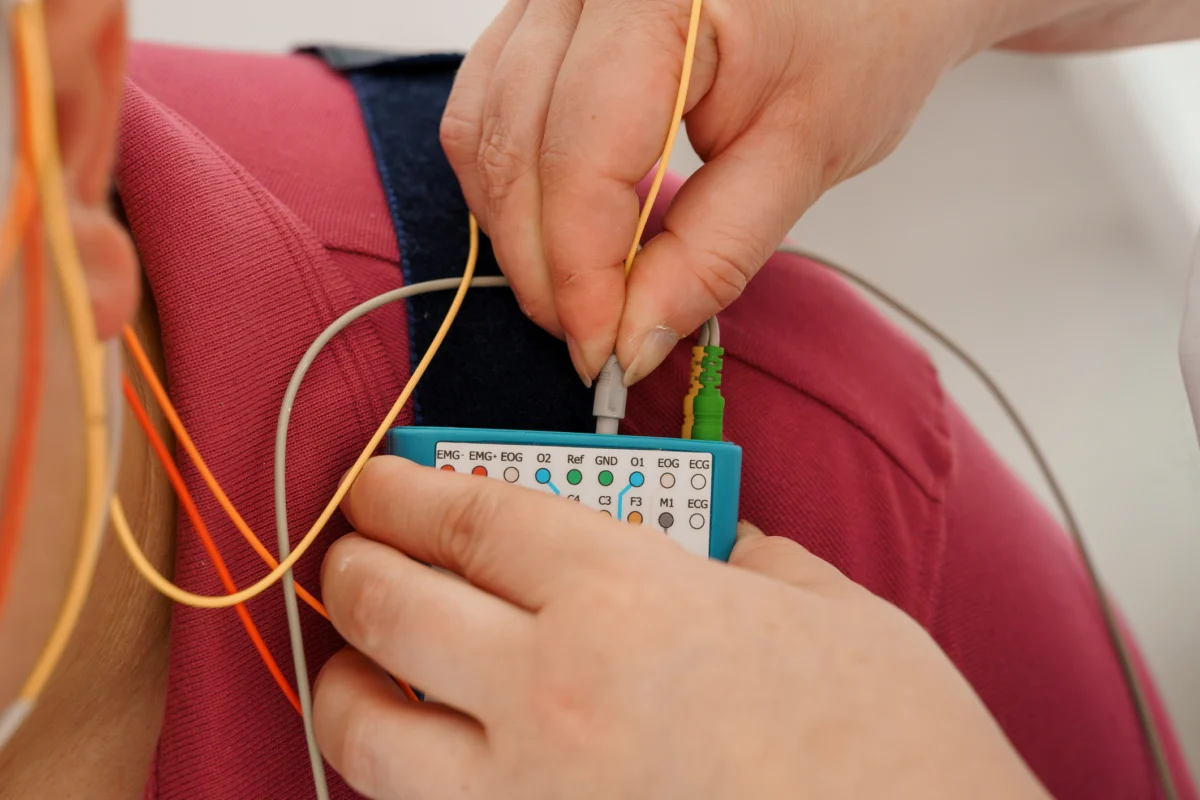
- The Methodology: At each visit, participants underwent a comprehensive overnight PSG to record brain waves, oxygen levels, and heart rate during sleep, followed by a daytime MWT to assess their ability to stay awake under standardized, boring conditions.
- The Data Extraction: By generating a massive dataset of 440 unique variables, the team was able to perform a longitudinal analysis of stability. They weren’t just looking for differences between groups; they were looking for how "sticky" or consistent those metrics remained for the same person over a three-month span.
- The Statistical Rigor: This approach allowed the researchers to filter out findings that were statistically significant but clinically unstable, effectively separating "stable biological signatures" from "random testing variance."
Supporting Data: Stability vs. Diagnostic Utility
One of the most counterintuitive findings of the study concerns quantitative electroencephalography (qEEG). The researchers discovered that qEEG measurements—which analyze the frequency and power of brain waves—were remarkably stable from one visit to the next. In any other medical context, high stability would be hailed as a gold-standard diagnostic marker. However, in this instance, it proved to be a red herring.
"The most reliable measures were not necessarily the most clinically informative," says Emily Schlafly, PhD, a postdoctoral researcher at Takeda Pharmaceuticals and the study’s lead author. "While qEEG features were remarkably stable from visit to visit, they rarely differentiated NT1 from NT2."
This finding highlights a common trap in clinical diagnostics: assuming that a consistent metric is inherently valuable. If a test consistently produces the same result for both an NT1 patient and an NT2 patient, it is useless for diagnosis, regardless of how precise the machine is.
The Role of Sleep Fragmentation
Conversely, the study found that specific markers of sleep fragmentation were both highly reproducible and clinically meaningful. Metrics such as increased wakefulness after sleep onset (WASO), elevated stage N1 sleep, higher stage-shift indices, and reduced N2 sleep continuity consistently separated the two groups.
"Measures of sleep fragmentation deserve greater attention when evaluating nocturnal PSG," Schlafly emphasizes. These metrics are not just "noisy" data points; they are consistent physiological signals that reflect the underlying pathology of the disorder.
Official Perspectives: The Path Forward
The study’s implications are being felt across the sleep medicine community, particularly regarding the role of "hypnodensity." This automated scoring method provides a continuous probability plot of sleep states rather than the traditional, rigid "staging" system (e.g., Stage 1, Stage 2, REM).
According to the research team, hypnodensity analysis showed strong reliability. Most importantly, it captured "wake-REM mixed features," which were highly effective at distinguishing NT1 from NT2.
"As the field evolves, some of the most informative signals may come from the patterns visible within these hypnodensity plots," Dr. Schlafly explains. "The exciting thing about hypnodensities is the different view of sleep they can provide, potentially highlighting patterns and mixed states that are difficult to capture with current sleep scoring."
The "NT2 Variability" Phenomenon
Perhaps the most intriguing takeaway was the unexpected degree of variability observed in NT2 patients across multiple domains, including both qEEG and MWT results. While NT1 patients showed consistent sleep-onset times, NT2 patients exhibited a "fluid" physiology. This raises a provocative question: Is NT2 a distinct, stable disease state, or is it characterized by an inherently fluctuating sleep-wake physiology? If the latter is true, current "one-off" diagnostic tests may be fundamentally ill-suited for the NT2 population, necessitating a move toward longitudinal monitoring.
Clinical Implications: Rethinking the Diagnostic Toolbox
The study serves as a necessary wake-up call for sleep specialists. By demonstrating that not all metrics are created equal, the research provides a foundation for more efficient and accurate diagnostic protocols.
1. Moving Beyond the "Average"
Clinicians have often relied on the average results of a single night of testing. This research suggests that for NT2 patients, a single snapshot might be misleading. For those patients who present with ambiguous symptoms, clinicians might need to consider repeat testing or rely on the specific metrics identified by Schlafly—such as sleep fragmentation indices—that have been proven to hold their value over time.
2. Prioritizing Reproducibility
The diagnostic process must shift toward markers that are "stable yet informative." If a marker cannot be reproduced in the same patient four weeks later, it should not be relied upon to make life-altering clinical decisions. By focusing on the metrics identified as reproducible in this study, the field can reduce the rate of misdiagnosis.
3. Future-Proofing with Technology
The success of hypnodensity analysis in this study suggests that the future of sleep medicine lies in software-driven, granular analysis of raw data. As artificial intelligence and machine learning become more integrated into PSG interpretation, the ability to analyze these "mixed states" will likely become the standard of care.
Conclusion
"Not all sleep metrics are equally reliable or equally useful clinically," says Schlafly. "Before we can confidently use a measure to monitor disease or treatment response, we need to understand how stable it is within an individual over time."
This study does not provide a single, magic-bullet test for narcolepsy. Instead, it provides a rigorous audit of the tools already in our hands. By identifying which PSG and MWT features are both reproducible and clinically informative, researchers have provided the foundation for a more nuanced understanding of narcolepsy. For the thousands of patients who currently exist in the diagnostic purgatory between NT1 and NT2, this research offers a path toward more reliable, data-driven, and compassionate care.
As the medical community continues to refine these metrics, the goal remains clear: to move away from the frustration of inconclusive tests and toward a clinical standard where patients are diagnosed with confidence and treated with precision.