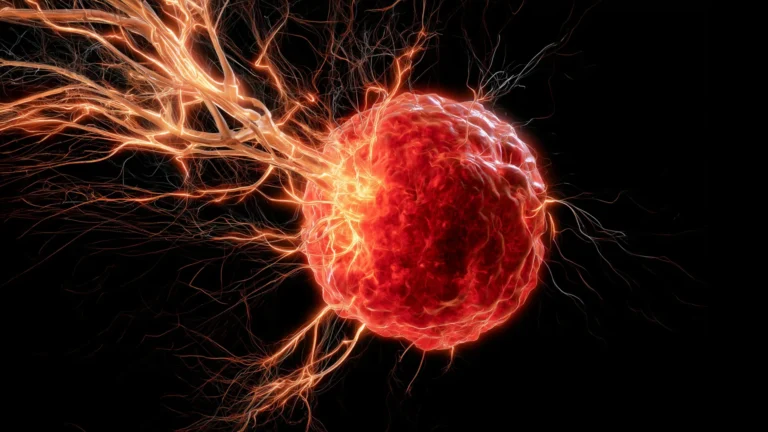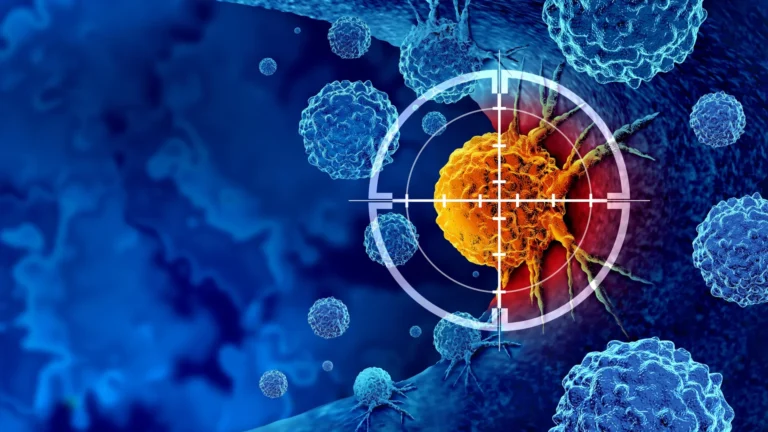











In the relentless pursuit of unchecked cellular proliferation, cancer employs a sophisticated array of biological machinery to override the body’s natural checkpoints. For decades, oncologists have understood that this rapid growth is fueled by the overexpression of key genes. However, a groundbreaking study recently published in the journal Science Advances has uncovered a startling paradox: the very mechanisms cancer cells use to "hit the accelerator" may be the same forces causing their own genetic structural collapse.
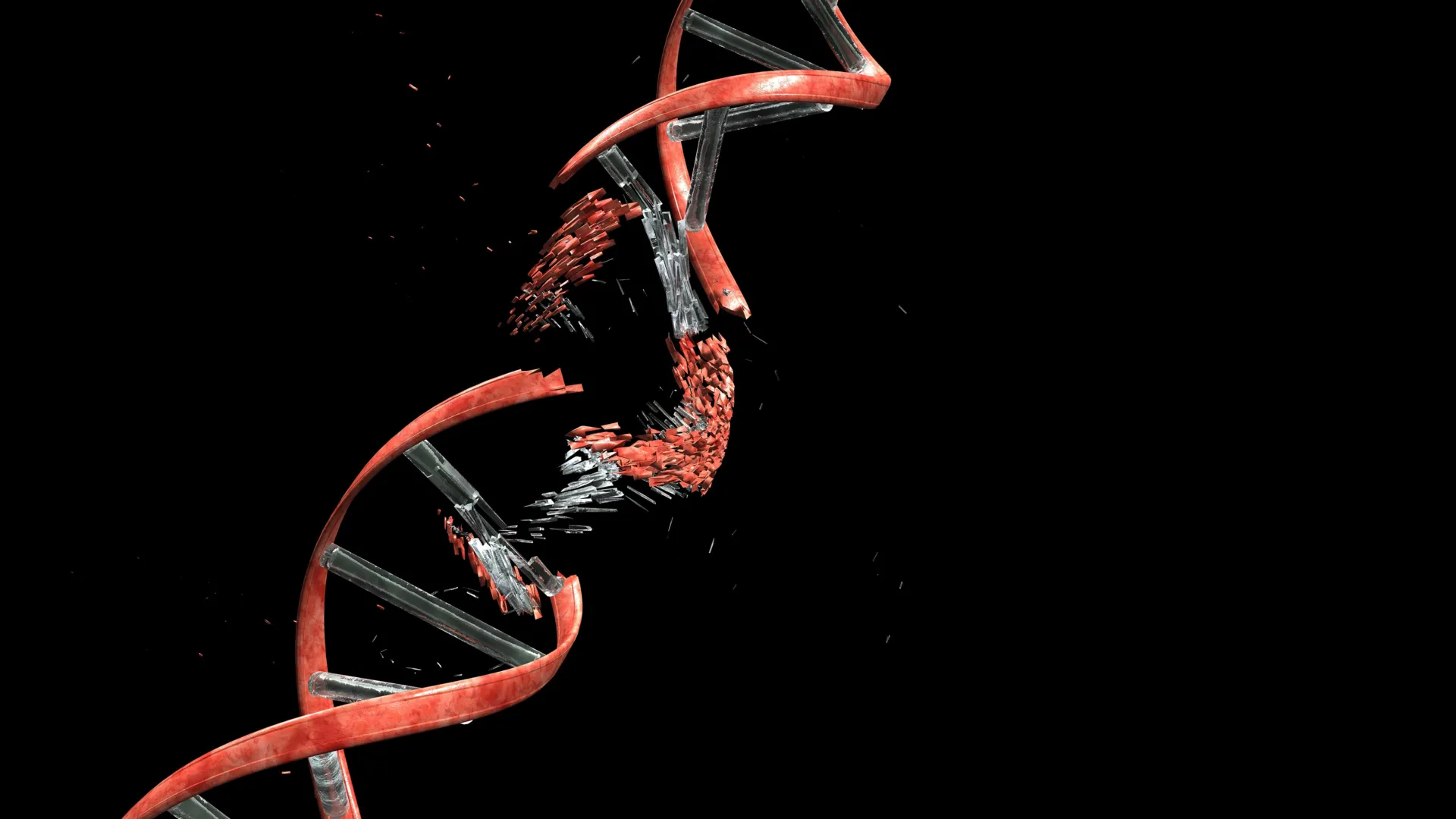
Research led by PhD candidate Osama Hidmi under the supervision of Professor Rami Aqeilan at the Hebrew University of Jerusalem suggests that cancer’s reliance on "super-enhancers"—highly active DNA control regions—is a double-edged sword. While these regions successfully force tumor-promoting genes into overdrive, they simultaneously induce immense physical strain on the DNA helix, leading to frequent, double-strand breaks. This revelation challenges the traditional view of genetic instability as a mere byproduct of cellular dysfunction, suggesting instead that it is a fundamental, self-inflicted consequence of the tumor’s own aggressive growth requirements.
The Mechanics of Malignancy: A Chronology of Discovery
The journey toward this discovery began with a fundamental question: Why is the cancer genome so consistently unstable? While environmental factors and external mutagens are well-documented contributors, the inherent, recurring patterns of DNA damage within specific genomic loci remained elusive.
The Initial Observation
The research team began by mapping the locations of double-strand breaks—the most catastrophic form of DNA damage—across the cancer genome. Utilizing advanced, high-resolution mapping techniques, the scientists observed that these breaks were not distributed randomly. Instead, they showed a non-random, highly specific clustering pattern.
Identifying the Culprit
Upon cross-referencing these break sites with transcriptional data, the researchers identified a striking correlation. The sites of structural failure were consistently located within genomic regions governed by super-enhancers. Super-enhancers are dense clusters of regulatory elements that act as "master switches," exerting powerful control to keep growth-promoting genes active at levels far exceeding those found in healthy, differentiated cells.
The Stress Cycle
The team tracked the biological response to these breaks by monitoring specific "alarm" proteins that the cell recruits to initiate repair. The data revealed a persistent, cyclical process: as the super-enhancer forces a gene to function at maximum capacity, the resulting physical tension causes the DNA to snap. The cell then rushes to repair the break to ensure its own survival. This cycle of damage and repair occurs repeatedly, creating an environment ripe for the accumulation of replication errors and mutations.
Supporting Data: Why "Full Capacity" is Destructive
The study provides a quantitative look at how cellular ambition leads to structural fatigue. To multiply, a cancer cell requires a constant influx of proteins involved in cell division and metabolic adaptation. By forcing genes to maintain this high-output state, the cell creates a "transcriptional bottleneck."
The Physics of DNA Tension
At a molecular level, DNA is not a static blueprint; it is a dynamic, tightly coiled structure. When super-enhancers demand high-intensity gene transcription, the molecular machinery—specifically RNA polymerase—must navigate the DNA strand at high speeds and frequencies. This causes physical torsion and friction. In healthy cells, this is tightly regulated. In cancer cells, however, the "pedal-to-the-metal" approach overrides these safety mechanisms, leading to the physical snapping of the DNA backbone.
The Repair-Mutation Feedback Loop
The research demonstrates that while cancer cells are adept at repairing these breaks to prevent immediate apoptosis (cell death), the repair process is rarely perfect. Each instance of "fixing" a double-strand break introduces the potential for minor misalignments or deletions. Over time, these small errors aggregate. This effectively means that the tumor is not just evolving due to random chance; it is actively creating its own mutational landscape, allowing it to adapt to environmental pressures, such as the onset of chemotherapy or immune system attacks.
Official Perspectives: The Experts Weigh In
The implications of this research are significant, providing a new framework for how we view the evolutionary trajectory of a tumor.
Professor Rami Aqeilan, who oversaw the study, emphasizes the duality of the tumor’s survival strategy:
"Cancer cells rely on super-enhancers to keep growth genes running at high speed. What we found is that this same high-output activity can put real strain on the DNA, creating break hotspots that the cell has to repair again and again. That cycle may help tumors survive in the short term, but it also increases the risk of mutations that can fuel cancer’s evolution."
Osama Hidmi, the lead author of the study, notes that this inherent weakness is perhaps the most exciting aspect of the findings. By understanding that cancer cells are "addicted" to these high-stress regions, scientists can begin to envision a new class of targeted therapies:
"Because cancer cells depend on these high-stress DNA regions to keep growing, they may also be more vulnerable there. This opens the door to treatments that target the very processes tumors rely on to survive."
Implications: Turning Cancer’s Strength Into a Target
If the very mechanism that drives tumor growth is also the source of its greatest vulnerability, the clinical landscape for cancer treatment could shift dramatically.
Precision Medicine and Targeted Disruption
Current cancer treatments often involve broad-spectrum chemotherapy or radiation, which damage both healthy and cancerous cells. The discovery of these "break hotspots" suggests that therapeutic agents could be designed to exacerbate the stress on super-enhancer regions. By pushing these already-strained areas past their breaking point, or by inhibiting the specialized repair proteins that cancer cells rely on to survive these daily breaks, clinicians could potentially induce "mitotic catastrophe" in tumor cells while sparing healthy tissue.
Limiting Evolutionary Adaptability
One of the most persistent hurdles in oncology is drug resistance. As tumors evolve, they often shed their sensitivity to treatment. By targeting the repair mechanisms associated with super-enhancer-induced damage, researchers might be able to effectively "lock" the tumor in its current state, preventing it from accumulating the mutations necessary to resist therapy. This would turn a tumor’s greatest strength—its capacity for rapid, error-prone evolution—into a structural liability.
A New Diagnostic Frontier
Furthermore, the ability to map these break hotspots could eventually serve as a diagnostic tool. Identifying the unique "stress signature" of a patient’s tumor could allow oncologists to predict how a specific cancer is likely to evolve and which metabolic or repair pathways are currently under the most strain. This would allow for a highly personalized approach, tailoring treatments to the specific "weak links" in an individual’s malignancy.
Conclusion: The Future of Cancer Research
The research conducted at the Hebrew University of Jerusalem represents a vital shift in the paradigm of cancer biology. By moving away from the view of cancer as a series of random mutations and toward a model of "forced mechanical instability," scientists are identifying the hidden costs of malignancy.
Cancer is, by definition, a disease of growth, but this study confirms that growth has a price. The super-enhancers that act as the fuel for a tumor’s expansion are simultaneously burning the bridge behind it. As we continue to refine our understanding of these DNA-damage hotspots, we move closer to a future where the most aggressive features of cancer can be turned against it. By exploiting the inherent fragility caused by runaway gene expression, the next generation of cancer therapies may finally offer a way to trap the tumor within its own cycle of destruction, effectively rendering it unable to sustain its own existence.
This research not only deepens our scientific knowledge but also provides a beacon of hope, suggesting that even in the most aggressive tumors, there are cracks in the foundation waiting to be exploited.