











For many women, the term "bra bulge"—that persistent pocket of soft tissue that gathers around the bra strap, underarm, and back area—is a common source of frustration. While often harmless, this physical trait can cause discomfort, undermine self-confidence, and make favorite garments feel ill-fitting. As we navigate our 60s and beyond, physiological shifts often make this area a focal point of concern.
However, addressing this concern requires a shift in perspective. Rather than searching for "magic" solutions to melt away localized fat, the key lies in a holistic approach: building strength, improving posture, and understanding the nuances of body composition.
The Reality of Bra Bulge: Understanding the Cause
Before diving into fitness routines, it is vital to discern whether the "bulge" is truly a result of adipose tissue or simply a case of improper equipment. Often, the issue is purely structural. If a bra band is too narrow or the cup size is inadequate, the fabric will inevitably dig into the skin, creating an artificial indentation that mimics excess fat. Before changing your entire workout regimen, ensure you have been professionally fitted for a bra that provides adequate support and proper band width.
If your undergarments fit correctly but you still notice a change in your silhouette, it may be time to evaluate your lifestyle. Changes in hormones, metabolism, and muscle mass—all common occurrences after 60—can shift how fat is distributed across the body.
The Myth of Spot Reduction
One of the most persistent misconceptions in the fitness industry is "spot reduction"—the idea that you can perform specific exercises to burn fat in one particular area of the body.
"If you’re over 60 and looking to tone your upper back or reduce bra bulge, it’s important to understand that we can’t pick and choose where our bodies lose fat," explains Sarah Pelc Graca, a NASM-Certified Personal Trainer (CPT), Women’s Fitness Specialist, and founder of Strong with Sarah Weight Loss Coaching.
Pelc Graca emphasizes that while you cannot "target" fat loss, you can absolutely change your body composition. By focusing on hypertrophy (muscle growth) in the upper back, shoulders, and arms, you improve your posture and create a firmer, more defined appearance that lifts the skin and muscle tissue in those target areas.
A Strategic Approach to Body Composition
For women entering their seventh decade, the focus should be on longevity, functional movement, and sustainable strength. Achieving a toned upper body is not just about aesthetics; it is about building a strong foundation that supports daily activities and mitigates the risk of musculoskeletal pain.
The Four Pillars of Change
According to Pelc Graca, a successful approach to physical change involves four distinct pillars:
- Resistance Training: Lifting weights or using resistance bands to build muscle density.
- Consistent Movement: Staying active throughout the day to boost metabolic rate.
- Protein Intake: Prioritizing high-quality protein to support muscle repair and maintenance.
- Caloric Balance: Maintaining a slight, healthy calorie deficit if fat loss is the primary goal.
These four moves are not intended to be a "quick fix." Instead, they are designed to be integrated into a broader, sustainable lifestyle. Their true utility lies in their convenience; they are easy to perform at home, simple to adapt to your fitness level, and effective enough to keep you consistent over the long term.
Essential Standing Exercises for the Upper Body
1. Standing Resistance Band Rows
The row is a foundational movement for back health. It targets the lats and the rhomboids, which are essential for pulling the shoulders back and maintaining an upright, confident posture.
- The Benefit: By strengthening the mid and upper back, you naturally counteract the "slumping" that often happens as we age, which can exacerbate the appearance of back fat.
- Execution: Anchor a resistance band at chest height. Hold one end in each hand with your arms extended. Squeeze your shoulder blades together as you pull the bands toward your torso, keeping your elbows close to your sides. Slowly return to the starting position.
2. Standing Band Pull-Aparts
This is perhaps the most effective exercise for addressing the rounded-shoulder posture often caused by excessive sitting or looking down at mobile devices.
- The Benefit: Pull-aparts isolate the rear deltoids and the upper back. Strengthening these muscles helps to "open up" the chest and smooth the skin around the underarm area.
- Execution: Hold a resistance band in front of you with both hands, arms straight. Keeping your arms extended, pull the band apart until it touches your chest, focusing on squeezing your shoulder blades together. Slowly return to the center.
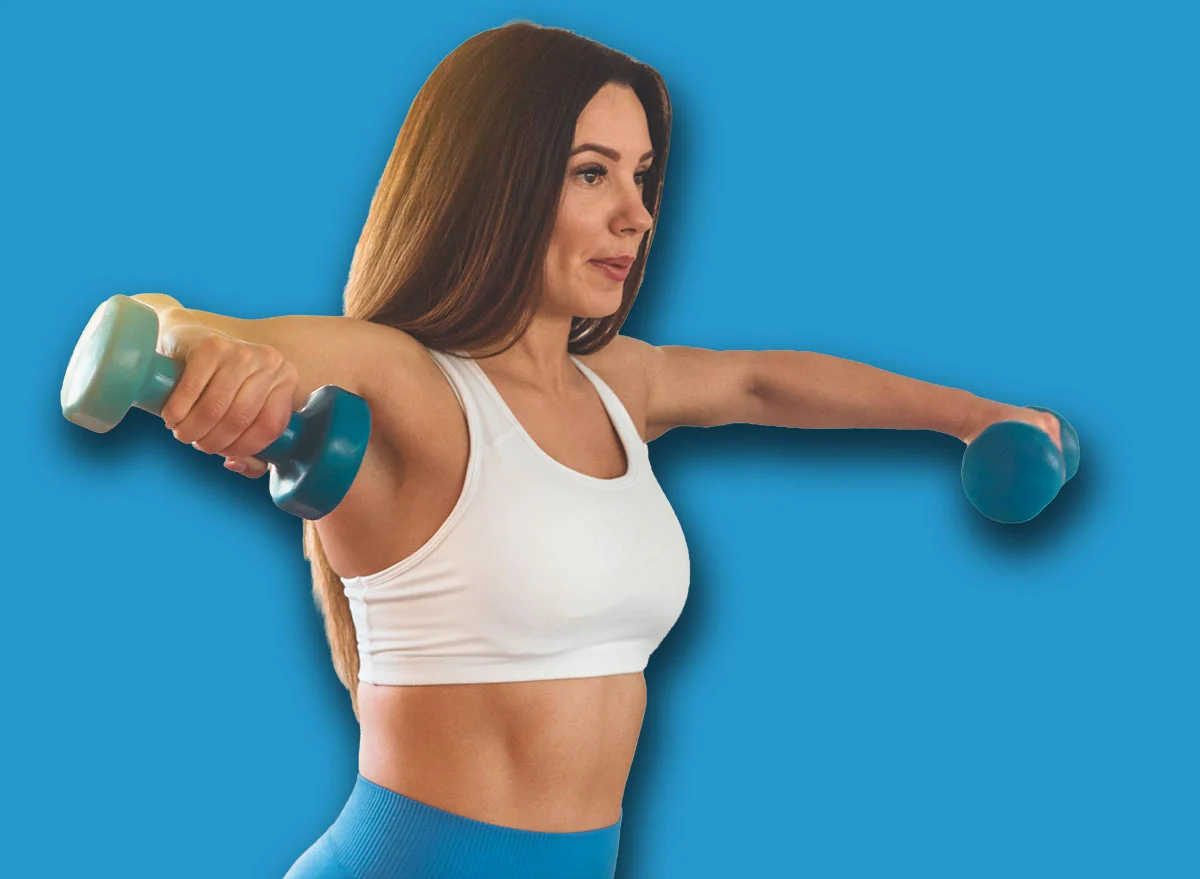
3. Standing Lateral Raise
To build definition in the shoulders and arms, the lateral raise is an essential tool.
- The Benefit: This move directly targets the lateral head of the deltoid, contributing to a "capped" shoulder look that creates a more balanced aesthetic for the upper body.
- Execution: Holding a light dumbbell in each hand, lift your arms out to the side until they are parallel to the floor. Keep a slight bend in the elbows. If you feel unsteady, you can perform these one arm at a time while holding a sturdy chair with your free hand for stability.
4. Tricep Kickbacks
The tricep is the primary muscle group on the back of the arm. Firming this area is frequently requested by those seeking to tighten the skin around the upper arm and shoulder joint.
- The Benefit: Tricep strength is vital for pushing movements—opening doors, lifting grocery bags, and maintaining independence.
- Execution: Lean forward slightly at the hips, keeping your back flat. Hold a dumbbell in each hand, pulling your elbows up to your ribcage. Keeping your elbows stationary, extend your forearms backward until your arms are straight. Squeeze the tricep at the top of the movement before returning to the start.
Implications for Longevity
While the motivation to begin these exercises may be rooted in vanity or the desire to fit better into a favorite bra, the long-term implications are significantly more profound.
Muscle mass naturally declines after age 30, a process that accelerates after 60. This loss, known as sarcopenia, can lead to frailty and decreased metabolic function. By incorporating resistance training, you are doing more than just addressing "bra bulge." You are actively engaging in:
- Bone Density Preservation: Resistance training is one of the most effective ways to combat osteoporosis.
- Metabolic Support: Muscle tissue is metabolically active; the more lean muscle you have, the more calories your body burns at rest.
- Functional Independence: Strong shoulders and backs allow for easier navigation of the world, from reaching items on high shelves to maintaining the balance required for daily travel.
Conclusion: The Path Forward
If you are over 60 and frustrated by the changes you see in the mirror, remember that your body is a dynamic system. You are not stuck with the composition you have today. By shifting your focus away from the desire for immediate, localized fat loss and toward the long-term goal of building a strong, functional, and resilient upper body, you can achieve the definition you desire while simultaneously investing in your future health.
Consistency, as Pelc Graca suggests, is the secret ingredient. Start with these four movements, prioritize your protein, stay mobile, and give your body the time it needs to adapt. You aren’t just sculpting your back; you are building a stronger version of yourself for the years to come.