





Ayurveda, the "science of life," stands as one of the world’s oldest holistic healing systems. Originating in India thousands of years ago, this medical tradition posits that health is a delicate balance between the mind, body, and spirit. Central to this system is the practice of Ayurvedic massage—a sophisticated, intentional form of therapeutic touch that transcends simple relaxation. Far from being a modern luxury, these techniques are rooted in ancient Vedic texts such as the Charaka Samhita, Sushruta Samhita, and Ashtanga Hridaya (the Brhat Trayi), serving as both palliative (Shamana) and purificatory (Shodhana) therapies for centuries.
The Foundations: Elements and Doshas
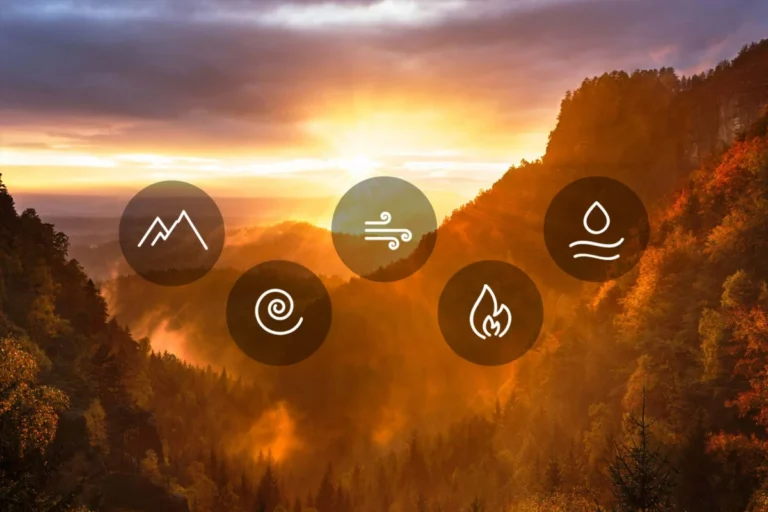
To understand Ayurvedic massage, one must first grasp the Ayurvedic view of the universe. Ayurveda teaches that all matter—including the human body—is composed of five great elements: space, air, fire, water, and earth. These elements combine to form the three doshas, or biological energies, that govern our physical and mental makeup:
- Vata: The energy of movement, composed of space and air.
- Pitta: The energy of metabolism and transformation, composed of fire and water.
- Kapha: The energy of structure and lubrication, composed of water and earth.
Ayurvedic massage is fundamentally a corrective science. Practitioners identify which dosha is vitiated or out of balance and select techniques, oils, and herbs with "opposite qualities" to restore equilibrium. By aligning the body with the principle of "like increases like," practitioners use specific strokes and substances to counteract excess heat, dryness, or stagnation, bringing the individual back to a state of Svastha (health).
Chronology and Historical Significance
The historical application of Ayurvedic bodywork is vast and multifaceted. In ancient India, these methodologies were not merely for stress relief; they were essential components of daily life and specialized care.
- Ancient Era: Techniques were documented in the Bhavaprakasha and Yogaratnakara, detailing protocols for athletes and warriors to maintain physical resilience and prevent injury.
- Medical Integration: Historically, massage was a cornerstone of Panchakarma (a five-fold detoxification process), used to loosen toxins (Ama) lodged in the deep tissues.
- Specialized Care: Ancient texts describe specific protocols for postpartum recovery, virilization, and age-related preventative care, demonstrating the adaptability of the practice.
- Modern Resurgence: In the 20th and 21st centuries, these ancient methodologies have been synthesized into modern wellness curricula, as seen in the lineage of the Ayurvedic Institute, which emphasizes the "heart-centered approach" to subtle therapies.
Individualized Care: The Science of Customization
Unlike Western spa massages, which often follow a standardized "full-body" menu, an Ayurvedic massage is a highly individualized clinical intervention. Before a single stroke is applied, a practitioner evaluates the recipient’s Prakruti (inherent constitution) and Vikruti (current state of imbalance).
The Role of Agni and Ama
A critical consideration is the state of the individual’s Agni (digestive fire) and the presence of Ama (metabolic toxins). If an individual has significant Ama—which manifests as a heavy, sticky, and coated state—traditional oil massage is often contraindicated. In these cases, the oil can "trap" toxins in the tissues. Instead, practitioners employ Udvartana, a dry, vigorous massage using heating herbal powders to break up and move stagnation.
The Alchemy of Oils
The choice of oil is a precise science. The carrier oil serves as a vehicle for the therapeutic properties of infused herbs.
- Vata: Requires heavy, warming oils like sesame oil to ground the erratic air element.
- Pitta: Benefits from cooling oils like coconut or sunflower to soothe the internal "fire."
- Kapha: Requires light, stimulating oils like mustard or herbal powders to cut through stagnation.
Special Considerations: Vata and the Mind
According to Samkhya philosophy, the air element is intimately linked to the Sparshendriya (the sense of touch). Because Vata is composed of air and space, it is uniquely susceptible to the healing power of touch.
The mind, which is also composed of the subtler aspects of air and space, finds profound relief in the rhythmic, grounding nature of Ayurvedic bodywork. By nourishing the skin—the largest organ—with herbalized oils, we essentially "feed" the internal tissues. This process, known as Abhyanga, provides nourishment that penetrates the skin to support the nerves, muscles, bones, and organs, effectively calming the nervous system and improving mental clarity.
Categories and Techniques
Ayurvedic massage is categorized by the medium used and the specific goal of the treatment.
Abhyanga: The Practice of Oiling
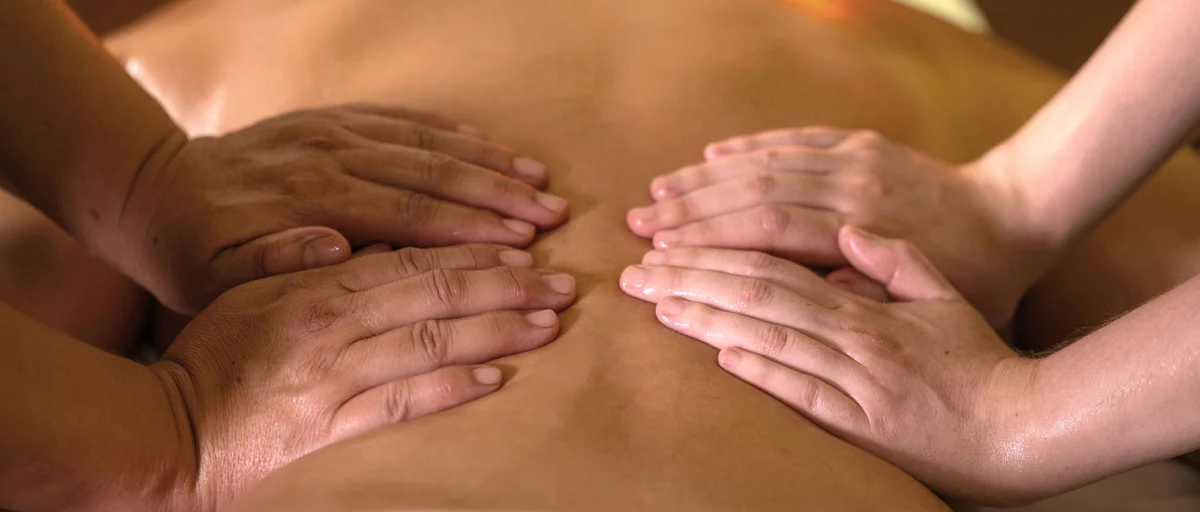
Abhyanga is the most recognized technique, translating to the application of oil. In Sanskrit, the word Snehan means both "oil" and "love." Thus, the practice is a physical manifestation of compassion. Whether performed as self-massage or by one or two therapists in a synchronized four-handed session, the goal is to harmonize the cells with a vibration of radiance. Specialized formulations, such as Mahanarayan tailam for joint pain or Dhanvantaram tailam for Vata disorders, represent the peak of Ayurvedic herbal alchemy.
Massage with Powders and Pastes
- Udvartana: Dry, hot herbal powders used to stimulate circulation and reduce Kapha.
- Udsadana: A variation focused on skin beautification and complexion.
- Udgarshana: The use of herbal pastes (herbs mixed with water or oil) to treat specific dermatological imbalances.
Strokes and Directionality
The direction of the stroke is not arbitrary.
- Anuloma (Away from the heart): Used to calm the mind and ground the Vata dosha.
- Pratiloma (Towards the heart): Used to stimulate lymph flow and improve venous return.
- Vocabulary of Motion: Practitioners employ a specific lexicon of techniques, including Garshana (friction), Peedana (kneading), Udvesthana (wringing), Praharana (percussion), and Sandhi Calana (joint mobilization).
Marma Therapy: The Energetic Frontier
One of the most profound aspects of this discipline is Marma Therapy. Marmani are specific energy points on the body where the physical and energetic channels intersect. These points act as gateways to the "inner pharmacy" of the body. By applying gentle, precise pressure to these points, practitioners can clear blockages in the flow of Prana (life force). While often compared to Chinese acupuncture, Marma therapy is distinct; the points are often larger and the application is non-invasive, focusing on the activation of the body’s latent healing potential.
Implications for Modern Health
The integration of Ayurvedic massage into a modern lifestyle offers more than just physical relief; it provides a comprehensive framework for preventative health. By acknowledging the link between the skin, the digestive fire, and the mind, this system addresses the root cause of discomfort rather than merely masking symptoms.
In an era of increasing chronic stress and sensory overload, the "healing touch" of Ayurveda offers a return to homeostasis. Whether addressing the physical structure of the skin, the circulation of the lymph, or the turbulence of the mind, the practice remains a vital, evolving, and deeply effective tool for longevity. As we continue to look for ways to harmonize our high-paced lives with the natural rhythms of our biology, the wisdom of the Brhat Trayi remains as relevant today as it was millennia ago.
For those looking to deepen their practice, engaging with formal education—such as specialized Masterclasses on the "Healing Touch of Marma"—provides a path to understanding the profound connection between the practitioner, the recipient, and the ancient lineage of this sacred science.