











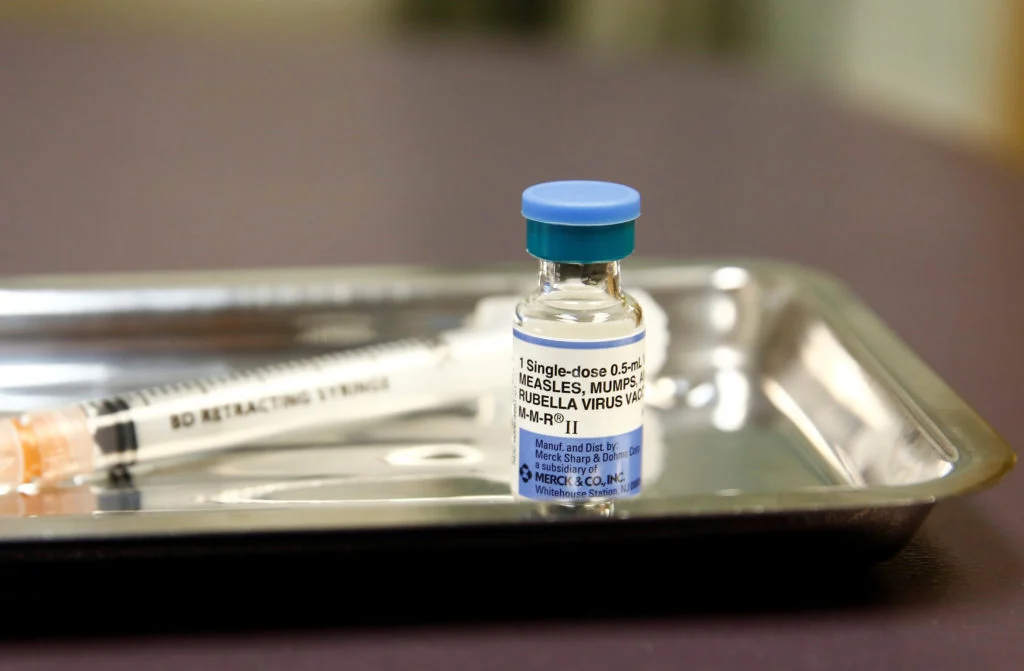
HARRISBURG, PA — The Commonwealth of Pennsylvania is grappling with its most severe public health crisis in over three decades. As of mid-September 2026, state health officials have confirmed a fourth measles-associated death, a somber milestone that underscores the rapid deterioration of vaccine-preventable disease control in the United States.
The latest fatality involved an 18-year-old resident of Mifflin County. According to the county coroner’s office, the teenager succumbed to acute disseminated encephalomyelitis (ADEM), a rare but devastating neurological complication triggered by the measles virus that causes inflammation of the brain and spinal cord. This tragedy follows a series of deaths that have left medical professionals and public health advocates sounding the alarm on a crumbling national vaccination infrastructure.
A Growing Chronology of Loss
The current outbreak, which has now claimed four lives in Pennsylvania alone, has unfolded with alarming speed.
- August 2026: The crisis began in the southeastern corridor, where two infants in Lancaster County died from measles-related complications. Because of their tender age, both infants were ineligible for the standard measles, mumps, and rubella (MMR) vaccine, leaving them entirely reliant on "herd immunity"—the collective protection afforded by a highly vaccinated population.
- September 12, 2026: A 40-year-old woman from rural Jefferson County died following complications from the virus, marking the first adult death in this specific outbreak cluster.
- September 15, 2026: The 18-year-old Mifflin County resident passed away, bringing the state’s death toll to four.
State health authorities have confirmed that none of the four individuals were vaccinated. While the infants were too young to receive the shot, the two adults remained susceptible due to a lack of immunization, highlighting the vulnerability of the broader population in a landscape where vaccine uptake has stagnated.
The National Context: A 35-Year Low
Pennsylvania’s struggle is not an isolated event but a grim reflection of a national trend. The United States is currently enduring its worst year for measles since 1991. Over the past 24 months, the country has recorded seven measles-associated deaths—a figure that eclipses the combined total of reported deaths over the previous three decades.
The persistence of the virus is a direct consequence of a steady decline in MMR coverage. Public health experts have long maintained that a 95% vaccination rate is the "gold standard" required to prevent community transmission. For years, the U.S. successfully maintained these levels, achieving the status of measles elimination in 2000. However, current data suggests that national coverage has fallen below that critical threshold, creating a patchwork of susceptibility that the virus has exploited with ruthless efficiency.
In Pennsylvania, the situation is acute. Nearly 700 laboratory-confirmed cases have been reported across 38 counties this year. With approximately 100 new cases emerging in just the last week, the outbreak shows no signs of plateauing.
Official Responses and the Burden of Policy
The scale of the outbreak has prompted urgent, yet measured, responses from state leadership. Dr. Debra Bogen, Pennsylvania’s Secretary of Health, expressed her profound condolences in a statement issued Tuesday, while emphasizing the urgency of the moment.
"My thoughts are with the two families who lost loved ones to this highly contagious virus, as Pennsylvania faces the worst measles outbreak in more than three decades," Dr. Bogen said. "We remain committed to working with our partners across Pennsylvania to stem this outbreak and prevent more deaths. That means ensuring people have the facts about measles and access to the MMR vaccine, which kept measles outbreaks at bay for decades."
However, the efficacy of state-level interventions is being hampered by a volatile national political climate. Public health agencies are currently navigating a landscape where the fundamental science of immunization is being challenged by high-ranking federal officials.
Critics point to the policies of the current administration, specifically under the leadership of Health Secretary Robert F. Kennedy Jr., as a contributing factor to the rising vaccine hesitancy. By casting doubt on the safety profiles of established vaccines and authorizing the defunding of local outreach initiatives, federal leadership has inadvertently dismantled the guardrails that once protected the public from outbreaks of this nature.
The Erosion of Public Trust
The resurgence of measles is a complex sociological phenomenon driven by three primary factors:
- Administrative Barriers: A rise in parental waivers and bureaucratic hurdles has made it easier for families to opt out of routine childhood vaccinations.
- Access Issues: Disparities in health care access continue to leave marginalized and rural communities with fewer resources to obtain timely vaccinations.
- The Information Crisis: The proliferation of disinformation has created a "trust deficit." When medical consensus is publicly questioned by government officials, the resulting skepticism often leads parents to delay or forgo essential healthcare for their children.
The impact of this disinformation is tangible. As medical professionals attempt to provide data-driven education, they are increasingly met with resistance from segments of the public who have been primed to view public health initiatives with suspicion.
Looming International Implications
The fallout from this outbreak may extend beyond American borders. In November, international health authorities are scheduled to convene to evaluate whether the United States and Mexico have effectively lost their "measles-free" status.
Losing this status would be a historic blow to U.S. public health, symbolizing a regression to an era before the widespread adoption of the MMR vaccine. For the global community, the U.S. has long served as a benchmark for health infrastructure; a failure to contain the virus domestically raises significant concerns regarding the ability of the international community to manage infectious diseases in a post-pandemic, increasingly skeptical environment.
The Path Forward: Can the Outbreak Be Contained?
As Pennsylvania enters the late autumn months, the focus of the Department of Health remains on containment. This involves intensive contact tracing, increased availability of the MMR vaccine in affected counties, and a desperate push to reach populations that have fallen through the cracks of the immunization system.
However, medical experts warn that without a cohesive national strategy that restores trust in scientific institutions, local efforts may be akin to bailing out a sinking ship with a thimble. The deaths in Lancaster, Jefferson, and Mifflin counties serve as a tragic reminder that viruses do not respect political boundaries or partisan rhetoric. They thrive on the gaps left by a society that has forgotten the severity of the diseases it once successfully suppressed.
"We are witnessing the consequences of complacency," said one infectious disease specialist familiar with the Pennsylvania data. "When we stop treating vaccines as a cornerstone of public safety and start treating them as a matter of personal opinion, we leave the door wide open for these preventable tragedies. The question is not how we got here, but how quickly we can reverse the trend before more lives are lost."
For now, the people of Pennsylvania wait—and watch the case counts—hoping that the fourth death will be the last, even as the data suggests that the outbreak is still gaining momentum. The coming months will be a test not just of the state’s medical infrastructure, but of the country’s collective commitment to the basic tenets of public health.