









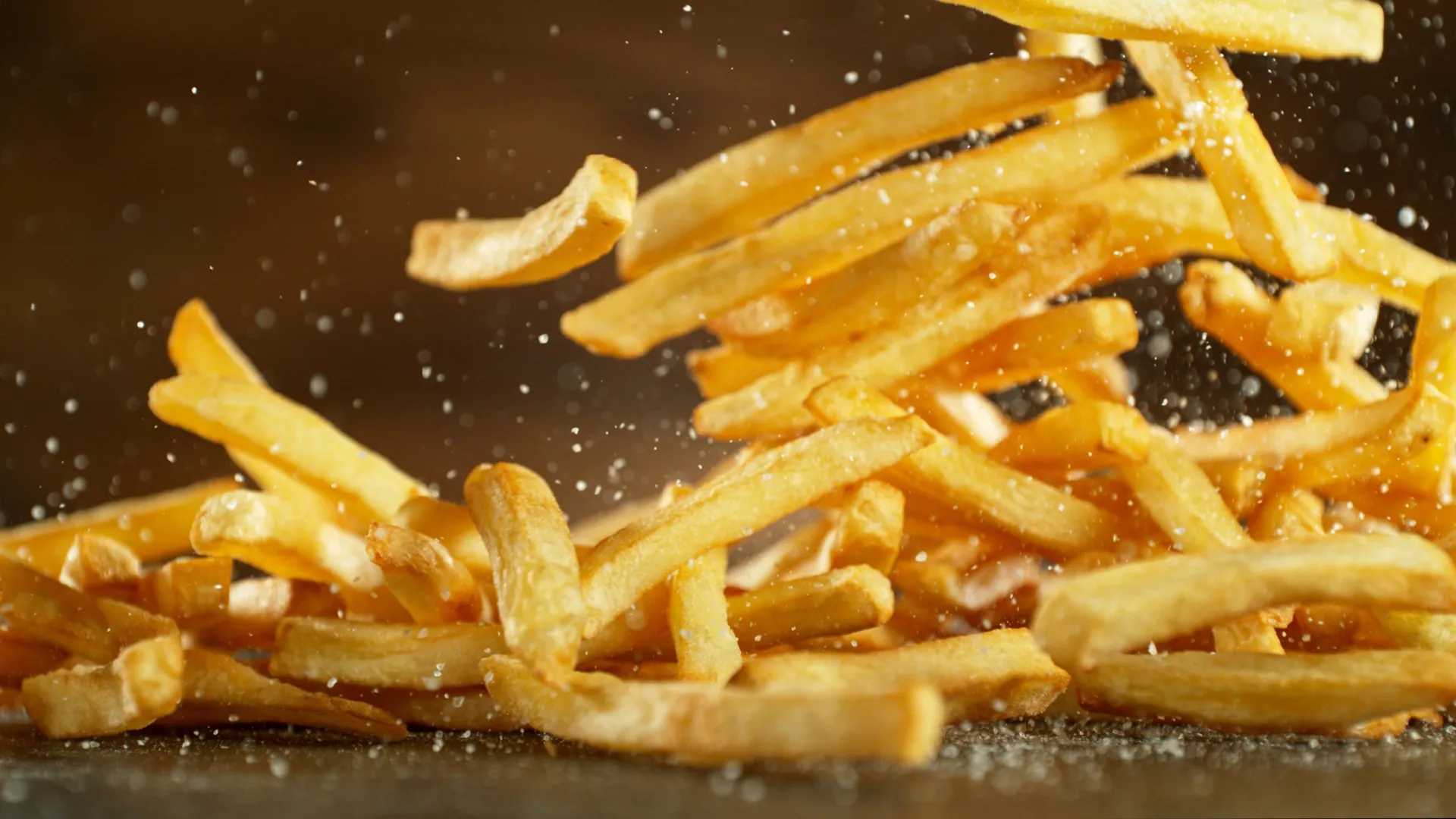
The golden, crunchy allure of a perfectly prepared French fry is a staple of global culinary culture. Yet, beneath the satisfying exterior lies a nutritional paradox: the very process that creates that iconic texture—deep-fat frying—is responsible for the high caloric density and excessive fat content that contribute to a host of modern health crises, including obesity and hypertension. For decades, food scientists have searched for the "holy grail" of culinary engineering: a way to maintain the taste and texture of fried foods while drastically reducing oil uptake.
Recent breakthroughs from the University of Illinois Urbana-Champaign (UIUC) suggest that the solution may lie in the invisible power of electromagnetic waves. By integrating microwave energy into the traditional frying process, researchers have unlocked a method that promises to reshape how the world prepares one of its favorite snacks.
The Science of the "Soggy" Problem
To understand why traditional frying is so oil-intensive, one must look at the microscopic architecture of a potato. When a raw potato strip is submerged in oil heated to 180 degrees Celsius (356 degrees Fahrenheit), the intense heat triggers a rapid transformation. The moisture trapped within the cellular matrix of the potato begins to boil, turning into steam that escapes through the potato’s pores.
However, this process is not merely a one-way street. As the water evaporates, it leaves behind a vacuum-like structure. Pawan Singh Takhar, a professor of food engineering in the Department of Food Science and Human Nutrition at UIUC, explains this phenomenon through a simple, yet vivid, analogy: the "straw effect."
"Think about a straw in a drink," says Takhar. "If you push air into the straw, it creates positive pressure and any liquid is pushed out. But if you create a vacuum, the liquid moves upward. Food materials have millions of tiny ‘straws’ or pores. When the interior of the potato is under positive pressure—driven by escaping vapor—the oil is kept at bay. But as soon as the pressure turns negative, the oil is sucked into those newly opened pores."
The researchers discovered that roughly 90% of the frying process occurs under this negative pressure, which acts as a sponge, pulling hot oil deep into the fry. This is why traditional frying, while efficient at creating texture, is inherently inefficient regarding oil consumption.
Chronology of the Research: Bridging Physics and Gastronomy
The path to this discovery began with a collaborative effort between UIUC and Washington State University. The researchers sought to observe, in real-time, the physical metamorphosis of a potato as it transitioned from a raw, starchy vegetable to a golden, crispy strip.
Phase 1: Instrumentation and Observation
The team utilized a specialized microwave fryer capable of operating at two distinct frequencies: 2.45 gigahertz (the standard frequency for consumer microwave ovens) and 5.8 gigahertz. By peeling, rinsing, and blanching potato strips, the team prepared the base material. Blanching—the brief exposure to hot water or steam—served as a crucial precursor, softening the tissue and readying the surface for the Maillard reaction, the chemical process responsible for browning and flavor development.
Phase 2: Monitoring the Internal Environment
During the cooking process, the team deployed an array of sensors to track temperature, internal pressure, volume, texture, moisture levels, and oil content. This phase was critical for mapping exactly when the potato transitioned from a moisture-releasing state to an oil-absorbing state.
Phase 3: Mathematical Modeling
Recognizing that physical sensors could only capture so much, the team developed complex mathematical models to simulate the heat and mass transfer. These computer models allowed the researchers to predict how different variables—such as the frequency of the microwave energy—interacted with the potato’s cellular structure. By simulating the "hybrid mixture theory," they were able to visualize the movement of moisture and oil at a molecular level, a feat that would be nearly impossible through physical observation alone.
Supporting Data: The Impact of Microwave Integration
The findings, recently published in the Journal of Food Science and Current Research in Food Science, provide a compelling case for the efficacy of hybrid frying. The data demonstrates a clear shift in the pressure profile of the potato when exposed to microwave energy.
Unlike conventional fryers, which heat food from the outside in, microwave energy penetrates the entire depth of the potato simultaneously. This causes water molecules to oscillate rapidly, generating internal vapor pressure throughout the entire strip. This internal pressure keeps the "straws" of the potato pressurized from within, effectively blocking oil from entering the cellular structure even as moisture is expelled.
Key metrics observed by the researchers included:
- Reduced Oil Uptake: By shifting the pressure profile toward the positive, the total oil absorbed by the fries was significantly lower compared to control groups fried via traditional methods.
- Accelerated Moisture Removal: Microwave energy allowed for a more efficient expulsion of water, reducing the total cooking time required to achieve the target moisture content.
- Pressure Dynamics: The research confirmed that microwave-assisted frying maintained a positive pressure state for a significantly longer duration, directly correlating to lower fat content.
The Quest for Texture: Why Microwave-Only Frying Fails
Despite the success in reducing oil uptake, the researchers encountered a significant hurdle: consumer preference. When fries were cooked solely using microwave energy, the results were lackluster. While the fries were undeniably healthier and lower in fat, they lacked the crisp, golden crust that is synonymous with the "fried" experience. They remained soft, soggy, and unappealing to the average palate.
"If you just use microwave frying, you get soggy food," says Takhar. "To obtain a crispy texture and taste, you need conventional heating."
This realization led to the proposed hybrid system: a device that utilizes conventional oil immersion to facilitate the Maillard reaction and surface browning, while simultaneously utilizing microwave energy to control the internal pressure and moisture expulsion. This "best-of-both-worlds" approach ensures that the exterior provides the satisfying crunch consumers crave, while the interior remains succulent without being saturated in oil.
Official Responses and Industry Implications
The academic community and the food industry have reacted with keen interest to the study. By utilizing existing technology—microwave generators are already widely available and relatively inexpensive—the researchers believe that the commercial application of this hybrid fryer is not a distant, high-cost dream, but a practical, near-term reality.
"Continuous fryers used in large food processing facilities could be modified to include microwave generators," the researchers noted. This suggests that major snack manufacturers could retrofit existing production lines rather than undergoing a total infrastructure overhaul.
The implications are broad:
- Public Health: If implemented on a large scale, this technology could contribute to a meaningful reduction in dietary fat intake, potentially lowering the incidence of hypertension and obesity among regular consumers of fried products.
- Economic Efficiency: By shortening cooking times, manufacturers could see a boost in production throughput, offsetting the initial costs of upgrading to hybrid units.
- Consumer Satisfaction: The technology addresses the "health-craving" dichotomy. Consumers want healthier options, but they are often unwilling to compromise on flavor. This research proves that they may no longer have to choose between the two.
Looking Ahead: The Future of Frying
The work of Pawan Singh Takhar, Yash Shah, and their colleagues represents a sophisticated marriage of food science, physics, and engineering. By treating the potato not just as a food item but as a dynamic biological material capable of complex pressure-driven fluid transport, they have opened the door to a new generation of fried snacks.
As the industry looks toward a future defined by heightened health consciousness and the demand for cleaner labels, technologies that can "engineer out" unhealthy components without altering the sensory experience will become increasingly valuable. While further pilot testing is needed to ensure the hybrid units can operate consistently in high-volume industrial environments, the science is clear: the future of the French fry may well be a marriage of traditional heat and modern waves.
The research, funded by the USDA National Institute of Food and Agriculture, serves as a reminder that the most persistent problems in our diet can often be solved by looking closer at the mechanics of what we eat. As this technology moves from the lab to the production line, the snack industry stands on the precipice of a quiet, yet significant, revolution.