The landscape of sleep medicine is undergoing a profound transformation. As awareness of sleep-disordered breathing—such as obstructive sleep apnea (OSA) and central sleep apnea (CSA)—grows, the demand for diagnostic testing has surged. However, many clinical practices find themselves constrained by the operational bottlenecks of home sleep testing (HST), including inventory management, device logistics, and patient technical support.
To address these systemic hurdles, EnsoData, a leader in AI-powered sleep diagnostics, has officially launched EnsoHST Direct. This fully managed diagnostic model is designed to offload the logistical burdens of sleep testing from clinical staff, allowing practitioners to pivot their focus toward what matters most: clinical interpretation and the strategic growth of their sleep programs.
The Core Innovation: A Fully Managed Diagnostic Ecosystem
At its heart, EnsoHST Direct is an end-to-end service designed to solve the "operational friction" that has historically plagued sleep clinics. Traditionally, a sleep clinic wishing to provide HST would need to procure a fleet of devices, manage cleaning and sanitization protocols, handle shipping and return logistics, and provide 24/7 technical support to patients struggling with sensors and connectivity.
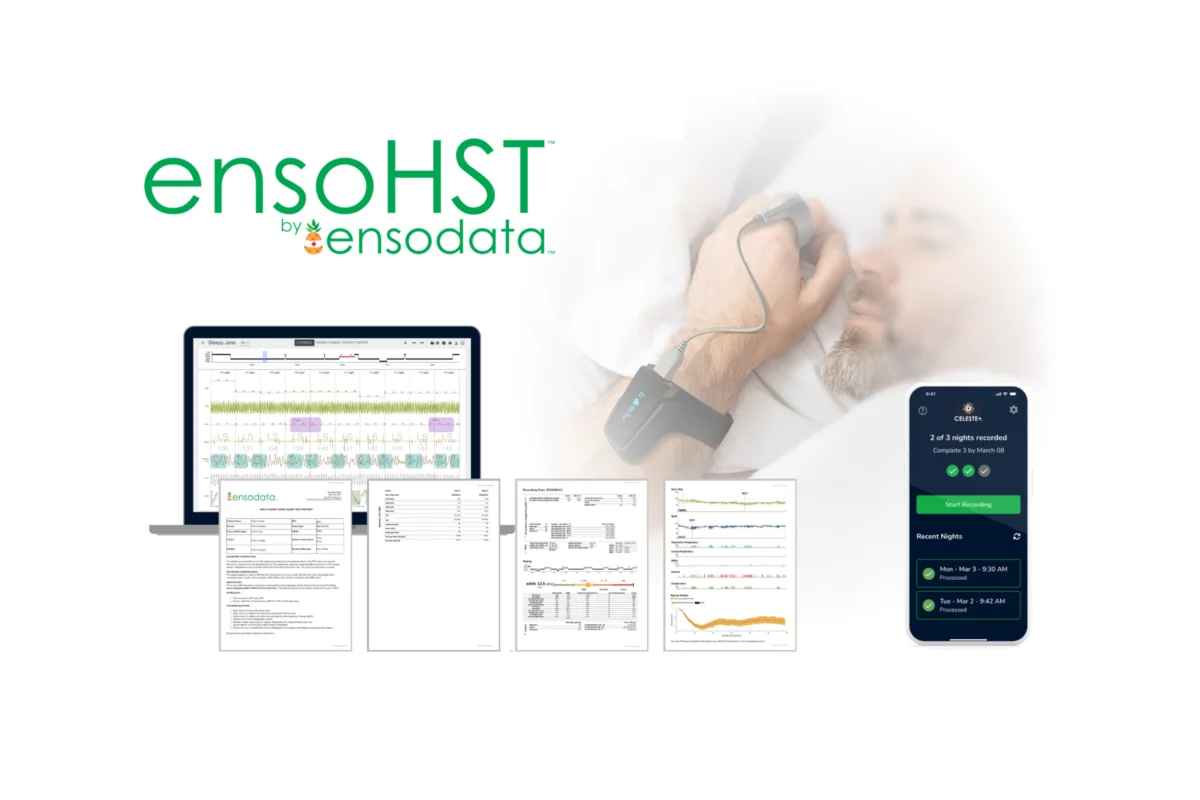
With the launch of EnsoHST Direct, these responsibilities are transitioned to EnsoData. The service operates by shipping FDA-cleared EnsoHST devices directly to the patient’s home. The workflow includes comprehensive setup guidance and ongoing support, ensuring that the patient is never left to navigate the diagnostic process alone.
Tackling Night-to-Night Variability
One of the most persistent challenges in sleep medicine is the variability of data collected over a single night. A patient might have a "bad night" due to external factors, leading to inconclusive results or the need for a repeat study, which drains resources and delays treatment.
EnsoHST Direct mitigates this by facilitating up to seven nights of continuous testing. This longitudinal approach captures a more accurate representation of the patient’s sleep architecture. To ensure high compliance, the system utilizes a real-time feedback loop: following each night of testing, patients receive an in-app notification confirming a successful study. If data capture is insufficient, the app prompts the patient to test for an additional night. According to internal metrics provided by the company, this proactive patient engagement has resulted in a 97% patient success rate, drastically reducing the "failed test" scenarios that frequently frustrate clinical teams.
Chronology and Development: The Path to AI-Driven Diagnostics
The introduction of EnsoHST Direct is the latest milestone in a multi-year effort by EnsoData to integrate machine learning into standard sleep medicine. The company’s trajectory has been defined by a commitment to clinical validation and regulatory rigor.
- Foundation: EnsoData established itself by developing advanced signal processing algorithms capable of analyzing sleep stages and respiratory events with high fidelity.
- Regulatory Milestone: The company achieved significant recognition when the FDA cleared their AI technology for sleep diagnosis, specifically regarding pulse oximetry and advanced respiratory analysis. This cleared the path for broader adoption in clinical environments.
- Scaling Up: Following a successful $20 million funding round aimed at expanding their AI-powered diagnostic footprint, the company shifted its focus from software-only solutions to comprehensive, service-oriented models.
- Current Launch: The release of EnsoHST Direct marks the transition from providing a "tool" to providing an "entire diagnostic infrastructure," allowing health systems to scale testing capacity without the need to hire additional administrative staff or expand their physical footprint.
Supporting Data: Clinical Precision and Turnaround
A primary concern for any clinician adopting new diagnostic technology is the accuracy of the data. EnsoData has provided compelling evidence that their AI-scored results are not only faster than manual scoring but also highly precise when benchmarked against the gold standard: polysomnography (PSG).
The Metrics of Performance
The AI engine powering the EnsoHST Direct workflow provides rapid, automated analysis, generating results in minutes rather than hours or days. The performance data released by the company includes:
- Sensitivity: 92% for sleep apnea detection.
- Specificity: 100% for moderate CSA.
- Mean eAHI: ±1 variance, indicating high agreement with manual scoring standards.
- Sleep Time Accuracy: A minimal 5.5-minute average difference between EnsoHST total sleep time and traditional in-lab PSG.
These metrics suggest that the AI model is capable of achieving near-lab-grade precision while significantly reducing the human labor involved in scoring. Furthermore, the overall turnaround time—from the moment an order is placed until the results are ready for the clinician—is compressed to a 1-to-5-day window. This speed is a critical differentiator for health systems looking to reduce time-to-treatment, which is a major factor in patient retention and long-term health outcomes.
Official Perspectives: Empowering the Modern Clinic
Bobby Cockrill, MBA, the chief commercial officer at EnsoData, has been vocal about the strategic necessity of this launch. In recent statements, Cockrill emphasized that the goal is not to replace the clinician, but to augment their capabilities by stripping away the "logistical noise" that clutters the modern clinical environment.
"Our primary goal with EnsoHST Direct is to eliminate the operational friction that has historically capped the growth of home sleep testing programs while finally making multi-night diagnostics accessible," Cockrill stated. "By taking the entire burden of shipping, device management, and patient support off the clinic’s shoulders, we are empowering healthcare providers to focus on what matters most: clinical interpretation and patient care."
Cockrill further highlighted that the shift toward a fully managed, end-to-end workflow allows sleep programs and health systems to overcome the clinical limitations of single-night testing. By capturing a true longitudinal picture of a patient’s sleep health, providers can make more informed decisions about therapy, whether that involves CPAP titration, oral appliance therapy, or lifestyle interventions.
Implications for the Future of Sleep Medicine
The implications of the EnsoHST Direct model are far-reaching for the healthcare industry. By decentralizing the diagnostic process, EnsoData is essentially moving the "sleep lab" into the patient’s home, while retaining the quality control of a centralized, expert-backed system.
1. Scaling Without Overhead
For mid-to-large-sized health systems, the biggest barrier to scaling is the "people and space" problem. Every new device added to an inventory requires cleaning space, staff time for shipping, and phone support for troubleshooting. By outsourcing this to EnsoData, clinics can scale their patient throughput exponentially without increasing their internal headcount.
2. Improving Patient Access and Compliance
Patients are notoriously non-compliant with complex testing setups. By providing a streamlined, user-friendly, and supported experience, the barrier to entry is lowered. The 97% success rate reported by EnsoData suggests that patients are more likely to complete a study when the technology is intuitive and the support is proactive.
3. Economic Viability
While EnsoData manages the logistics, the sleep practice retains control over the financial aspect, processing patient payments and insurance billing. This hybrid model preserves the clinic’s revenue stream while reducing their operational costs, effectively increasing the margin on each sleep test performed.
4. Longitudinal Care
The medical community is increasingly moving toward "continuous" monitoring. The ability to collect seven nights of data, rather than a snapshot, provides a window into the patient’s health that was previously too expensive or cumbersome to obtain. This data can lead to more personalized treatment plans, potentially improving CPAP adherence and reducing the rates of untreated sleep apnea in the general population.
Conclusion: A New Standard for Diagnostics
As the medical field continues to embrace digital health, the success of models like EnsoHST Direct will likely depend on their ability to integrate seamlessly into existing Electronic Health Records (EHRs) and clinical workflows. EnsoData appears to have positioned itself as an essential partner for sleep clinics that are looking to modernize their operations in an increasingly digital-first environment.
By bridging the gap between high-tech AI scoring and high-touch logistical support, the company is not just selling a device or a service—it is providing a pathway for sleep clinics to expand their reach, improve their clinical outcomes, and ultimately, save more lives through better diagnosis. As we look toward the future of sleep medicine, the era of the "single-night, manual-score" diagnostic process is clearly drawing to a close, making way for a faster, more accurate, and more scalable future.