










There is an old, time-honored adage that suggests, “Luck is when hard work meets opportunity.” For Dan Browne, a man whose life has been defined by the rhythmic pounding of pavement and the relentless pursuit of human potential, the concept of luck is secondary to the architecture of discipline. While Browne credits faith as his guiding compass, his extraordinary career as an elite distance runner and military leader serves as a definitive case study in how preparation, combined with an unwavering refusal to accept limitations, can transform the seemingly impossible into reality.
Browne’s story is not merely one of athletic achievement; it is a blueprint for character development. From the track at West Point to the global stage in Athens, his trajectory reflects a man who understood early on that greatness is not an act, but a habit. "I was always a driven person, even from a young age," Browne reflects. That drive, fueled by a deep-seated curiosity about the limits of human endurance, propelled him to heights that few in the history of the sport have reached.
The Foundations of a Distance Runner
Growing up in the rugged landscapes of Oregon, Browne’s affinity for running began not in a stadium, but during "fun-runs" with his father. These early experiences laid the groundwork for a lifelong passion for endurance sports. While he participated in various athletic endeavors, it was the grueling nature of cross-country that truly ignited his competitive spirit.
"I always enjoyed the feeling I got from running," Browne recalls. It was more than just a sport; it was a medium through which he could explore the boundaries of his own physical and mental fortitude. This intrinsic motivation would eventually lead him to the hallowed grounds of the United States Military Academy at West Point.
For Browne, West Point was the natural evolution of his journey. It was a place that promised not just rigorous athletic competition, but the forging of a leader of character. "Because of my personality and desire to challenge myself to become a leader of character, West Point was going to be the natural fit for me," he explains.
Chronology of a Career: From Cadet to Olympian
The West Point Years: Breaking Barriers
At West Point, Browne did more than just represent the Army; he redefined the possibilities for collegiate athletes. He set school records in the 3,000, 5,000, and 10,000 meters, but his defining moment arrived when he became the first cadet in the Academy’s history to break the 4-minute mile.
Clocking in at 3:59.37 against the U.S. Naval Academy, the achievement remains a standing record at West Point as of 2026. To put this in perspective, it is estimated that fewer than 2,500 individuals in human history have ever broken the 4-minute barrier. For a cadet balancing the immense pressures of military training, academic excellence, and physical rigor, this feat was nothing short of extraordinary.
"I believe God gives us certain gifts," Browne says, reflecting on his time at the Academy. "And I believe that curiosity to explore my potential combined with belief in myself spurred me on."
The Olympic Crucible
Browne’s trajectory shifted toward the international stage during his junior year at West Point, when he qualified for the U.S. Olympic Trials. This served as his "North Star"—the realization that competing at the highest echelon of global sport was not just a pipe dream, but a tangible target.
Following his commission, Browne joined the U.S. Army’s World Class Athlete Program (WCAP), a vital initiative that allowed him to train at a professional level while maintaining his service commitments. The missing link, however, appeared when legendary coach Alberto Salazar invited him to join the Nike Oregon Project. Returning to his home state of Oregon to train under one of the sport’s most demanding mentors was a "full-circle moment" for Browne.
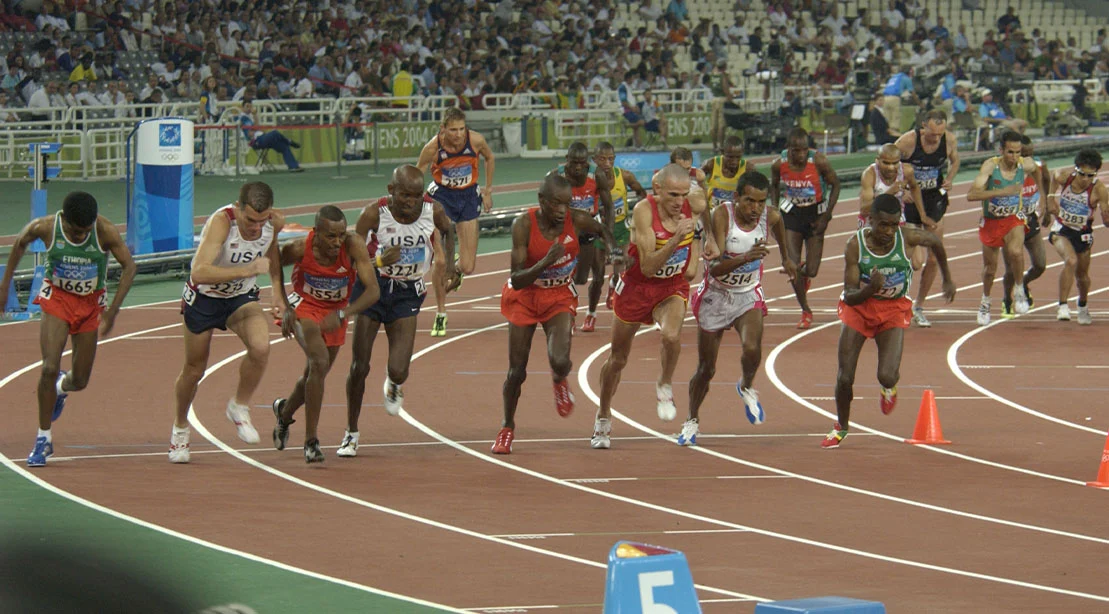
The culmination of these efforts occurred in 2004, when Browne represented the United States at the Olympic Games in Athens, Greece. Competing in both the 10,000 meters and the marathon, he stood on the world stage wearing the red, white, and blue—a testament to years of tactical, physical, and mental preparation.
Supporting Data and the Philosophy of "Near-Successes"
When analyzing the metrics of success, observers often focus solely on podium finishes. Browne, however, offers a more nuanced perspective. He speaks frequently of "near-successes"—such as his repeated second-place finishes in high school state championships.
"I didn’t like to call them failures because I found ways to still improve when others would only see a loss," he notes. This psychological reframing is a cornerstone of his success. By viewing setbacks as data points for improvement rather than terminal points for ambition, Browne was able to sustain a career that spanned over 100,000 miles of training.
His transition from elite athlete to coach saw him applying this same logic to the next generation. During his tenure as a coach for the WCAP, he helped guide athletes to the 2016 Rio de Janeiro Olympics, proving that his methodology was not just a personal gift, but a replicable system of high-performance development.
Official Perspectives: Culture as a Strategic Asset
Browne is adamant that his success was not achieved in a vacuum. He attributes his development to a specific intersection of environments: the military and elite athletic culture. "I believe my success was in part because of the culture that was instilled from my military experience and at Nike," he asserts.
This culture—one of extreme ownership, accountability, and the "hard right over the easy wrong"—is what he believes is currently missing in many aspects of modern life. He views the act of coaching and mentoring as a duty. By inviting younger athletes into this demanding culture, he is not just training runners; he is attempting to build better citizens.
Implications for the Future: The Cost of Comfort
Perhaps the most profound takeaway from Browne’s philosophy is his warning regarding the current trajectory of American youth. He argues that by avoiding the "hard path," society is inadvertently undermining its own long-term stability and security.
"There are things you learn about yourself as you explore your potential, and if we as a country separate ourselves from that growth, there will be consequences," he cautions. His message is a call to action: whether a person chooses the military, athletics, or the corporate world, the pursuit of greatness requires a voluntary embrace of hardship.
"West Point teaches you to do the hard right over the easy wrong," Browne concludes. "I think young kids across the nation could benefit from those lessons, and applying them could benefit our national security."
Conclusion: A Legacy of Service
Today, Dan Browne remains a testament to the idea that the "easy path" is rarely the one that leads to true satisfaction. Having retired from the track, his focus has shifted to the long game: paying forward the lessons of the WCAP and his military service.
Through his professional life and his advocacy for high-standard training, he continues to challenge the next generation to see their own potential through the lens of grit. His story serves as a reminder that while the road to the Olympics is paved with miles of sweat, the road to a life of significance is paved with the courage to seek out the most difficult challenges, and the tenacity to see them through to the end.
For those looking to understand the intersection of military discipline and elite athleticism, Browne’s life remains the ultimate case study. As he continues to pursue coaching opportunities and mentor service members, his message remains clear: the goal is not merely to run fast, but to live well—by choosing the difficult, the honorable, and the excellent.
For more information on the U.S. Army’s World Class Athlete Program (WCAP), visit armywcap.com. For further professional insights from Dan Browne, you can follow his journey via his LinkedIn profile.
This article was produced as part of the Fit to Serve series, with contributions from M&F Senior Military Editor Rob Wilkins.