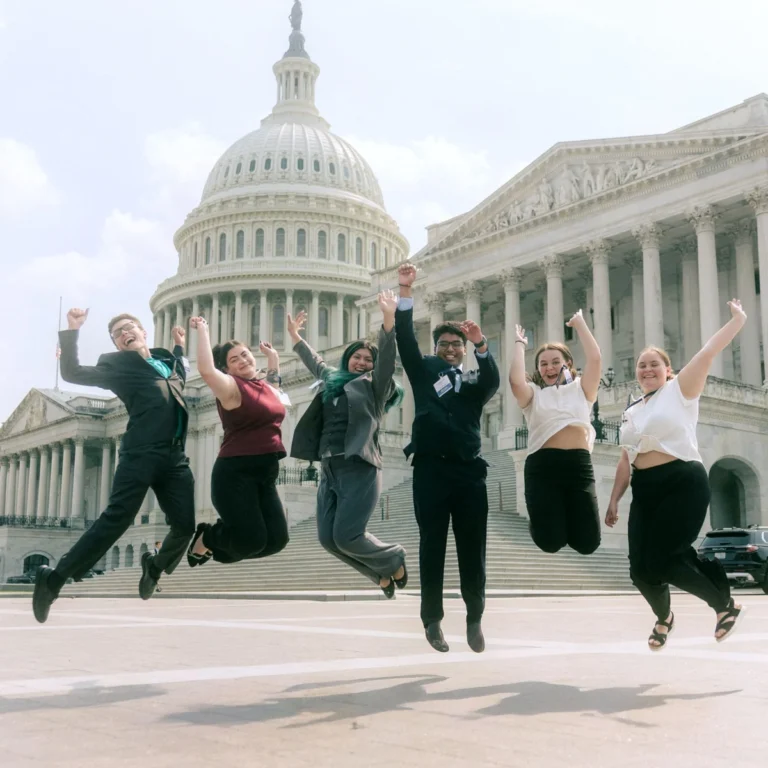









WASHINGTON, D.C. — In a definitive shift from mental health awareness to legislative mobilization, Active Minds, the nation’s leading nonprofit organization promoting mental health for young adults, has announced its 2026 Hill Day and National Conference. This year’s event marks a historic milestone as more than 200 youth and young adult advocates descend upon Capitol Hill to champion the Campus Lifeline Act, a bipartisan piece of legislation designed to integrate mental health support directly into the infrastructure of American higher education.
As the mental health crisis among Gen Z continues to escalate, the 2026 conference represents a strategic evolution for Active Minds. No longer content with merely "starting the conversation," the organization is equipping the next generation of leaders with the tools to rewrite federal policy, ensuring that mental health resources are not just available, but inescapable.
I. Main Facts: The Legislative Catalyst and the Campus Lifeline Act
The centerpiece of the 2026 mobilization is the Campus Lifeline Act. Developed with significant input from youth advisors, the bill addresses two critical gaps in the current mental health landscape: immediate crisis accessibility and sustainable federal funding for peer-led initiatives.
The Two Pillars of the Act
- The 988 Student ID Initiative: The bill mandates the inclusion of the 988 Suicide & Crisis Lifeline on all newly issued student identification cards. By placing this number in the pockets of millions of students, the act aims to normalize crisis seeking and provide a 24/7 safety net that is physically present during a student’s daily routine.
- Federal Investment in Youth-Informed Strategies: Moving beyond top-down administrative approaches, the act calls for increased federal grants specifically earmarked for mental health strategies designed and led by students. This recognizes that peer-to-peer intervention is often the most effective first line of defense in a university setting.
The bipartisan nature of the bill underscores a growing consensus in Congress that youth mental health is a non-partisan emergency. By leading this charge, Active Minds is positioning young adults not as victims of a crisis, but as the primary architects of its solution.
II. Chronology: From the Halls of Power to Community Connection
The 2026 conference is structured as a transition from high-stakes political advocacy to deep-rooted community building. The schedule reflects a "boots-on-the-ground" approach that bridges the gap between digital activism and physical presence.
The Advocacy Push
The day begins on Capitol Hill, where 200 advocates, representing a diverse cross-section of the American student body, engage in direct dialogue with legislators. These meetings are the culmination of months of training through the Active Minds Advocacy Institute, where students learned to translate their lived experiences into persuasive policy arguments.
The Social and Programmatic Shift
Following the legislative sessions, the focus shifts to a social and interactive evening designed to recharge and empower the advocates. The "Social Hour" serves as a hub for resource sharing and professional development, featuring:
- The Reimagined "Send Silence Packing" (SSP): Long known for its powerful display of backpacks representing lives lost to suicide, the 2026 iteration of SSP includes a "Share Your Story" booth, allowing participants to contribute their narratives to a living archive of resilience.
- Cause + Career Integration: Recognizing that advocacy is a lifelong path, the conference offers professional headshot stations to help students bolster their LinkedIn profiles and professional identities.
- Collaborative Installations: The Student Advisory Committee (SAC) hosts a "Reflection and Connection Wall," a physical manifestation of the collective’s journey, blending art, photography, and written word.
The Evening Plenary
The day concludes with a high-profile evening program, including a live recording of the She Persisted podcast featuring Sadie Sutton and Hailey Hardcastle, and a musical performance by D.C.-based artist Be Steadwell. The night’s anchor is the panel discussion, "Built for This: The Advocacy Pipeline from School Passion to National Impact," which highlights the trajectory of student leaders into national figures.

III. Supporting Data: The Context of a Crisis
The urgency of the 2026 Hill Day is supported by sobering statistics regarding the state of youth mental health in the United States. According to recent data from the Centers for Disease Control and Prevention (CDC) and the Substance Abuse and Mental Health Services Administration (SAMHSA):
- Crisis Line Efficacy: Since the transition to the three-digit "988" code, call and text volume has increased by over 30%, yet awareness among college-aged students remains inconsistent. Integrating the number on student IDs is projected to increase immediate usage among the 18–24 demographic by an estimated 15-20%.
- The Peer Support Gap: Research indicates that 67% of students tell a friend they are struggling before they tell a professional. Despite this, federal funding for peer-to-peer programs remains a fraction of what is allocated for clinical services.
- Marginalized Communities: Data shows that Black, Indigenous, and People of Color (BIPOC) students, as well as LGBTQ+ youth, face higher barriers to accessing culturally competent care. The 2026 conference specifically targets these inequities by elevating leaders from these backgrounds.
IV. Official Responses: Voices from the Front Lines
The 2026 conference features a roster of "Official Voices"—youth leaders who have already begun implementing systemic changes in their local communities. Their work serves as a proof-of-concept for the national goals of the Campus Lifeline Act.
The Visionaries
- Brandon Bond (Moderator): As the Director of People & Organizational Well-Being at Garrett’s Space, Bond represents the intersection of public health and social work. His work with the "A.S.K." (Acknowledge, Support, Keep-in-Touch) campaign has become a blueprint for non-clinical therapeutic support. "We are moving toward a model of multicultural wellness," Bond noted, emphasizing that mental health must be integrated into everyday spaces, like his pop-up barbershop initiative.
- Bria Murph (Panelist): A member of the Active Minds Advocacy Institute, Murph’s "Project Zen UH" at the University of Houston demonstrates the power of environmental psychology. By revamping campus spaces into "Zen" zones, she has addressed the need for physical sanctuary in high-stress academic environments.
- Rohan Sajita (Panelist): The CEO of the Let’s Learn Foundation, Sajita has scaled the "Vibrant Voices Project," which uses monologue-writing workshops to support youth in juvenile detention. His work highlights the necessity of reaching underserved and incarcerated youth, populations often left out of the broader mental health conversation.
- Jodi Johnson (Panelist): Johnson’s "Brother, You’re Not Alone" project focuses on the specific stigma faced by Black, African, and Caribbean American men. By combining distance running with advocacy, Johnson has raised thousands of dollars and used endurance athletics as a metaphor for the long-term journey of mental health recovery.
- Varsha Penumalee (Panelist): Serving on the Active Minds Student Advisory Committee and as President of NAMI Virginia NextGen, Penumalee represents the "Policy Pipeline." Her work bridges the gap between state-level outreach and national advocacy, focusing on health inequities in marginalized communities.
V. Implications: A Paradigm Shift in Mental Health Policy
The 2026 Active Minds Hill Day and Conference signals a broader shift in how society views the role of young people in policy-making. There are three primary implications for the future of mental health in America:
1. The Professionalization of Youth Advocacy
By providing headshots, networking opportunities, and legislative training, Active Minds is signaling that youth advocacy is no longer an extracurricular activity; it is a professional discipline. This "Advocacy Pipeline" ensures that as these students enter the workforce, they carry a "mental health first" mindset into corporate, medical, and legal sectors.
2. Legislative Accountability
The push for the Campus Lifeline Act places the onus on the federal government to treat mental health with the same structural seriousness as physical safety. By mandating 988 on IDs, the government acknowledges that a mental health crisis is as much an emergency as a fire or a medical injury, requiring immediate, codified access to help.
3. The Digital-Physical Hybrid Model
The conference’s focus on "social media challenges built to elevate advocacy efforts" acknowledges that the modern battle for mental health is fought in both the halls of Congress and the algorithms of TikTok and Instagram. By taking "boots-on-the-ground mobilization into the digital space," Active Minds is creating a scalable model of activism that can reach students who may never be able to travel to Washington, D.C.
Conclusion
As the 2026 conference concludes, the message from Active Minds is clear: the era of silent suffering is over. Led by a diverse coalition of scholars, athletes, artists, and policy wonks, the youth mental health movement has matured into a sophisticated political force. The Campus Lifeline Act is not just a bill; it is a declaration that the next generation is "Built for This"—ready to lead, ready to advocate, and ready to save lives.
About Active Minds:
Active Minds is the nation’s premier nonprofit organization supporting mental health awareness and education for young adults. Through a network of over 600 campus chapters and a suite of national programs, Active Minds empowers students to speak openly about mental health and take action to prevent suicide.