










For decades, the medical community operated under a fundamental, near-universal axiom: cancer is a disease of aging. As human cells replicate over time, they inevitably accumulate molecular errors and DNA damage, a process that creates the fertile ground from which tumors grow. Consequently, the longer a person lives, the higher their risk of receiving a cancer diagnosis.
However, a concerning shift has been unfolding in global health statistics. Over the last several decades, oncology wards have seen an uptick in younger adults—people aged 55 and under—being diagnosed with cancers that were once considered rare for their age brackets. This trend has defied traditional risk models and prompted a provocative, urgent question among researchers: Are younger generations accumulating biological "wear and tear" more quickly than their predecessors?
A groundbreaking study led by researchers at the Washington University School of Medicine in St. Louis suggests the answer is a resounding yes. By analyzing the health data of over 160,000 individuals, the team found evidence that younger generations are biologically "older" than their chronological age would suggest, and that this accelerated aging is a significant driver of early-onset cancer.
The Disconnect Between Chronological and Biological Time
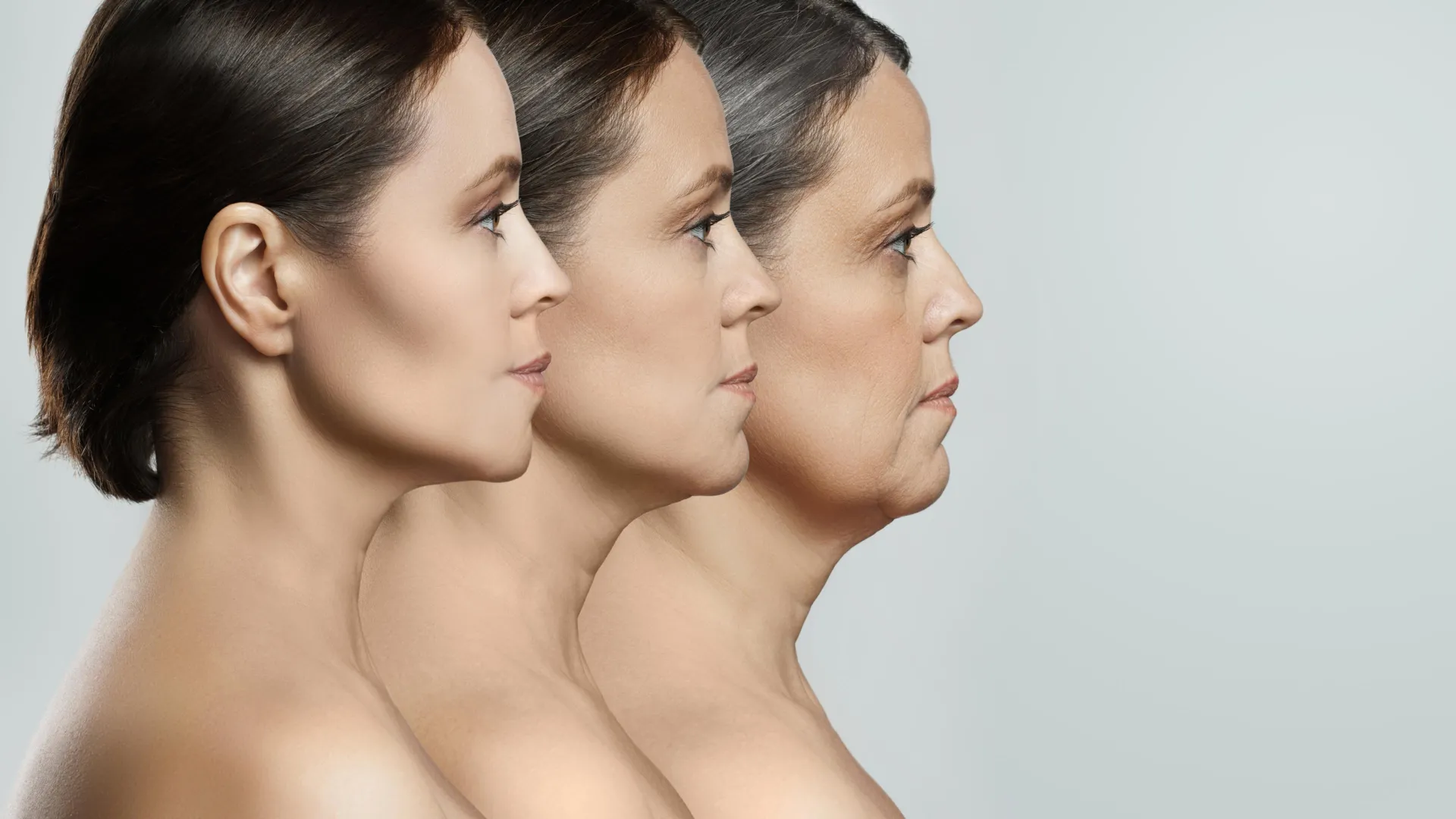
To understand the study’s implications, one must first distinguish between the two ways we measure age. Chronological age is the simple, linear count of years since birth. Biological age, however, is a far more nuanced metric; it acts as a composite readout of how our cells, organs, metabolism, and physiological systems are actually functioning.
When a person’s biological age outpaces their chronological age, it indicates that their body is under internal stress, experiencing cellular senescence or metabolic dysfunction at an accelerated rate. According to the research published in Nature Medicine, the greater the "gap" between these two ages, the higher the risk of developing early-onset cancer.
The study indicates that this gap is widening in more recent birth cohorts. Younger generations appear to be carrying a heavier "biological burden" than those born in the mid-20th century, effectively navigating their lives with bodies that are functionally older than they should be.
A Chronology of the Research: From Data to Discovery
The path to these findings was complex, requiring a synthesis of massive datasets and international collaboration. The study was spearheaded by Yin Cao, ScD, a molecular epidemiologist and associate professor at WashU Medicine, and conducted under the auspices of Team PROSPECT—a global initiative funded by Cancer Grand Challenges, a partnership between the National Cancer Institute (NCI) and Cancer Research UK.
Phase 1: Analyzing the Populations
The team leveraged the UK Biobank, a massive repository of biological and lifestyle data, to examine more than 154,000 individuals. To ensure the findings held true across diverse environments, they also analyzed data from over 10,000 participants in the United States via the NIH’s All of Us Research Program, which aims to map the health profiles of over a million Americans.
Phase 2: Defining the Aging Metrics
To quantify biological aging, the researchers utilized two primary methodologies:
- Systemic Aging: Using established clinical tools like the PhenoAge clock and the Klemera-Doubal Method, researchers looked at blood biochemistry markers—such as albumin (liver function) and creatinine (kidney function)—to determine how the body as a whole is aging. They also incorporated a metabolomic age score to capture patterns in metabolism.
- Organ-Specific Aging: By analyzing blood proteomic data, the team looked at specific protein patterns linked to individual organs, allowing them to estimate the "age" of specific systems rather than just the body as a whole.
Phase 3: Observing the Generational Shift
The data revealed a clear, statistically significant pattern. In the UK cohort, individuals born between 1965 and 1974 exhibited systemic aging 23% higher than those born between 1950 and 1954, even when adjusted for chronological age. The trend was even more pronounced in the U.S. data, where participants born in the 1990s showed systemic aging 92% higher than those born between 1965 and 1969.
Supporting Data: The Link to Malignancy
The researchers did not merely identify that younger people are aging faster; they mapped this accelerated aging directly to cancer outcomes. The findings were stark:
- Systemic Risk: Greater systemic aging was associated with an 8% increased risk of early-onset solid cancers.
- The "Most Accelerated" Group: When participants were categorized by their level of biological aging, those with the most advanced systemic aging had a 15% higher risk of early-onset solid cancer compared to their peers with the least advanced aging.
- Organ-Specific Vulnerabilities: The study revealed that systemic aging is not uniform. For instance, an immune system that appeared biologically older was specifically linked to early-onset lung cancer. Similarly, older-appearing adipose (fat) tissue was associated with a higher risk of early-onset colorectal cancer.
Crucially, these associations remained statistically significant even after researchers accounted for inherited genetic cancer risks and genetic predispositions to accelerated aging. This suggests that the environment—what we eat, how we live, and the stressors we face—is "embedding" itself into our biology, overriding genetics.
Official Perspectives: Shaping the Future of Prevention
The implications of this research are far-reaching. By shifting the focus from "age" as a static number to "biological age" as a dynamic health marker, clinicians may be able to intervene long before a tumor manifests.
"Our ultimate goal is to decode how modern environments become biologically embedded to drive cancer risk," Dr. Yin Cao stated. "This brings us closer to identifying risk earlier and developing prevention strategies that are tailored to an individual’s biology."
David Scott, PhD, director of Cancer Grand Challenges, emphasized the necessity of global, multidisciplinary cooperation in this effort. "We don’t have a definitive answer to what is driving the rise of early-onset cancers around the world," Scott noted. "But studies like this are helping us piece together the bigger picture, showing that cancer may be influenced not just by changes inside individual cells, but by wider changes happening across the body as a whole."
Implications: A New Frontier in Oncology
The transition from reactive to proactive cancer care is the ultimate goal of the research team. If a 30-year-old can be identified as having a "biological age" of 45, the medical community could move from broad, population-wide screenings—which typically don’t begin until much later in life—to personalized, early-detection interventions.
Addressing the Root Causes
Dr. Cao’s team has spent years investigating the environmental and lifestyle factors that shape long-term health, including metabolic dysregulation, alcohol consumption, sedentary behavior, and even the method of birth. While no single factor has been identified as the "smoking gun," the new research suggests that these influences work in concert to accelerate biological aging.
The researchers are now moving forward with the next stage of the PROSPECT project, aiming to understand the exact mechanisms through which these lifestyle "marks" become permanent biological signatures. By tracing the accumulation of these risks, they hope to stop the disease before it begins, essentially "resetting" or slowing the biological clock through clinical intervention and lifestyle modification.
As the scientific community digests these findings, the message to the public is one of cautious, calculated progress. We are moving away from the era where age is a fixed predictor of cancer, and toward a future where our biological status—measured by our blood, our organs, and our metabolism—can serve as a powerful tool for longevity and health preservation.
This work was part of the PROSPECT team supported by the Cancer Grand Challenges initiative. Additional funding and support were provided by the National Cancer Institute of the NIH, the French National Cancer Institute, the Bowelbabe Fund for Cancer Research UK, and the Foundation for Barnes-Jewish Hospital. The authors maintain full responsibility for the content, which does not necessarily reflect the official views of the NIH.