










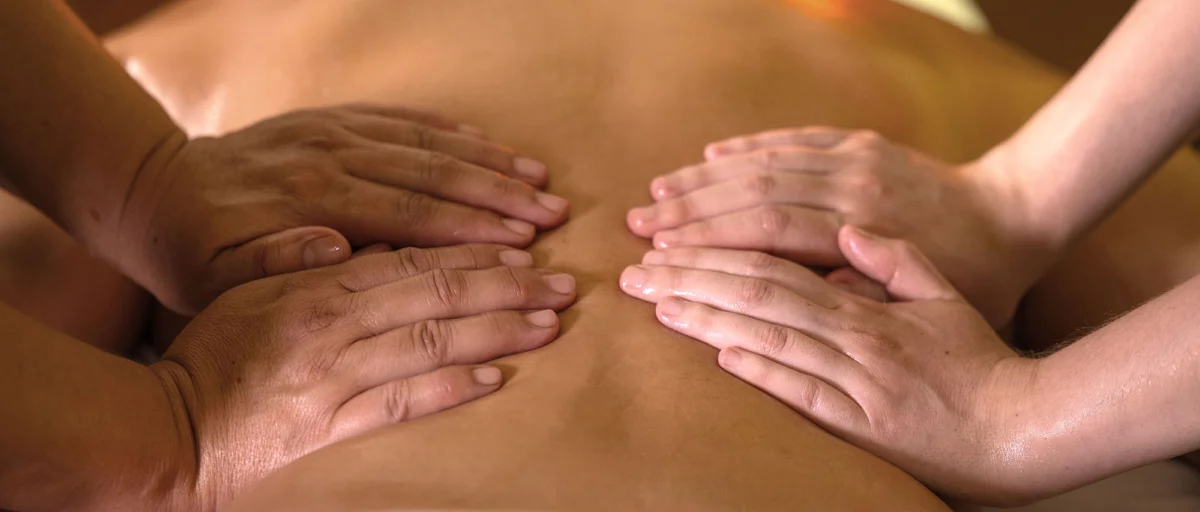
Ayurveda, the ancient Indian system of holistic healing, has long recognized the profound therapeutic potential of intentional touch. Far from being a mere luxury, massage—or Abhyanga—is regarded as a fundamental pillar of both palliative (Shamana) and purificatory (Shodhana) therapies. By aligning the body and mind through the strategic application of herbalized oils and specialized strokes, this ancient practice seeks to return the individual to a state of blissful equilibrium.
As modern medicine increasingly acknowledges the mind-body connection, the timeless wisdom of Ayurvedic massage has moved from the fringes of alternative therapy to the forefront of integrative health.
The Foundations of Ayurvedic Philosophy
At its core, Ayurveda operates on the understanding that the universe and the human body are composed of five great elements: space, air, fire, water, and earth. These elements manifest within the human physiology as three primary energetic forces, known as Doshas:
- Vata: Composed of space and air, this dosha governs movement and the nervous system.
- Pitta: Composed of fire and water, this dosha governs metabolism and transformation.
- Kapha: Composed of water and earth, this dosha governs structure, lubrication, and stability.
The primary objective of any Ayurvedic treatment, including massage, is to identify if these doshas have become vitiated or increased. The therapeutic approach is governed by the principle of "like increases like," meaning that practitioners treat imbalances by applying the opposite qualities. For instance, a Vata-imbalanced individual, characterized by dryness and cold, would be treated with heavy, warm, and oily applications to ground their system.
A Chronological Perspective: From Vedic Texts to Modern Practice
The methodologies and techniques used in Ayurvedic massage are not modern inventions; they are rooted in the Brhat Trayi, the "Great Three" texts of Ayurveda: the Caraka Samhita, the Sushruta Samhita, and the Ashtanga Hridaya of Vagbhata. Later texts, including the Bhavaprakasha and Yogaratnakara, further refined these practices.
Historically, these techniques served a variety of societal functions. In ancient India, massage was utilized to prepare warriors and athletes for peak physical performance, to support postpartum recovery, and as a potent tool for virilization and longevity. Furthermore, it served as a preventative measure, ensuring the maintenance of health long before the onset of disease. This long-standing tradition demonstrates that massage was always intended to be a dynamic, evolving discipline tailored to the specific needs of the population.
Individualized Care: The Science of Customization
Unlike Western massage, which often follows a standardized protocol, Ayurvedic massage is deeply individualized. The practitioner begins by assessing the recipient’s Prakruti (their unique genetic constitution) and their Vikruti (their current state of imbalance).
Two critical indicators in this assessment are the state of the individual’s digestive fire (Agni) and the accumulation of metabolic toxins (Ama). If an individual has a significant buildup of Ama, traditional oil-based massage may be contraindicated, as the heavy, sticky nature of the oil can exacerbate the condition. In such instances, practitioners may employ Udvartana, a dry massage using heated herbal powders to invigorate circulation and break down sluggishness.
The Strategic Use of Oils and Herbs
The selection of the carrier oil and the specific herbs infused into it is a sophisticated, intentional process:
- For Vata: Heavy, warming oils like sesame are preferred to pacify the air and space elements.
- For Pitta: Cooling, soothing oils such as coconut or sunflower are utilized to counteract the heat of fire and water.
- For Kapha: Lighter, heating oils like mustard are employed to stimulate and increase circulation.
The amount of oil used is equally important. Vata-dominant individuals require liberal amounts of oil to soothe the nervous system, while Kapha-dominant individuals require a much lighter touch with minimal oil to avoid heaviness.
Special Considerations: The Mind and Vata
According to the Samkhya school of philosophy, the air element is intimately connected to Sparshendriya, the sense of touch. Because Vata dosha is primarily composed of air and space, it is uniquely susceptible to the healing influence of touch.
This makes Ayurvedic massage a primary intervention for mental health concerns and anxiety. The practice of oiling the skin—the body’s largest organ—does more than provide physical relaxation. By nourishing the skin, the oils and herbs penetrate into the deeper tissues, including the nerves, muscles, and bones. This process feeds the agni of the skin, much like food nourishes the digestive system, improving the complexion and resilience of the body’s protective barrier.
Categories and Techniques of Massage
The versatility of Ayurvedic massage is reflected in its diverse modalities:
Abhyanga
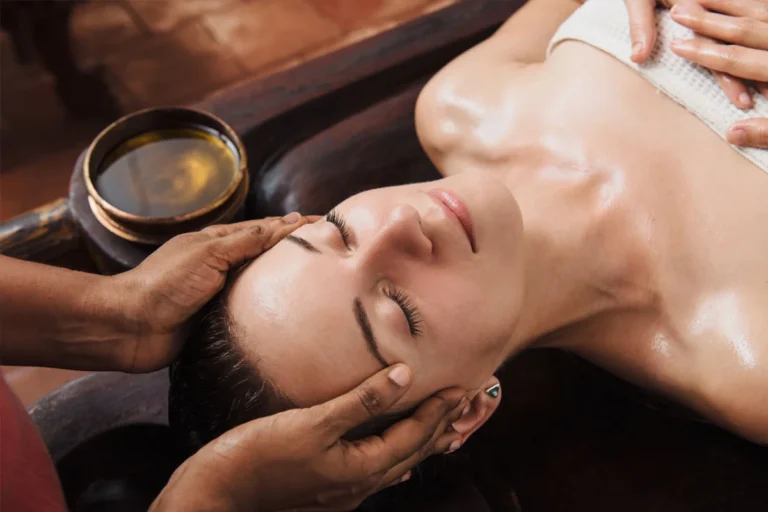
This is the most celebrated form of Ayurvedic massage, focusing on the systemic application of warm herbalized oils. Whether performed as a self-massage or administered by one or two practitioners in a four-handed session, Abhyanga serves as a physical manifestation of love—the Sanskrit word Snehan meaning both "oil" and "love." Specialized formulations, such as Mahanarayan tailam for joint pain and Dhanvantaram tailam for nervous system regulation, are cornerstones of this practice.
Dry Massage (Udvartana)
As noted, massage with dry, hot herbal powders is essential for detoxifying the body. Udsadana is often used for cosmetic beautification, while Udgarshana uses herbal pastes mixed with water or oil to address specific skin ailments.
Directionality and Stroke Mechanics
The direction of strokes is critical to the outcome. Anuloma strokes (moving away from the heart) are grounding and calming, ideal for Vata pacification. Pratiloma strokes (moving toward the heart) are stimulating and are often used to improve lymphatic drainage and address varicosity. A skilled practitioner will utilize a range of movements, including:
- Peedana: Deep kneading.
- Udvesthana: Twisting or wringing of the tissues.
- Praharana: Rhythmic percussion.
- Sandhi Calana: Intentional joint mobilization.
Marma Therapy: The Energetic Frontier
Perhaps the most distinctive aspect of advanced Ayurvedic massage is the incorporation of Marma therapy. Marmani are vital energy points on the body that correspond to specific organs, glands, and subtle energy channels (nadis).
While often compared to Chinese acupuncture, Marma therapy is distinct in its application and scope. The points are generally larger and focus on the activation of Prana (life force energy) to resolve blockages that have not yet manifested as physical pathology. By stimulating these points, practitioners can access the "inner pharmacy" of the body, facilitating deep emotional and physical release.
Implications for Modern Wellness
The implications of integrating Ayurvedic massage into contemporary health regimes are vast. As stress-related disorders, chronic pain, and mental health struggles become increasingly prevalent, the holistic, non-invasive, and deeply personalized nature of Ayurveda offers a necessary counter-balance to the high-paced, symptomatic treatment approach of modern life.
By treating the person rather than the disease, Ayurvedic massage acknowledges that true health is a state of total integration. It empowers individuals to take an active role in their own healing, transforming the act of massage from a passive reception into an intentional, self-reflective practice.
Conclusion: The Healing Touch
The study of Ayurvedic massage is a journey into the intelligence of the body. From the gentle, rhythmic strokes designed to soothe a restless mind to the vigorous application of herbal powders to clear metabolic stagnation, every element is a calculated move toward harmony. As we continue to bridge the gap between ancient Vedic wisdom and modern scientific inquiry, the practice of Abhyanga and Marma therapy stands as a testament to the power of human touch to heal, nurture, and restore.
For those looking to deepen their understanding, the study of these modalities is not just an education in technique, but an exploration of the profound connection between the elements, the mind, and the spirit. As practitioners like Beatrice Voss emphasize, the lineage of these therapies—rooted in heart-centered service—remains as relevant today as it was in the time of the great sages. Whether for preventative wellness or specific therapeutic intervention, the "Healing Touch of Ayurveda" remains a vital key to unlocking the body’s natural capacity for health and longevity.