









In a landmark moment for the intersection of artificial intelligence and pharmacology, Boulder-based Enveda Biosciences has successfully closed a $311 million Series E financing round. The capital injection, announced on September 23, 2026, represents one of the most significant private funding events in the biotech sector this year, rivaling the capital usually reserved for high-profile initial public offerings (IPOs).
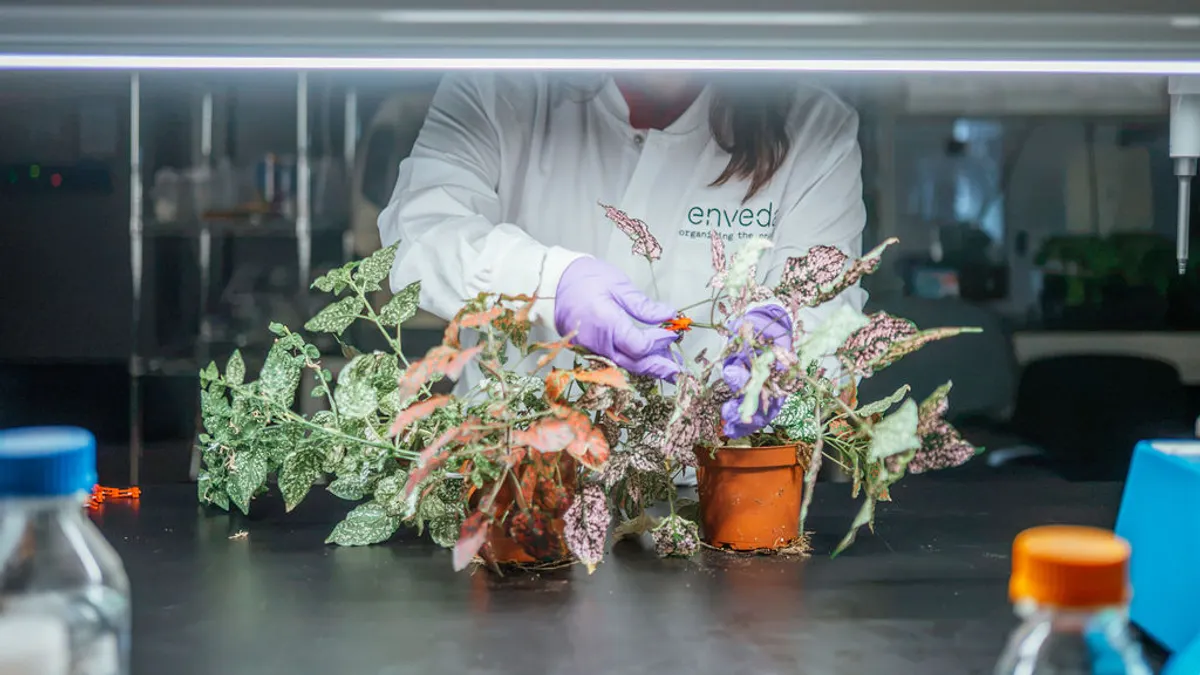
This infusion of capital serves as a powerful endorsement of Enveda’s mission: to unlock the untapped chemical potential hidden within the natural world using advanced machine learning. By bridging the gap between ancient biological wisdom—found in plants and microbes—and 21st-century computational biology, Enveda is attempting to rewrite the rules of drug development.
The Core Strategy: Mining Nature with Machine Learning
At its heart, Enveda is a company built on a paradox: using the most advanced digital tools to explore the most traditional source of medicine. Historically, drug discovery relied on serendipitous findings in nature. Today, Enveda replaces serendipity with structural prediction.
The company’s proprietary platform scans the chemical makeup of living organisms, predicting the structure and function of molecules with high precision. Once the system identifies a molecule with therapeutic potential, it ranks the candidate based on its probability of success. Enveda’s chemists then refine these biological leads into viable clinical candidates.
CEO and founder Viswa Colluru, who has consistently championed the potential for AI to move beyond mere efficiency, views this technology as a paradigm shifter. "As much as the industry has gotten comfortable with the more iterative approaches, the thing that moves the needle for patients and seeds power law returns for companies is first-in-class mechanisms that shift the paradigm," Colluru stated.

Chronology: A Trajectory of Rapid Expansion
Enveda’s rise has been marked by a deliberate, aggressive expansion of its clinical pipeline. The company’s journey to this $311 million milestone follows a steady accumulation of expertise and capital:
- Early R&D Phase: Enveda focused on building its "Knowledge Graph," a massive database linking natural chemistry to human biology.
- 2025 – The Series D Breakout: The company secured $150 million in Series D funding, signaling its transition from a pure discovery platform to a clinical-stage biotechnology firm.
- June 2026 – Pipeline Transparency: CEO Viswa Colluru confirmed that the company was evaluating at least 17 programs, with the goal of bringing multiple first-in-class assets into human trials.
- September 23, 2026 – The Series E Milestone: The $311 million round is finalized, led by Catalio Capital Management, with support from a diverse syndicate including Surveyor Capital, T. Rowe Price, Lux Capital, and a major sovereign wealth fund.
- Post-Funding Outlook: With over $840 million in total venture backing to date, the company is now positioned to push its three current clinical-stage assets through rigorous human testing while scaling its discovery engine.
Supporting Data: Three Pillars of the Pipeline
Enveda’s current clinical portfolio is defined by its focus on high-impact areas: immune diseases and metabolic health. Three primary candidates currently dominate the company’s clinical roadmap.
1. ENV-294: The Molecular Glue for Eczema
Perhaps the most notable of Enveda’s assets is ENV-294. Classified as a "molecular glue," this small-molecule therapy aims to treat moderate-to-severe atopic dermatitis. Unlike existing biologics such as Dupixent, which require injections, ENV-294 is designed as an oral pill. Early Phase 1b data has been promising, demonstrating a clear reduction in eczema symptoms. The company is currently advancing this program into Phase 2 trials, extending the scope to include asthma.
2. ENV-308: Mimicking the Physiology of Exercise
In the crowded obesity space, ENV-308 stands out as a unique contender. Billed as a "pill designed from the chemistry of exercise," the drug mimics "Lac-Phe," a hormone naturally produced by the human body during physical exertion or post-meal metabolism. While the GLP-1 market is currently dominated by injectable peptides, Enveda is positioning ENV-308 as a potent tool for weight-loss maintenance, particularly for patients looking to transition off GLP-1 therapies. Early safety data has provided the foundation for continued development.
3. ENV-6949: Targeting the TL1A Pathway
Rounding out the clinical trio is ENV-6949. This candidate targets the TL1A pathway, an emerging "hot" target in the treatment of inflammatory bowel disease (IBD). By focusing on this pathway, Enveda is positioning itself to compete in one of the most commercially significant areas of immunology.

Official Responses and Strategic Vision
The investor confidence displayed in the Series E round underscores a broader trend in biotechnology: the "platform-plus-pipeline" model. Investors are no longer merely betting on AI software; they are betting on the ability of AI to translate into tangible, human-proven drugs.
"The way we think about it is, put multiple drugs into the clinic, and strategically partner each of these at the time when the value inflection is right," Colluru explained regarding the company’s capital allocation strategy. "Such that we get both the validation and capital to move other chess pieces further along."
This "chess game" approach allows Enveda to maintain its independence while de-risking individual programs through potential strategic partnerships with Big Pharma. By keeping the most promising assets in-house while potentially licensing others, Enveda aims to sustain its growth without the constant dilution of repeated, massive financing rounds.
Implications for the Biotech Industry
Enveda’s success carries significant implications for the future of drug discovery.
The Shift from Screening to Prediction
For decades, the standard for pharmaceutical discovery was high-throughput screening—testing thousands of compounds against a target to see what sticks. Enveda’s success validates a predictive model. By using AI to navigate the vast, complex chemical space of natural products, the company is essentially "pre-filtering" for success before a single test tube is touched.

Democratizing Natural Products
Natural products have long been a source of wonder in chemistry, but they are notoriously difficult to work with due to their structural complexity. Enveda’s ability to map these structures and identify their biological targets suggests that the "low-hanging fruit" of synthetic chemistry may soon be eclipsed by the sophisticated, highly refined chemistry of the natural world.
A New Standard for Private Financing
The sheer size of the Series E round suggests that the capital markets are ready to support "big bets" on AI-biotech, provided the company can show clinical progress. For other emerging biotechs, the bar has been set: it is no longer enough to have a clever algorithm. Companies must now demonstrate that their algorithms can produce reliable, safe, and effective candidates in the clinic.
The Challenge of Sustainability
While the $311 million provides a substantial runway, the challenges ahead remain significant. Bringing a drug through Phase 2 and Phase 3 clinical trials is a capital-intensive, multi-year process fraught with regulatory hurdles. Enveda’s success will ultimately be measured not by the size of its funding rounds, but by the successful launch of its candidates. If ENV-294 or ENV-308 can demonstrate superior efficacy and safety in larger, late-stage trials, it will serve as the final proof that AI-driven discovery is not just a trend, but the new standard of the pharmaceutical industry.
As Enveda continues to scale its operations, the biotech world will be watching closely. In a 21st-century landscape where AI is disrupting every sector, Enveda is proving that the most advanced technology might be the key to unlocking the oldest secrets of human health.