



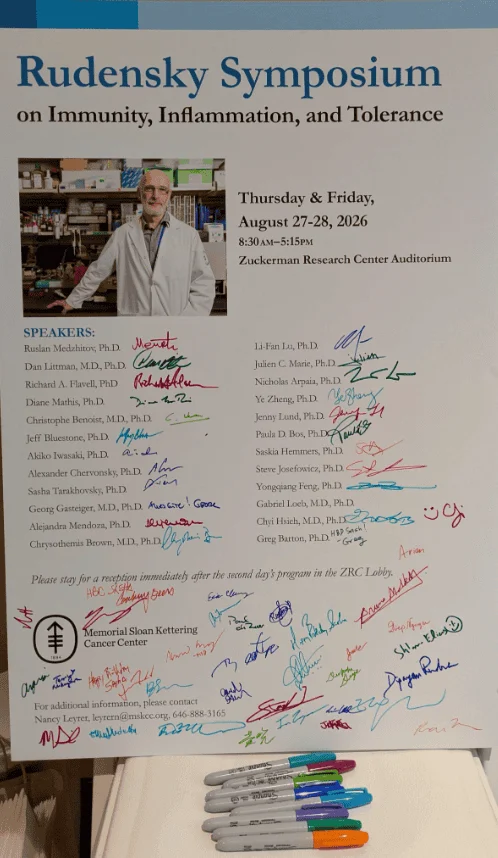
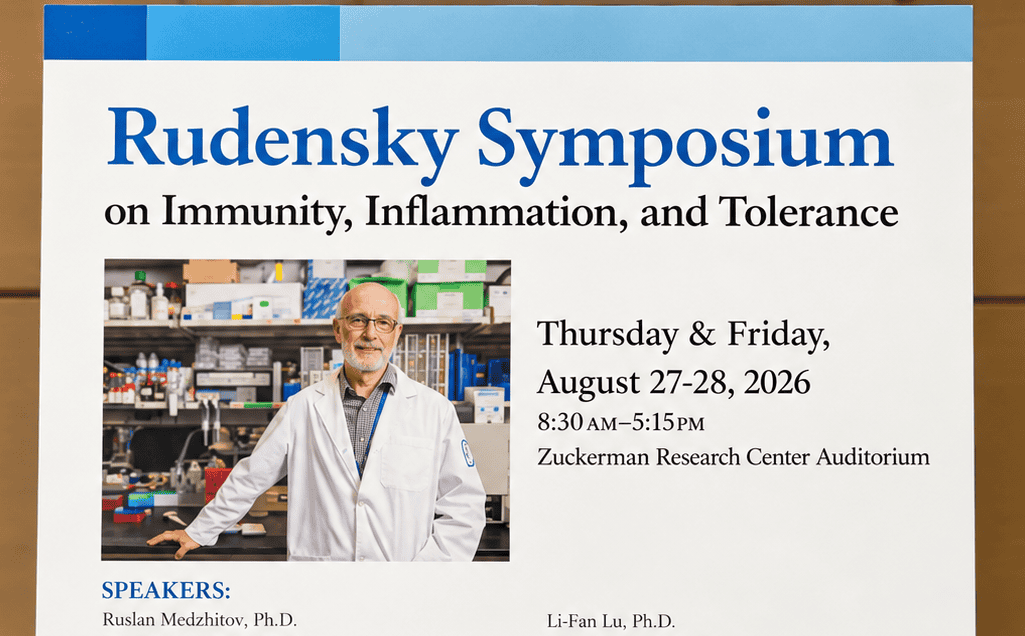
On August 27–28, 2026, the scientific community gathered not merely for a conference, but for a celebration of a life’s work. The Rudensky Symposium on Immunity, Inflammation, and Tolerance served as a poignant tribute to Alexander “Sasha” Rudensky, PhD, of the Memorial Sloan Kettering Cancer Center, on the occasion of his 70th birthday.
While the event was centered on academic rigor, it transcended the typical boundaries of a professional meeting. It was a reunion of generations—a vibrant tapestry of former trainees, lifelong collaborators, and peers whose collective efforts have fundamentally redefined our understanding of the immune system. For the Cancer Research Institute (CRI), which has supported Dr. Rudensky for over two decades, the symposium represented the culmination of a long-term investment in the "human element" of scientific breakthrough.
A Legacy Built on Mentorship and Collaboration
The scientific career of Dr. Rudensky is defined by a deep curiosity regarding the mechanisms of immune tolerance—the process by which the body distinguishes "self" from "non-self" and maintains homeostasis. In 2015, the CRI recognized these contributions by awarding him the William B. Coley Award for Distinguished Research in Basic and Tumor Immunology.
However, the symposium highlighted that his impact extends far beyond his own publications. With over a dozen CRI-funded fellows having passed through his laboratory, Rudensky’s academic lineage is vast. The symposium featured a series of presentations that were deliberately interwoven with personal anecdotes, illustrating a mentorship philosophy that emphasizes intellectual independence, rigorous debate, and the pursuit of fundamental truths over immediate clinical applications.
Chronology of Scientific Inquiry
The symposium was structured to mirror the evolution of immunology—moving from the foundational mechanisms of tissue maintenance to the complex, systemic environments of cancer.
The Foundation: Tissue Balance and Immune Surveillance (Day 1)
The opening sessions focused on the paradox of the immune system: its dual role as a defender against infection and a manager of tissue integrity.
- The Tissue Maintenance Crew: Ruslan Medzhitov, PhD (2003 CRI Coley Awardee), challenged the conventional view of macrophages as purely reactive immune cells. Instead, he proposed a model where stressed cells recruit these macrophages to act as a "maintenance crew," clearing out damaged protein debris. This suggests that immune activity is a constant, steady-state requirement for health, rather than just an emergency response.
- The Versatility of Regulatory T cells (Tregs): A recurring theme was the multi-faceted role of Tregs. Diane Mathis, PhD, and Christophe Benoist, MD, PhD (both 2024 CRI Coley Awardees), presented compelling evidence that Tregs do more than suppress inflammation. Mathis detailed how specific Treg populations facilitate muscle repair and limit scarring post-injury, while Benoist demonstrated that the identity and functional profile of a Treg are dictated by the specific molecular targets it recognizes.
The Transition: From Early Surveillance to Cancer Emergence (Day 2)
As the symposium progressed, the focus shifted toward the “pre-cancerous” state. The central question posed was: Can the immune system intervene before a tumor is even visible?
- Early Immunosurveillance: Richard A. Flavell, PhD (2012 CRI Coley Awardee), provided a window into the competitive nature of cells. By tracking intestinal stem cells carrying a cancer-linked BRAF mutation, his team observed that while mutant cells possess a survival advantage, they are often eliminated by the immune system. The research highlighted that immune recognition—or the failure thereof—is a primary driver in which abnormal cells gain the foothold necessary to become a tumor.
- Inflammatory Plasticity: Julien C. Marie, PhD, explored how regulatory signals, specifically TGF-β, maintain the balance of intestinal Th17 cells. When this signal is disrupted, these cells enter a state of chronic, damaging inflammation that acts as a catalyst for DNA damage and eventual cancer. Crucially, Marie showed that this state is not necessarily permanent, suggesting that inflammatory programs possess a level of flexibility that could be therapeutically exploited.
Implications for Cancer Therapy and Prevention
The symposium’s second half turned to the "ecosystem" of the tumor. The data presented underscored that a tumor is not an isolated entity, but a biological site that hijacks its surroundings to ensure its own survival.
The Gut-Tumor Axis
Dan Littman, MD, PhD (2016 CRI Coley Awardee), connected the dots between the gut microbiome and systemic cancer immunotherapy. His work suggests that the training of T cells in the intestine has downstream effects on how a patient responds to checkpoint inhibitors elsewhere in the body. This reinforces the necessity of viewing the patient as an integrated system, where the gut microbiome serves as a foundational "tutor" for the immune system.
Disrupting the Tumor Neighborhood
The final sessions focused on the physical and cellular landscape of the tumor:
- Collagen Highways: Paula D. Bos, PhD, revealed how Tregs manipulate the tumor environment to support metastasis. By interacting with macrophages, Tregs encourage the alignment of collagen fibers into "highways" that facilitate the escape of tumor cells. By temporarily modulating Treg activity, Bos’s team was able to disrupt these structures, leading to a marked decrease in metastatic spread in preclinical models.
- Targeting the Microenvironment: Nicholas Arpaia, PhD, showcased research on fibroblast populations that actively recruit suppressive Tregs to lung tumors. This "suppressive neighborhood" shields the cancer from immune attack. In a high-impact collaboration with CRI Lloyd J. Old STAR Tal Danino, PhD, Arpaia described the use of engineered bacteria as "delivery vehicles" to concentrate immune-modulating treatments directly within these neighborhoods.
Official Perspective: The CRI Commitment
For the Cancer Research Institute, the Rudensky Symposium was more than a celebratory event; it was a testament to the efficacy of long-term funding models.
"The progress we see in cancer immunotherapy today is built on the foundation of decades of basic science," stated a CRI spokesperson. "By supporting scientists like Dr. Rudensky, we are not just funding a lab; we are funding a culture of inquiry. The symposium proved that when you give brilliant minds the freedom to ask fundamental questions about how tissues stay in balance, the answers eventually illuminate the path toward curing cancer."
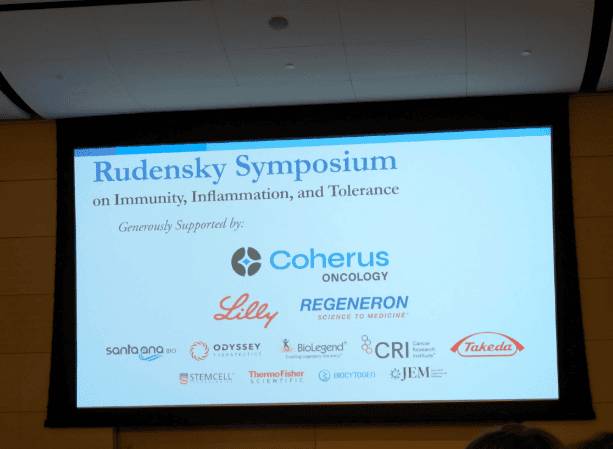
The Institute’s strategy has remained consistent for over 70 years: invest in the people, prioritize basic immunology, and allow the science to dictate the trajectory of clinical application. The presence of young investigators, who represent the next generation of this legacy, suggests that this model remains as vital as ever.
Conclusion: The Ripple Effect of Discovery
As the symposium concluded, the physical evidence of this legacy was plain to see: a poster board, signed by the “Rudensky Research Family,” displayed signatures from dozens of scientists across the globe.
The symposium demonstrated that scientific progress is non-linear. It is a process of "rigorous disagreement," mentorship, and the bravery to pursue research where the clinical benefit is not yet apparent. By bridging the gap between basic biological principles—such as how a cell cleans its own "garbage"—and complex clinical strategies, such as how to dismantle a tumor’s physical escape routes, the community of researchers surrounding Dr. Rudensky is setting the stage for the next generation of cancer therapies.
In the final analysis, the Rudensky Symposium was a reminder that while the tools of science (genomics, imaging, immunotherapy) are constantly evolving, the engines of progress remain constant: the curiosity of the individual, the rigor of the mentor, and the collective commitment to understanding the delicate dance of the immune system. The ripples of Dr. Rudensky’s 70 years of life are, in the world of immunology, creating waves that will likely influence patient outcomes for decades to come.