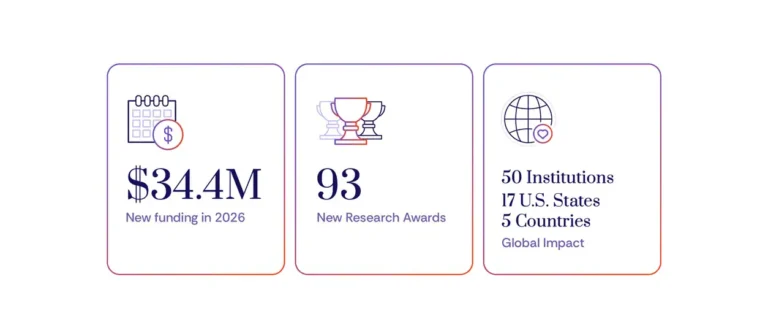









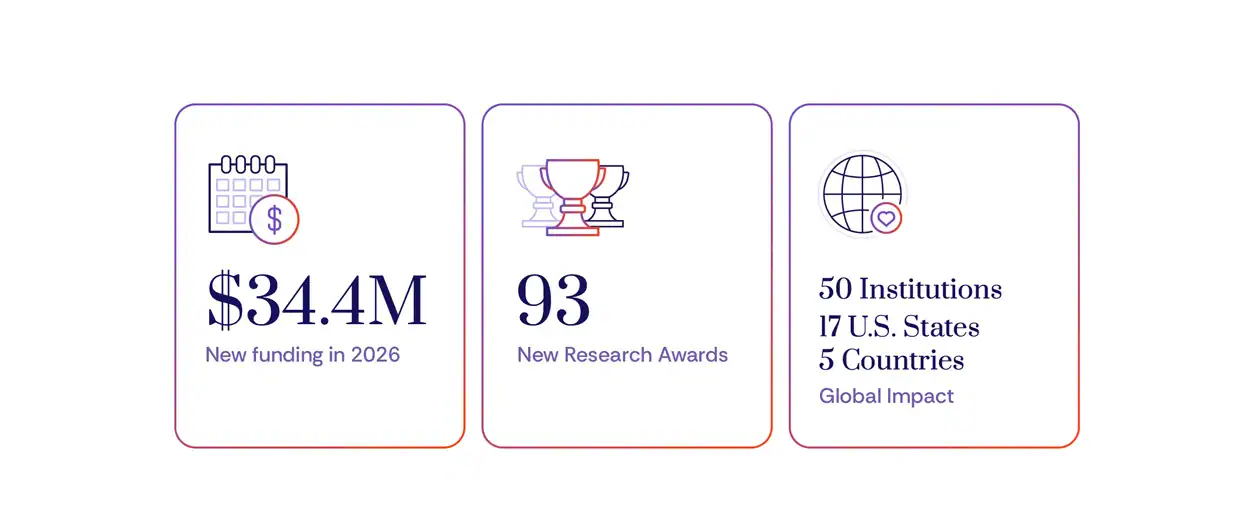
In an era defined by fiscal volatility and shrinking public research budgets, the Cancer Research Institute (CRI) has made a defiant statement: progress will not be paused. Facing a landscape where brilliant minds are often forced to abandon their research due to a lack of resources, the CRI has reached a historic milestone. In the 2025–2026 fiscal year, the organization committed $34.4 million in new funding across 93 awards—the largest grantmaking effort in its seven-decade history.
This surge in funding is not merely a financial statistic; it is a calculated effort to preserve the integrity of the scientific pipeline. By deploying capital across 50 institutions in 17 states and five countries, the CRI is working to ensure that the "valley of death"—the precarious period where promising research often stalls due to funding gaps—does not become the final resting place for potential cancer breakthroughs.
Chronology of Commitment: A Seventy-Year Legacy
For over 70 years, the CRI has operated on a foundational philosophy: identify the most promising scientists early and support them long enough to see their work through to fruition.
- The Early Decades: Since its inception, CRI has focused on the untapped potential of the immune system to fight cancer, long before it was the mainstream focus of oncology.
- The Mid-Career Transition: Recognizing that the transition from a post-doctoral fellow to a principal investigator is the most vulnerable point in a researcher’s life, the CRI began formalizing its support structures to bridge this critical gap.
- The 2025–2026 Milestone: Faced with national funding headwinds, the CRI ramped up its efforts, culminating in the launch of the IGNITE Award. This program specifically targets the "independence gap," ensuring that early-career researchers have the autonomy to pursue high-risk, high-reward inquiries.
The IGNITE Award: Inspiring Growth and Nurturing Independence
The transition from a supervised trainee to an independent laboratory lead is often a "make or break" moment for a scientist. Without established track records or massive preliminary datasets, many early-career researchers struggle to secure traditional government grants.
The CRI’s new IGNITE Award (Inspiring Growth and Nurturing Independence Through Excellence) serves as a vital financial bridge. It provides the resources necessary for these scientists to define original areas of investigation and generate the early evidence required for long-term, sustainable funding.
The Case of Dr. Simone Park
Dr. Simone Park, a researcher at the University of Pennsylvania, serves as the archetypal beneficiary of the CRI’s "continuum of support." Initially supported by the CRI as a postdoctoral fellow, Dr. Park is now an inaugural IGNITE Award recipient.
Her research focuses on tissue-resident memory T cells—specialized immune cells that dwell within tissues rather than circulating in the blood. These cells act as a permanent, local surveillance team, potentially offering the key to preventing cancer recurrence. By investigating how these cells persist and remain vigilant, Dr. Park is developing strategies to engineer longer-lasting, more potent immune defenses. Her trajectory from a trainee to a lead investigator demonstrates the efficacy of a "long-game" funding strategy.
Supporting Data: A Global Impact
The scale of the CRI’s 2025–2026 efforts underscores the necessity of private-sector agility in scientific research.
- Total Financial Commitment: $34.4 million in new funding.
- Reach: 93 individual awards distributed across 50 prestigious research institutions.
- Geographic Scope: A truly international effort, spanning five countries and 17 states.
- The Continuum Model: The CRI’s investment strategy is segmented into three distinct pillars:
- Postdoctoral Fellowships: The launchpad for the next generation of scientific leaders.
- IGNITE Awards: The critical bridge to laboratory independence.
- Lloyd J. Old STAR Awards: Targeted support for established investigators pursuing bold, high-impact, high-risk research.
Official Perspectives: The Value of Persistence
Leadership at the Cancer Research Institute emphasizes that the organization’s role is not just to provide capital, but to provide the confidence that allows scientists to take risks.
"Behind every award is a scientist pursuing a critical question," an official statement from the CRI noted. "At every stage, they need more than just a good idea. They need the flexibility of funders who understand that science is not a linear process. It is a process of trial, error, and eventual breakthrough."
The organization maintains that while uncertainty may alter the landscape of the scientific world, the requirements for progress remain static: exceptional people, bold ideas, and the sustained support to bring them together. By insulating researchers from the immediate pressure of "safe" research, the CRI encourages the kind of innovation that eventually leads to life-saving immunotherapies.
Implications: Building a Resilient Ecosystem
The implications of the CRI’s record-breaking year extend far beyond the laboratory bench. By diversifying its support, the CRI is fostering a broader, more resilient ecosystem of cancer research.
Expanding Beyond the Lab
The organization’s mission is not limited to funding researchers. The CRI has expanded its mandate to include:
- Clinical Studies: Accelerating the translation of laboratory findings into human clinical trials.
- Data Programs: Providing shared resources and computational infrastructure to help researchers process increasingly complex biological data.
- Patient Advocacy: Serving as a conduit for information and support for patients and caregivers who are navigating the rapidly evolving world of immunotherapy.
This multi-pronged approach ensures that every dollar invested has a compound effect. By equipping scientists with computational skills, fostering interdisciplinary collaboration, and providing clear, accessible information to patients, the CRI is creating a pipeline where discovery is not just a destination, but a continuous loop of innovation.
Looking Ahead: The Future of Immunotherapy
The 2026 Annual Impact Report, which highlights these record-setting contributions, serves as a testament to the promises the CRI has kept to both its scientific partners and the patients waiting for new therapeutic possibilities.

However, the leadership at CRI is quick to point out that the current success is not an endpoint. "There is extraordinary work still ahead of us," the organization stated. "We are just getting started."
The current research landscape is volatile, with shifts in political priorities and economic climates creating significant barriers to entry for new research programs. Yet, by prioritizing the human element—the scientist at the center of the inquiry—the CRI has demonstrated that progress is possible even in the most uncertain times.
As we look toward the next decade, the focus will remain on identifying the next generation of pioneers. The success of the IGNITE program and the growth of the STAR awards suggest that the most effective way to combat cancer is to invest in the individuals who possess the courage to ask the most difficult questions. The CRI’s mission remains clear: to ensure that when a brilliant mind encounters a problem, they have the resources, the time, and the freedom to solve it.
In a world that demands instant results, the Cancer Research Institute is doubling down on the one thing that has always produced real, lasting change: the sustained, thoughtful, and daring support of the scientific imagination.