






In an era defined by fiscal volatility and shrinking federal research budgets, the scientific community is facing an existential crossroads. As traditional funding streams constrict, the pipeline of discovery—the very engine that drives medical breakthroughs—risks stagnation. Yet, amidst this climate of hesitation, the Cancer Research Institute (CRI) has taken a defiant stand: by committing to its largest grantmaking cycle in its 70-year history, the organization is proving that scientific progress should never be held hostage by economic uncertainty.
The Pillars of Progress: A Record-Breaking Fiscal Year
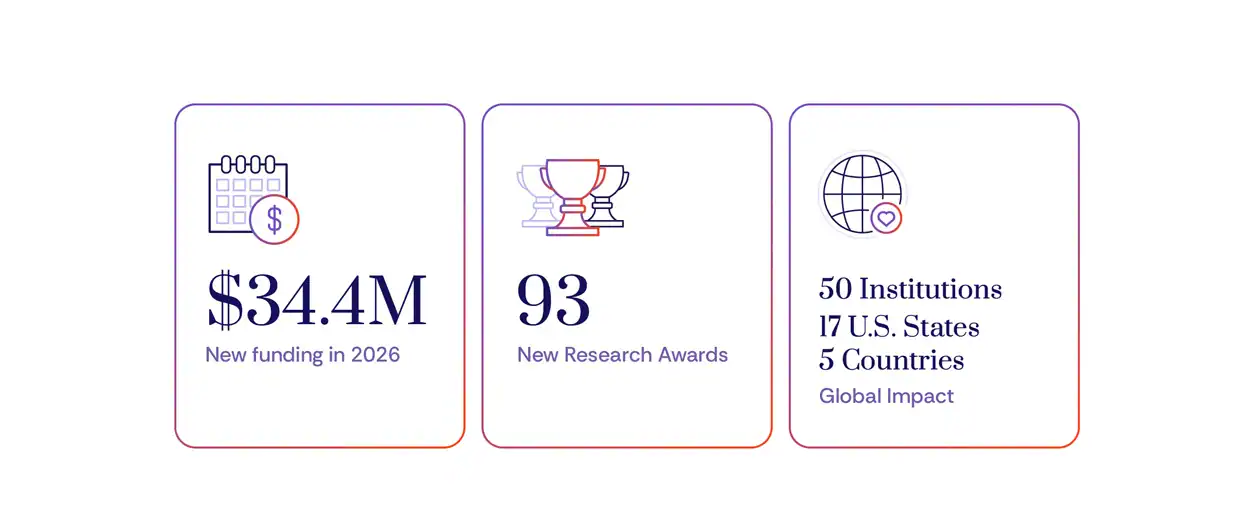
During the 2025–2026 fiscal year, the CRI solidified its position as a cornerstone of the global oncology research ecosystem by committing a staggering $34.4 million in new funding. This capital injection spans 93 individual awards, reaching 50 elite research institutions across five countries and 17 states.
These figures, while impressive, represent more than just transactional philanthropy. They signify a strategic allocation of resources designed to safeguard the most vulnerable phase of the scientific career path. By prioritizing both early-career independence and high-risk, high-reward inquiries, the CRI is actively buffering the research landscape against the tremors of broader economic instability.
Chronology of Commitment: 70 Years of Foresight
The CRI’s recent surge in funding is not an isolated reaction to current market conditions, but rather the culmination of seven decades of institutional philosophy.
- The Foundational Decades: Since its inception, CRI has operated on the premise that the "who" is as important as the "what." By funding researchers before they become household names, the institute has cultivated a legacy of identifying scientific talent at the precipice of discovery.
- The Post-Doctoral Bridge: For years, the CRI has anchored its efforts in supporting postdoctoral fellows—the researchers who perform the heavy lifting of laboratory discovery but who often lack the institutional weight to secure large-scale grants.
- 2025–2026: The IGNITE Initiative: The introduction of the IGNITE (Inspiring Growth and Nurturing Independence Through Excellence) Award marks a pivot point. Recognizing that the transition from a postdoc to an independent principal investigator (PI) is the "valley of death" for many brilliant careers, the CRI designed this specific mechanism to provide the financial runway necessary for young scientists to establish their own labs and original research agendas.
Supporting Data: The Anatomy of an Investment
The $34.4 million distributed this year is not distributed uniformly; it is allocated with surgical precision to maximize impact across the immunotherapy pipeline.
The Spectrum of Support
- Postdoctoral Fellowships: These provide the foundational training necessary for the next generation of immuno-oncologists.
- IGNITE Awards: These represent the "Bridge to Independence," providing the early evidence required to compete for long-term government and private funding.
- Lloyd J. Old STAR Awards: Designed for established investigators, these awards prioritize "high-risk, high-impact" research. By removing the pressure to produce incremental, safe data, the CRI empowers top-tier scientists to pursue the "moonshot" questions that can fundamentally alter the standard of care for cancer patients.
The data indicates that this tiered approach minimizes the "attrition of talent." By supporting a scientist from their fellowship through to their establishment as a lab head, the CRI ensures that the institutional knowledge and research momentum gained during early training are not lost to the administrative and financial hurdles of career advancement.
Case Study: Dr. Simone Park and the Future of Memory T-Cells
The success of the CRI’s methodology is perhaps best captured by the trajectory of Dr. Simone Park of the University of Pennsylvania. Initially supported by the CRI during her postdoctoral tenure, Dr. Park now stands as an inaugural recipient of the IGNITE Award.
Dr. Park’s research into tissue-resident memory T cells addresses one of the most persistent problems in immunotherapy: recurrence. While current treatments are often successful at inducing initial remission, cancer cells frequently return. Dr. Park’s work explores the biological mechanisms that allow specialized T cells to persist within tissue, effectively serving as an internal "sentinel" against tumor recurrence.
"The transition to independence is a period of profound vulnerability," notes Dr. Park. "The IGNITE Award isn’t just funding; it is the confidence to define an original area of investigation that might otherwise be considered too experimental for traditional, more conservative funding bodies."
By backing researchers like Dr. Park, the CRI is not merely buying lab supplies; it is investing in the intellectual capital that will define the oncology landscape of the 2030s and beyond.
Implications: Beyond the Bench
The CRI’s mission extends far beyond the publication of papers in high-impact journals. The organization has intentionally built an "ecosystem of discovery." This includes:
- Data and Shared Resources: Facilitating collaboration between labs to ensure that findings in one institution can be validated or expanded upon in another.
- Computational Empowerment: As cancer research becomes increasingly data-driven, the CRI is equipping researchers with advanced computational skills to navigate the complexities of genomic and proteomic datasets.
- Patient Advocacy and Education: The institute serves as a bridge between the laboratory and the bedside, providing patients and caregivers with the tools to navigate the often-confusing world of clinical trials and emerging immunotherapy treatments.
Official Perspective: The Philosophy of "Promises Kept"
In its latest Annual Impact Report, the CRI frames its recent spending not as a charitable gesture, but as a commitment to the promise of scientific discovery. The leadership emphasizes that while the global landscape of science may be shifting due to political and economic factors, the fundamental requirements of innovation remain constant: brilliant people, bold questions, and the financial oxygen to pursue them.

"Uncertainty is an environmental factor," says an internal spokesperson. "It is something to be managed, not a reason to halt progress. When we look at the 93 awards granted this year, we aren’t just looking at numbers; we are looking at 93 separate bets on the future of human health."
Looking Ahead: A Sustained Trajectory
The implications of this massive capital deployment are significant. By intentionally filling the funding gaps created by larger, more bureaucratic institutions, the CRI is ensuring that the "pipeline" of immunotherapy research remains pressurized.
The strategy is clear: keep the scientists working, keep the labs open, and keep the focus on the patient. As the CRI looks toward the next fiscal year, the message to the scientific community is one of stability. In a world of volatile headlines, the Cancer Research Institute is positioning itself as the steady hand, ensuring that the work of curing cancer continues, regardless of the climate.
As the organization notes in its 2026 report, "There is extraordinary work still ahead of us. And we are just getting started." For the thousands of researchers currently operating in the shadow of funding uncertainty, that promise is more than just words—it is a lifeline to the future of medicine.