







Contributing author: Blood Cancer United
As medical science achieves increasingly remarkable outcomes in the treatment of blood cancers, the focus of the oncology community is shifting. It is no longer enough to simply ensure a patient survives; the modern standard of care increasingly emphasizes the quality of that survival. For the growing population of young adults who have successfully navigated aggressive malignancies through revolutionary treatments like Chimeric Antigen Receptor (CAR) T-cell therapy, the conversation is turning toward long-term life goals—including the possibility of starting or growing a family.
September marks Blood Cancer Awareness Month, a pivotal time to reflect on the triumphs of modern medicine and the evolving needs of the survivor community. While the immediate question for any patient remains, "Will this treatment work?", the subsequent question—"What does my life look like after the cancer is gone?"—has become a cornerstone of patient-centered care. A new, collaborative study spearheaded by researchers at Blood Cancer United, Moffitt Cancer Center, and University of Florida Health is now working to answer that vital question by gathering data directly from the people who know it best: the survivors.
The Evolution of CAR T-Cell Therapy: A Medical Milestone
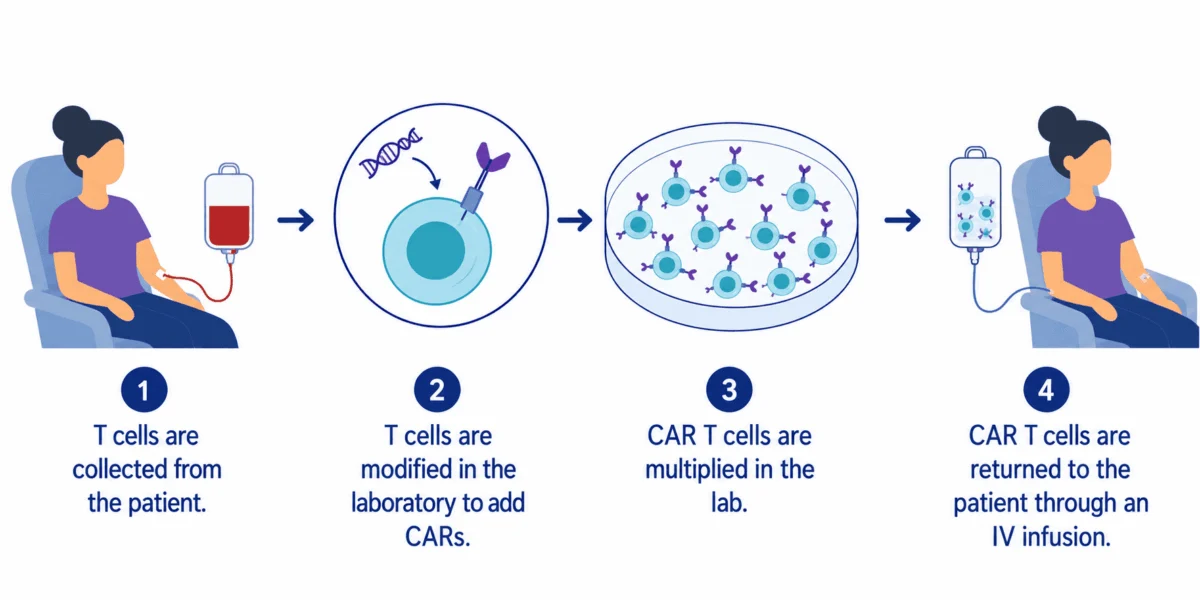
To understand the current research landscape, one must first appreciate the mechanism of CAR T-cell therapy. As a specialized form of immunotherapy, this treatment represents a paradigm shift in how we approach oncology. Unlike traditional chemotherapy, which acts as a broad-spectrum assault on rapidly dividing cells, CAR T-cell therapy is a precision-engineered biological intervention.
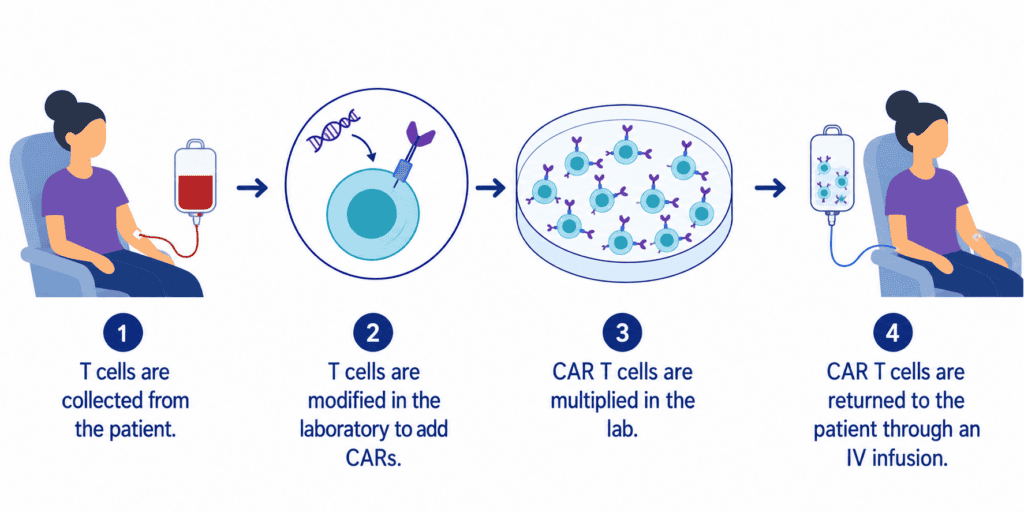
The process begins with the collection of a patient’s own T cells—the "soldiers" of the immune system. These cells are sent to a laboratory, where they undergo genetic modification to express a chimeric antigen receptor (CAR) on their surface. This receptor acts as a biological "GPS," allowing the T cells to identify and dock onto specific proteins found exclusively on cancer cells. Once the modified cells are reinfused into the patient, they multiply and launch a targeted attack on the malignancy.
The journey to this innovation was decades in the making. The foundation was laid by foundational research, most notably by CRI Scientific Advisory Member Dr. Carl June, whose work led to the first successful remissions in patients with refractory leukemia. Since the FDA granted its first approval for a CAR T-cell therapy in 2017, the treatment landscape has expanded to include options for various leukemias, lymphomas, and multiple myeloma.
The Confounding Variables: Why Fertility Data Remains Elusive
If CAR T-cell therapy has been available for nearly a decade, why is the scientific community only now gaining clarity on its impact on fertility? The answer lies in the clinical history of the patients treated.
Early recipients of CAR T-cell therapy were, by definition, patients with few remaining options. They were often battling aggressive, refractory blood cancers that had failed to respond to multiple prior lines of therapy. Most had already endured years of intensive systemic treatments, including heavy-duty chemotherapy regimens, total-body irradiation, and hematopoietic stem cell transplantation. These treatments are well-documented for their potential to damage reproductive organs and impair fertility.
Furthermore, the standard "lymphodepletion" protocol—a brief course of chemotherapy administered just before the CAR T-cell infusion to create "space" for the new cells to proliferate—adds another layer of physiological stress. Consequently, when a survivor reports difficulty conceiving, clinicians face a diagnostic puzzle: is the infertility a result of the CAR T-cell therapy itself, the cumulative damage of prior treatments, the natural progression of age, or the physiological toll of the underlying disease? Separating these variables is the primary challenge for researchers today.
Preliminary Findings: A Glimmer of Hope
In an effort to move beyond anecdotal evidence, the research team from Blood Cancer United, Moffitt Cancer Center, and the University of Florida Health launched a patient-facing survey designed to capture real-world data from adult survivors of blood cancer.
The preliminary results from the first 106 respondents offer a significant, if early, insight into the post-treatment reproductive landscape. Of the cohort, 32 individuals expressed a desire to have children following their CAR T-cell therapy, and 12 had actively attempted to conceive. Notably, six of these individuals reported a successful pregnancy—four from female respondents and two from the partners of male respondents.
Crucially, none of these six pregnancies required the use of assisted reproductive technologies (ART) such as IVF. While this data set is small and serves as a starting point rather than a definitive conclusion, it provides a much-needed signal that conception is not only possible but occurring naturally after CAR T-cell therapy.
Insights from Autoimmune Research
Interestingly, the pursuit of answers regarding reproductive health is being bolstered by data from an unexpected field: autoimmune disease. CAR T-cell therapy is currently being investigated as a treatment for severe autoimmune conditions like lupus, where the immune system attacks the body’s own healthy tissues.
Because these patients often present with different medical histories and disease burdens compared to cancer patients, their reproductive outcomes offer a unique "control" environment. A 2026 report provided a breakthrough in this area, documenting 14 pregnancies across 13 patients who had received CAR T-cell therapy for autoimmune disease. By the time the report was published, eight healthy infants had been born. While these findings cannot be directly extrapolated to the oncology population, they provide a valuable piece of the puzzle, suggesting that the CAR T-cell mechanism itself may not be inherently destructive to reproductive capacity.
The Clinical and Human Implications
The ultimate goal of this research is to transform the standard of care for cancer patients. If researchers can determine exactly how—or if—CAR T-cell therapy affects fertility, oncologists will be empowered to provide clearer, evidence-based guidance.
"These early findings are encouraging, but they also highlight how much we still need to learn," explains Dr. Nina Logan, Senior Director of Research & Clinical Programs at Blood Cancer United. "Our goal is to give patients and their care teams better information about fertility after CAR T-cell therapy so they can have informed conversations about treatment, survivorship, and their plans for the future."
For a patient, this level of clarity is life-changing. Currently, many young adults facing a cancer diagnosis must make rapid decisions about fertility preservation—such as egg or sperm freezing—amidst the chaos of a life-threatening diagnosis. If clinicians have better data, they can offer more nuanced advice, potentially sparing patients unnecessary procedures or, conversely, ensuring that those at high risk take preemptive action.
A Call to Action for Survivors
The "CAR T-Cell Therapy and Fertility Survey" remains a vital initiative. By aggregating data on patient experiences, laboratory biomarkers, and longitudinal reproductive outcomes, the study seeks to build a robust evidence base.
Participation is essential. By contributing their stories, survivors are not just providing data points; they are helping to define the future of survivorship. Adults aged 18 and older who have undergone CAR T-cell therapy for blood cancer are encouraged to participate in the ongoing study to ensure that the voices of those who have walked this path are heard.
As we look toward the future of oncology, the definition of success must continue to expand. By bridging the gap between clinical efficacy and long-term quality of life, the research community is ensuring that for the modern cancer survivor, the end of treatment is truly the beginning of a life lived to its fullest potential.
Sources and Further Reading
- "Pediatric cancer immunotherapy and potential for impact on fertility: A need for evidence-based guidance," Transplant Cell Ther, 2024.
- "Fertility outcomes following CAR T-cell therapy: Results from a patient-facing survey," Tandem Meetings | Transplantation & Cellular Therapy Meetings of ASTCT and CIBMTR, 2026.
- "Pregnancies in patients with autoimmune disease receiving CAR T-cell therapy," N Engl J Med, 2026.
- "Approved Cellular and Gene Therapy Products," U.S. Food and Drug Administration, 2026.
Disclaimer: This article is intended for informational purposes only. Blood Cancer United and related organizations do not endorse or recommend specific study participation. Please consult with your personal oncology team regarding your medical history and reproductive health.