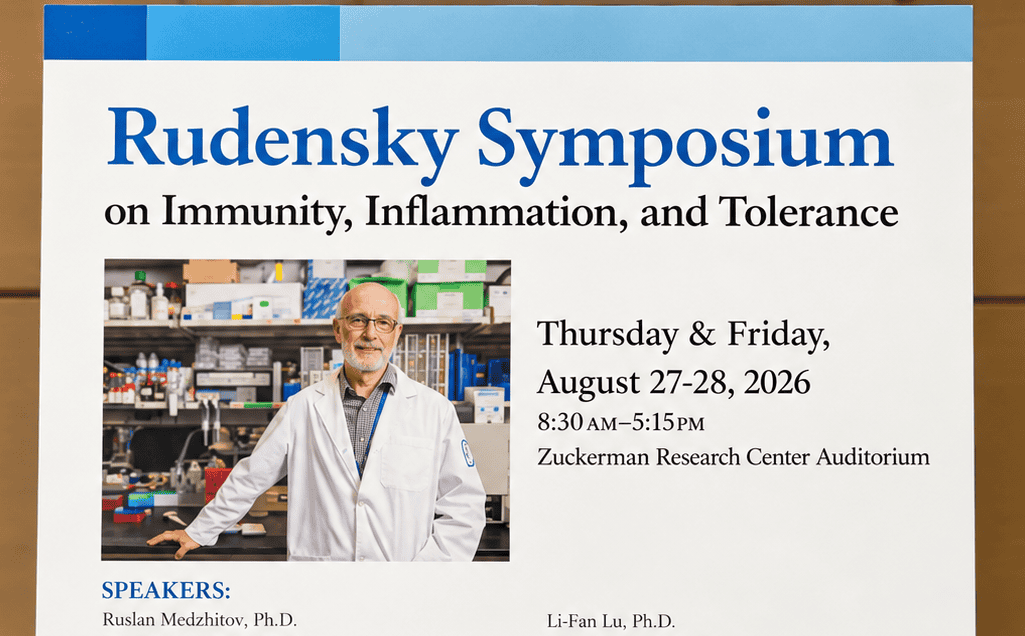
On August 27–28, 2026, the scientific community converged for a landmark event that transcended the standard academic conference. The Rudensky Symposium on Immunity, Inflammation, and Tolerance was convened not merely to review data, but to honor the 70th birthday of Dr. Alexander “Sasha” Rudensky, a titan in the field of immunology and a central figure at the Memorial Sloan Kettering Cancer Center (MSKCC).
The symposium served as a living archive of a scientific career that has fundamentally reshaped our understanding of the immune system. Bringing together generations of former trainees, collaborators, and esteemed colleagues, the event underscored a profound truth: that the trajectory of modern medicine is built upon the dual pillars of rigorous inquiry and enduring mentorship.
A Legacy of Mentorship and Scientific Excellence
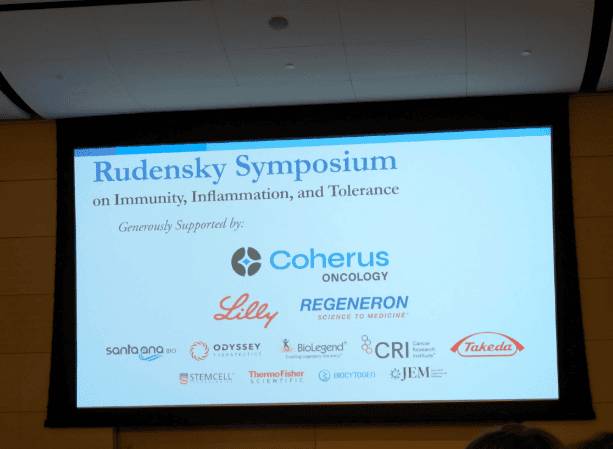
The Cancer Research Institute (CRI) has been a steadfast partner in Dr. Rudensky’s journey for over two decades. This relationship is emblematic of CRI’s broader mission to champion basic immunology as the essential precursor to transformative cancer therapy. Dr. Rudensky’s impact is perhaps best measured by his “academic family”—the over a dozen CRI-funded fellows who have trained under his guidance and are now leading their own laboratories across the globe.
In 2015, the CRI recognized Dr. Rudensky’s pioneering work on regulatory T cells (Tregs) by awarding him the prestigious CRI William B. Coley Award. His research, which elucidated how these cells act as the immune system’s “brakes” to prevent autoimmunity and protect healthy tissue, has provided the foundation for modern checkpoint immunotherapy.
The Interconnected Ecosystem of Immunity
The symposium’s agenda was meticulously curated to showcase how basic biological questions—often far removed from clinical oncology—inevitably lead to breakthroughs in cancer treatment. The sessions navigated the complex intersections of tissue repair, the gut microbiome, immune tolerance, and tumor evolution, revealing that the mechanisms maintaining homeostasis in healthy tissue are the same mechanisms hijacked by malignant tumors.
The Maintenance Crew: Immunity in Healthy Tissue
The proceedings opened with a sobering reminder: the immune system is not solely a defensive force; it is an architect of tissue health. Dr. Ruslan Medzhitov, a 2003 CRI Coley Awardee, presented findings on how stressed cells recruit macrophages to perform "housekeeping" duties, such as the removal of damaged protein aggregates. This framing of immune cells as "tissue maintenance crews" shifts the paradigm of immunology from pure conflict to systemic sustainability.
Expanding on this theme, Drs. Diane Mathis and Christophe Benoist—both recipients of the 2024 CRI Coley Award—demonstrated the versatility of Tregs. Beyond their suppressive roles, these cells are vital for orchestrating the repair of injured muscle and controlling inflammation. Dr. Benoist’s work specifically highlighted how the molecular targets recognized by Tregs dictate their functional identity, suggesting that we may one day "program" these cells to intervene in specific disease states.
Chronology of Discovery: From Early Surveillance to Metastasis
A central theme of the symposium was the concept of "cancer immunosurveillance"—the idea that the immune system acts as a vigilant sentry, identifying and eliminating aberrant cells long before they manifest as clinically significant tumors.
Detecting the Pre-Malignant State
Dr. Richard A. Flavell, a 2012 CRI Coley Awardee, presented a fascinating look at the very early stages of tumorigenesis. By studying intestinal stem cells harboring the BRAF mutation, Dr. Flavell’s team observed that while these mutant cells initially gain a survival advantage, a significant portion are eventually purged by the immune system.
The findings suggest that the loss of specific communication molecules between mutant cells and T cells acts as a "green light" for tumor progression. Furthermore, the presence of Tregs and the anti-inflammatory cytokine IL-10 appears to act as a buffer, restraining early clones. This research suggests that our window for cancer intervention may be far earlier than currently realized.
The Role of Inflammation
Dr. Julien C. Marie addressed the delicate balance of the tumor microenvironment. His research indicates that when the regulatory signal TGF-β is disrupted, Th17 cells—a subset of helper T cells—can be pushed into a chronically inflammatory state. This state fosters DNA damage, creating a feedback loop that promotes cancer development. Crucially, Dr. Marie’s work suggests this inflammatory program is not necessarily permanent; restoring signaling pathways could potentially revert these cells to a non-pathogenic state.
The Tumor Microenvironment: A Complex Neighborhood
As the symposium progressed into the later sessions, the focus shifted from individual cells to the broader tumor ecosystem.
The Microbiome Connection
Dr. Dan Littman, a CRI SAC member and 2016 CRI Coley Awardee, bridged the gap between the gut and the tumor. His preclinical research has been instrumental in defining how the gut microbiome trains T cells, directly influencing the patient’s response to checkpoint immunotherapy. This underscores the systemic nature of cancer treatment: what happens in the gut can dictate the efficacy of an immune attack on a tumor elsewhere in the body.
Shaping the Physical Landscape
Dr. Paula D. Bos offered a compelling look at the physical architecture of tumors. Her research demonstrated that Tregs do not just suppress immune cells; they influence the physical scaffolding of the tumor environment. By temporarily depleting Tregs in mice, Dr. Bos observed a shift in macrophages toward a tumor-fighting phenotype and the disruption of collagen fibers that typically serve as a "highway" for cancer cell metastasis. This targeted approach to modulating the tumor microenvironment offers a promising alternative to broad immunosuppression.
Engineered Interventions
Dr. Nicholas Arpaia concluded the scientific sessions by examining how tumors actively recruit fibroblasts to build immune-suppressive neighborhoods. In a synergistic project with CRI Lloyd J. Old STAR awardee Dr. Tal Danino, Dr. Arpaia explored the use of engineered bacteria to deliver therapeutics directly into the tumor core. This high-precision strategy aims to concentrate immune-modulating drugs exactly where they are needed, minimizing systemic toxicity and maximizing the "neighborhood" impact.
Implications for Future Oncology
The Rudensky Symposium served as a stark reminder that the "war on cancer" is, in reality, a masterclass in biological systems engineering. The implications of these combined findings are profound:
- Precision Timing: By understanding the "pre-tumor" state, we may eventually develop screening tools that detect the immune system’s struggle to contain mutant cells, allowing for early, non-invasive interventions.
- Structural Modulation: Future therapies may move beyond simply "turning on" the immune system. Instead, they may focus on breaking down the physical barriers—like collagen highways—that allow cancer to spread.
- Systemic Integration: The success of immunotherapy is not localized to the tumor. Nutritional, microbial, and metabolic interventions will likely become standard adjuncts to checkpoint inhibitors.
Closing Reflections: The Human Element
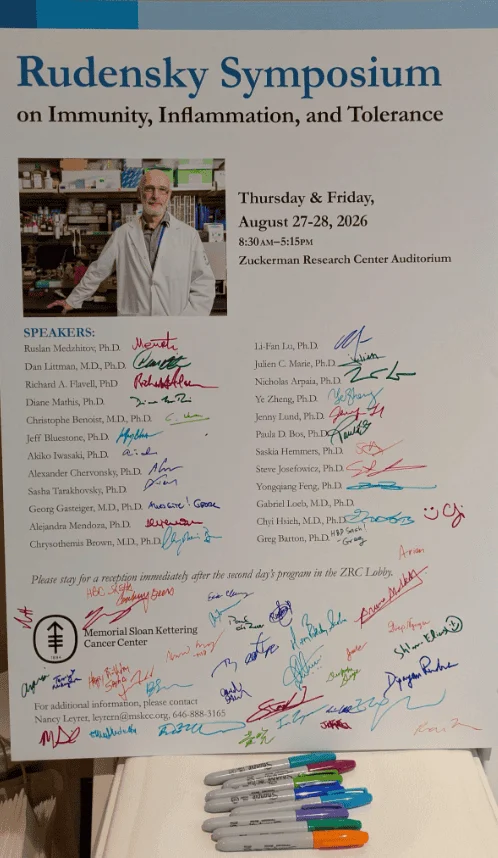
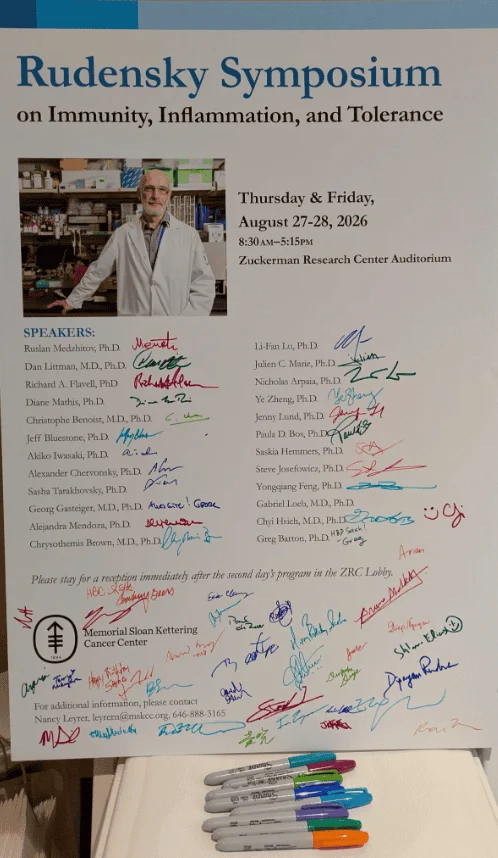
The final hours of the symposium were marked by the signing of a commemorative poster by Dr. Rudensky’s "research family." This act of collective celebration highlighted the most critical, yet often overlooked, component of scientific advancement: the human connection.
Science is a volatile process, characterized by "rigorous disagreement" and the freedom to chase questions that may lack immediate clinical relevance. As the CRI has learned over its 70-year history, the most breakthrough discoveries rarely arrive with a roadmap. They are born in environments where mentors provide the safety to fail and the resources to pursue the unknown.
The Rudensky Symposium was more than a birthday celebration; it was a testament to the power of a sustained, multi-generational effort. By fostering an environment where basic scientists and clinical oncologists speak the same language, the CRI and leaders like Dr. Rudensky are ensuring that the future of cancer treatment is not just reactive, but foundational—rooted in a deep, mechanistic understanding of how life, at its smallest level, stays in balance.
As the attendees dispersed, the message was clear: the next frontier of cancer research will not be found by looking at the tumor alone, but by understanding the intricate, beautiful, and sometimes fragile systems that define our health.